

191
resulting in a highly purified enzyme product, with 78–94% overall yield. The chromatography was carried out at 5–7 °C to avoid enzyme decomposition. The time
requirement of one affinity adsorption-desorption cycle was typically 26–30 h
(Seres et al. 1980).
The affinity-chromatography-based enzyme processing can be summarized in
three main steps:
Step 1: Preparation of affinity chromatographic sorbent (occasional) – sepharose6B agarose gel was reacted with 1,4-butanediol diglycidyl ether, and alphacyclodextrin was added to be bonded; approximately 10 μmol alpha-cyclodextrin/g
wet gel was immobilized by this method; the resulting affinity sorbent was quite
stable and reusable many times and possessed high binding affinity toward
cyclodextrin glucosyltransferase.
Step 2: Laboratory-scale concentration of enzyme via affinity chromatography –
initially, the crude fermentation liquor filtrate was concentrated to 1/10 in volume, and its pH maintained to slightly acidic (pH 6); this filtered concentrate was
passed through the cooled chromatographic column filled with the special affinity chromatographic absorbent; loading about 2000 mL of filtrate corresponding
to 200,000 Kitahata units with 100 mL/(cm
2
*h) linear flow velocity, the whole
cyclodextrin glucosyltransferase content was bound to the affinity stationary
CGTase enzyme
impurities
1
Alpha-cyclodextrin
2
3
4
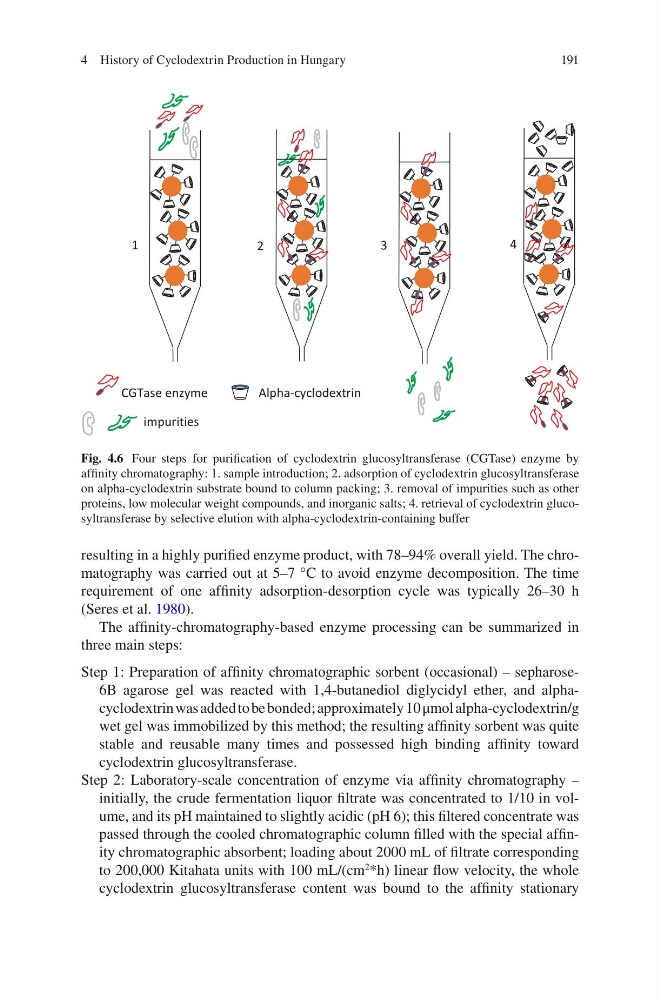
Fig. 4.6 Four steps for purification of cyclodextrin glucosyltransferase (CGTase) enzyme by
affinity chromatography: 1. sample introduction; 2. adsorption of cyclodextrin glucosyltransferase
on alpha-cyclodextrin substrate bound to column packing; 3. removal of impurities such as other
proteins, low molecular weight compounds, and inorganic salts; 4. retrieval of cyclodextrin glucosyltransferase by selective elution with alpha-cyclodextrin-containing buffer
4 History of Cyclodextrin Production in Hungary
resulting in a highly purified enzyme product, with 78–94% overall yield. The chromatography was carried out at 5–7 °C to avoid enzyme decomposition. The time
requirement of one affinity adsorption-desorption cycle was typically 26–30 h
(Seres et al. 1980).
The affinity-chromatography-based enzyme processing can be summarized in
three main steps:
Step 1: Preparation of affinity chromatographic sorbent (occasional) – sepharose6B agarose gel was reacted with 1,4-butanediol diglycidyl ether, and alphacyclodextrin was added to be bonded; approximately 10 μmol alpha-cyclodextrin/g
wet gel was immobilized by this method; the resulting affinity sorbent was quite
stable and reusable many times and possessed high binding affinity toward
cyclodextrin glucosyltransferase.
Step 2: Laboratory-scale concentration of enzyme via affinity chromatography –
initially, the crude fermentation liquor filtrate was concentrated to 1/10 in volume, and its pH maintained to slightly acidic (pH 6); this filtered concentrate was
passed through the cooled chromatographic column filled with the special affinity chromatographic absorbent; loading about 2000 mL of filtrate corresponding
to 200,000 Kitahata units with 100 mL/(cm
2
*h) linear flow velocity, the whole
cyclodextrin glucosyltransferase content was bound to the affinity stationary
CGTase enzyme
impurities
1
Alpha-cyclodextrin
2
3
4
Fig. 4.6 Four steps for purification of cyclodextrin glucosyltransferase (CGTase) enzyme by
affinity chromatography: 1. sample introduction; 2. adsorption of cyclodextrin glucosyltransferase
on alpha-cyclodextrin substrate bound to column packing; 3. removal of impurities such as other
proteins, low molecular weight compounds, and inorganic salts; 4. retrieval of cyclodextrin glucosyltransferase by selective elution with alpha-cyclodextrin-containing buffer
4 History of Cyclodextrin Production in Hungary