

18
Sensemaking in Safety Critical and Complex Situations
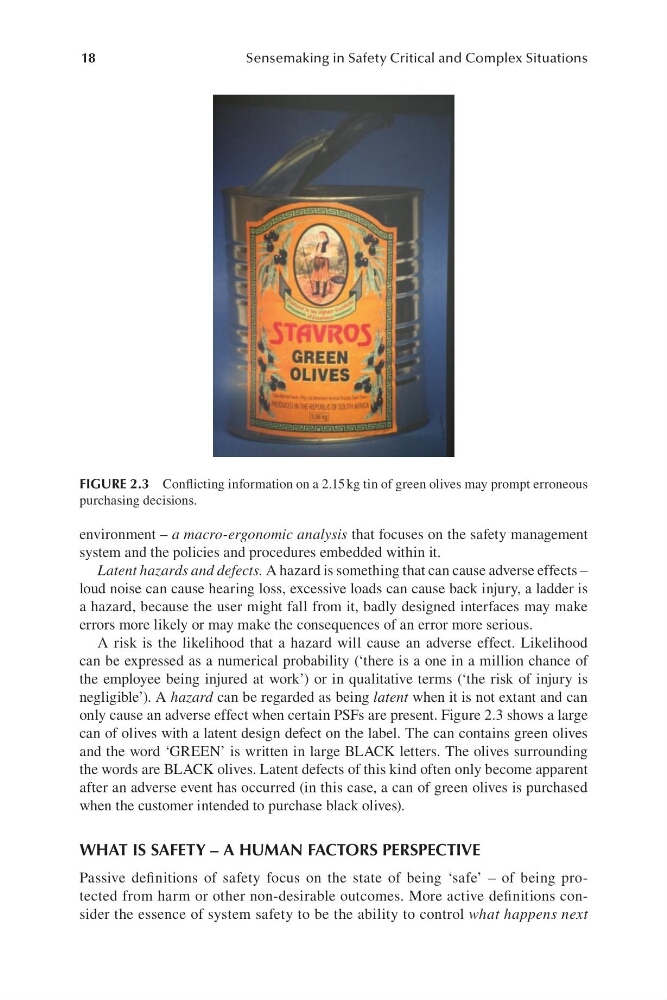
FIGURE 2.3 Conflicting information on a 2.15 kg tin of green olives may prompt erroneous
purchasing decisions.
environment – a macro-ergonomic analysis that focuses on the safety management
system and the policies and procedures embedded within it.
Latent hazards and defects. A hazard is something that can cause adverse e ffects –
loud noise can cause hearing loss, excessive loads can cause back injury, a ladder is
a hazard, because the user might fall from it, badly designed interfaces may make
errors more likely or may make the consequences of an error more serious.
A risk is the likelihood that a hazard will cause an adverse effect. Likelihood
can be expressed as a numerical probability (‘ there is a one in a million chance of
the employee being injured at work’) or in qualitative terms (‘ the risk of injury is
negligible’). A hazard can be regarded as being latent when it is not extant and can
only cause an adverse effect when certain PSFs are present. F igure 2.3 shows a large
can of olives with a latent design defect on the label. The can contains green olives
and the word ‘G REEN’ is written in large BLACK letters. The olives surrounding
the words are BLACK olives. Latent defects of this kind often only become apparent
after an adverse event has occurred (i n this case, a can of green olives is purchased
when the customer intended to purchase black olives).
WHAT IS SAFETY – A HUMAN FACTORS PERSPECTIVE
Passive definitions of safety focus on the state of being ‘ safe’ – of being protected from harm or other n on-desirable outcomes. More active definitions consider the essence of system safety to be the ability to control what happens next
Sensemaking in Safety Critical and Complex Situations
FIGURE 2.3 Conflicting information on a 2.15 kg tin of green olives may prompt erroneous
purchasing decisions.
environment – a macro-ergonomic analysis that focuses on the safety management
system and the policies and procedures embedded within it.
Latent hazards and defects. A hazard is something that can cause adverse e ffects –
loud noise can cause hearing loss, excessive loads can cause back injury, a ladder is
a hazard, because the user might fall from it, badly designed interfaces may make
errors more likely or may make the consequences of an error more serious.
A risk is the likelihood that a hazard will cause an adverse effect. Likelihood
can be expressed as a numerical probability (‘ there is a one in a million chance of
the employee being injured at work’) or in qualitative terms (‘ the risk of injury is
negligible’). A hazard can be regarded as being latent when it is not extant and can
only cause an adverse effect when certain PSFs are present. F igure 2.3 shows a large
can of olives with a latent design defect on the label. The can contains green olives
and the word ‘G REEN’ is written in large BLACK letters. The olives surrounding
the words are BLACK olives. Latent defects of this kind often only become apparent
after an adverse event has occurred (i n this case, a can of green olives is purchased
when the customer intended to purchase black olives).
WHAT IS SAFETY – A HUMAN FACTORS PERSPECTIVE
Passive definitions of safety focus on the state of being ‘ safe’ – of being protected from harm or other n on-desirable outcomes. More active definitions consider the essence of system safety to be the ability to control what happens next