

243
Constrained Autonomy
O OE
F
O OA
O AC
O FA
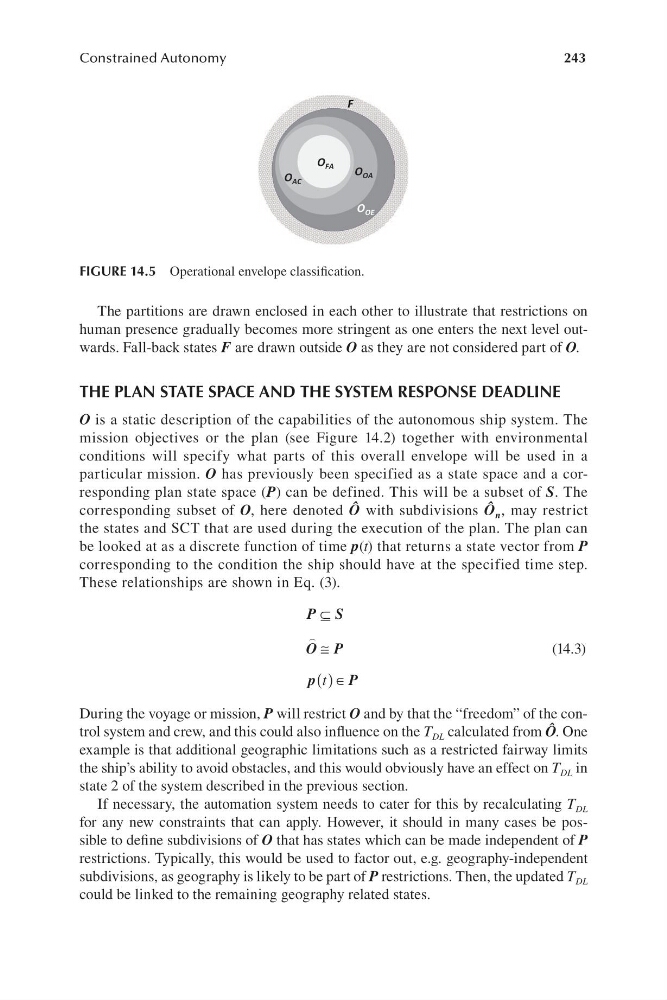
FIGURE 14.5 Operational envelope classification.
The partitions are drawn enclosed in each other to illustrate that restrictions on
human presence gradually becomes more stringent as one enters the next level outwards. Fall-back states F are drawn outside O as they are not considered part of O.
THE PLAN STATE SPACE AND THE SYSTEM RESPONSE DEADLINE
O is a static description of the capabilities of the autonomous ship system. The
mission objectives or the plan (s ee F igure 14.2) together with environmental
conditions will specify what parts of this overall envelope will be used in a
particular mission. O has previously been specified as a state space and a corresponding plan state space (P) can be defined. This will be a subset of S. The
corresponding subset of O, here denoted Ô with subdivisions Ô n , may restrict
the states and SCT that are used during the execution of the plan. The plan can
be looked at as a discrete function of time p(t) that returns a state vector from P
corresponding to the condition the ship should have at the specified time step.
These relationships are shown in Eq. (3 ).
P S
⊆
O P
≅
(14.3)
p
P
( )
t ∈
During the voyage or mission, P will restrict O and by that the “ freedom” of the control system and crew, and this could also influence on the T DL calculated from Ô. One
example is that additional geographic limitations such as a restricted fairway limits
the ship’s ability to avoid obstacles, and this would obviously have an effect on T DL in
state 2 of the system described in the previous section.
If necessary, the automation system needs to cater for this by recalculating T DL
for any new constraints that can apply. However, it should in many cases be possible to define subdivisions of O that has states which can be made independent of P
restrictions. Typically, this would be used to factor out, e.g. geography-independent
subdivisions, as geography is likely to be part of P restrictions. Then, the updated T DL
could be linked to the remaining geography related states.
Constrained Autonomy
O OE
F
O OA
O AC
O FA
FIGURE 14.5 Operational envelope classification.
The partitions are drawn enclosed in each other to illustrate that restrictions on
human presence gradually becomes more stringent as one enters the next level outwards. Fall-back states F are drawn outside O as they are not considered part of O.
THE PLAN STATE SPACE AND THE SYSTEM RESPONSE DEADLINE
O is a static description of the capabilities of the autonomous ship system. The
mission objectives or the plan (s ee F igure 14.2) together with environmental
conditions will specify what parts of this overall envelope will be used in a
particular mission. O has previously been specified as a state space and a corresponding plan state space (P) can be defined. This will be a subset of S. The
corresponding subset of O, here denoted Ô with subdivisions Ô n , may restrict
the states and SCT that are used during the execution of the plan. The plan can
be looked at as a discrete function of time p(t) that returns a state vector from P
corresponding to the condition the ship should have at the specified time step.
These relationships are shown in Eq. (3 ).
P S
⊆
O P
≅
(14.3)
p
P
( )
t ∈
During the voyage or mission, P will restrict O and by that the “ freedom” of the control system and crew, and this could also influence on the T DL calculated from Ô. One
example is that additional geographic limitations such as a restricted fairway limits
the ship’s ability to avoid obstacles, and this would obviously have an effect on T DL in
state 2 of the system described in the previous section.
If necessary, the automation system needs to cater for this by recalculating T DL
for any new constraints that can apply. However, it should in many cases be possible to define subdivisions of O that has states which can be made independent of P
restrictions. Typically, this would be used to factor out, e.g. geography-independent
subdivisions, as geography is likely to be part of P restrictions. Then, the updated T DL
could be linked to the remaining geography related states.