

362
The Chemistry and Technology of Petroleum
the original oil in place. Moreover, the incompatibility of crude oils with each other is a continuing
issue and the occurrence of suspended organic solids during recovery (especially thermal) reduces
the efficiency of a variety of processes.
Asphaltene precipitation or the mere presence of asphaltenes may invoke many implications
in recovering asphaltic crude oils. Asphaltene precipitation may occur under various thermally or
nonthermally enhanced oil recovery schemes or even primary production conditions.
These models are proposed as being applicable to the prediction of sediment (i.e., asphaltene,
resin, wax) formation and deposition from petroleum due to changes in pressure, temperature, and
composition. Further modeling must involve an understanding of the chemistry of these materials
and reflect the more modern approach to the physicochemical structure of petroleum. Only then will
it be possible to more correctly predict the onset of precipitation as well as the location and amount
of the sediment deposition in the producing wells and in oil-transport pipelines.
13.5 EFFECTS ON RECOVERY AND REFINING
The separation of solid sediments from reservoir fluids during oil production is an annoying and
frustrating occurrence that can result in the plugging of the formation, wellbores, and production facilities and it is necessary to take remedial actions (Park et al., 1994). Although the separation of asphaltenic sediments during refining operations can now be understood and there is
some degree of predictability of phase separation (the separation of a sediment or deposition of
0.5
Benzene
Polynuclear aromatic
hydrocarbon systems
D e a l k y l a t i o n ; a r o m a t i z a t i o n
H y d r o g e n a t i o n
O x i d a t i o n
0.0
6
10
15
1.0
Solubility parameter, δ
1.5
2.0
2.5
δ Asphaltenes : 9.0–12.0
δ DAO : 6.0–9.0
H/C atomic ratio
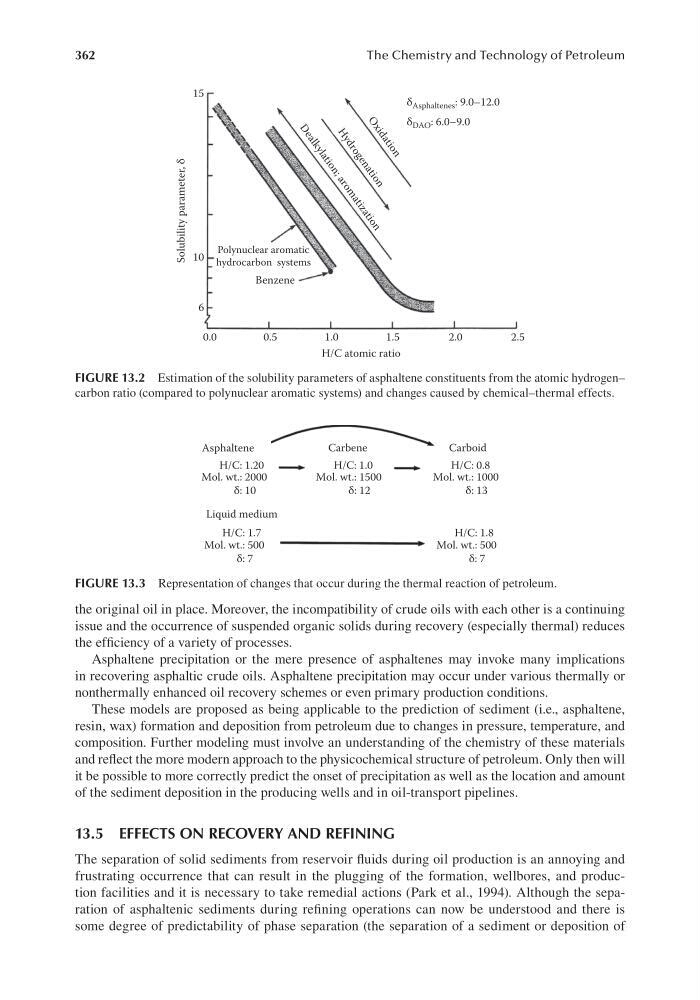
FIGURE 13.2 Estimation of the solubility parameters of asphaltene constituents from the atomic hydrogen–
carbon ratio (compared to polynuclear aromatic systems) and changes caused by chemical–thermal effects.
Liquid medium
H/C: 1.8
H/C: 1.7
Mol. wt.: 500
Mol. wt.: 500
Carbene
Carboid
H/C: 0.8
H/C: 1.20
H/C: 1.0
δ: 13
δ: 12
δ: 10
Mol. wt.: 1000
Mol. wt.: 2000
Mol. wt.: 1500
Asphaltene
δ: 7
δ: 7
FIGURE 13.3 Representation of changes that occur during the thermal reaction of petroleum.
The Chemistry and Technology of Petroleum
the original oil in place. Moreover, the incompatibility of crude oils with each other is a continuing
issue and the occurrence of suspended organic solids during recovery (especially thermal) reduces
the efficiency of a variety of processes.
Asphaltene precipitation or the mere presence of asphaltenes may invoke many implications
in recovering asphaltic crude oils. Asphaltene precipitation may occur under various thermally or
nonthermally enhanced oil recovery schemes or even primary production conditions.
These models are proposed as being applicable to the prediction of sediment (i.e., asphaltene,
resin, wax) formation and deposition from petroleum due to changes in pressure, temperature, and
composition. Further modeling must involve an understanding of the chemistry of these materials
and reflect the more modern approach to the physicochemical structure of petroleum. Only then will
it be possible to more correctly predict the onset of precipitation as well as the location and amount
of the sediment deposition in the producing wells and in oil-transport pipelines.
13.5 EFFECTS ON RECOVERY AND REFINING
The separation of solid sediments from reservoir fluids during oil production is an annoying and
frustrating occurrence that can result in the plugging of the formation, wellbores, and production facilities and it is necessary to take remedial actions (Park et al., 1994). Although the separation of asphaltenic sediments during refining operations can now be understood and there is
some degree of predictability of phase separation (the separation of a sediment or deposition of
0.5
Benzene
Polynuclear aromatic
hydrocarbon systems
D e a l k y l a t i o n ; a r o m a t i z a t i o n
H y d r o g e n a t i o n
O x i d a t i o n
0.0
6
10
15
1.0
Solubility parameter, δ
1.5
2.0
2.5
δ Asphaltenes : 9.0–12.0
δ DAO : 6.0–9.0
H/C atomic ratio
FIGURE 13.2 Estimation of the solubility parameters of asphaltene constituents from the atomic hydrogen–
carbon ratio (compared to polynuclear aromatic systems) and changes caused by chemical–thermal effects.
Liquid medium
H/C: 1.8
H/C: 1.7
Mol. wt.: 500
Mol. wt.: 500
Carbene
Carboid
H/C: 0.8
H/C: 1.20
H/C: 1.0
δ: 13
δ: 12
δ: 10
Mol. wt.: 1000
Mol. wt.: 2000
Mol. wt.: 1500
Asphaltene
δ: 7
δ: 7
FIGURE 13.3 Representation of changes that occur during the thermal reaction of petroleum.