

346
The Chemistry and Technology of Petroleum
evidence to extol and embrace the concept of a complete continuum of structural types throughout
the whole range of petroleum constituents, be they hydrocarbon or heteroatom in nature.
The issues relating to the composition and structural types, which occur in the gas oil and resin
fractions have not been previously addressed, although considerable detail has been given about the
constituents of the asphaltene fraction (Chapter 11). Thus, it is appropriate at this point that some
recognition be given to the molecular types found in the gas oil and resin fractions.
13.2 MOLECULAR SPECIES IN PETROLEUM
13.2.1 volAtIle FrACtIons
Petroleum is not a uniform material insofar as the proportions of the various chemical constituents
can vary, not only with the location and age of the oil field but also with the depth of the individual
well. However, on a molecular basis, petroleum is a complex mixture of hydrocarbons plus organic
compounds of sulfur, oxygen, and nitrogen, as well as compounds containing metallic constituents,
particularly vanadium, nickel, iron, and copper. The hydrocarbon content may be as high as 97%,
for example, in the lighter paraffinic crude oils, or as low as 50% or less as illustrated by the heavier
asphaltic crude oils. Nevertheless, crude oils with as little as 50% hydrocarbon components are still
assumed to retain most of the essential characteristics of the hydrocarbons.
13.2.2 nonvolAtIle ConstItuents
By definition as used in this work, the nonvolatile constituents are those constituents of petroleum
that are nonvolatile but exclude the resin and the asphaltene constituents.
13.2.2.1 Composition
Elemental compositions of the oil fractions are markedly different from those of the asphaltene and
resin constituents. The hydrogen-to-carbon ratio of the oils fraction is much higher than those of the
asphaltene constituents and of the resins. This indicates the presence of more paraffinic (or naphthenic) constituents in the oil fraction. The heteroatoms, with the exception of sulfur, are noticeably
absent or present at the most in very small amounts.
13.2.2.2 Structure
Structurally, the oils may be composed of a single naphthene ring containing one or more side chains
of varying lengths. The greater the number of these aliphatic side chains, the nearer is the molecule to
a true paraffin hydrocarbon, and the longer the side chains, the higher is the solidification temperature
0 0
10
100
80
60
40
20
Saturates
Weight percent
20
Aromatics
Polar aromatics
30
40
50 60
70
80 90 100
% of feedstock
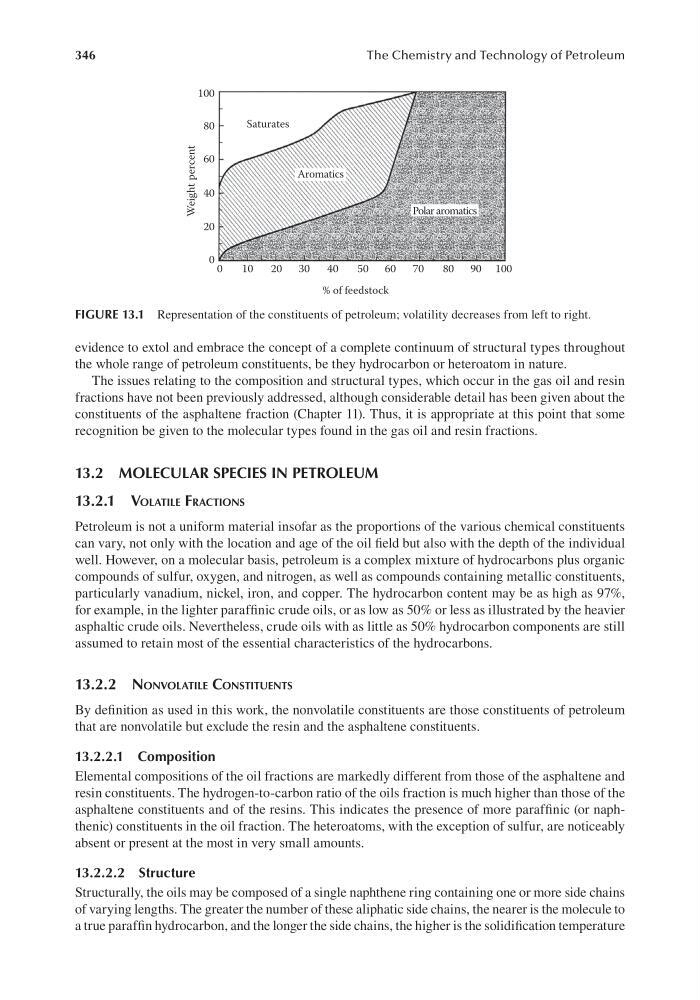
FIGURE 13.1 Representation of the constituents of petroleum; volatility decreases from left to right.
The Chemistry and Technology of Petroleum
evidence to extol and embrace the concept of a complete continuum of structural types throughout
the whole range of petroleum constituents, be they hydrocarbon or heteroatom in nature.
The issues relating to the composition and structural types, which occur in the gas oil and resin
fractions have not been previously addressed, although considerable detail has been given about the
constituents of the asphaltene fraction (Chapter 11). Thus, it is appropriate at this point that some
recognition be given to the molecular types found in the gas oil and resin fractions.
13.2 MOLECULAR SPECIES IN PETROLEUM
13.2.1 volAtIle FrACtIons
Petroleum is not a uniform material insofar as the proportions of the various chemical constituents
can vary, not only with the location and age of the oil field but also with the depth of the individual
well. However, on a molecular basis, petroleum is a complex mixture of hydrocarbons plus organic
compounds of sulfur, oxygen, and nitrogen, as well as compounds containing metallic constituents,
particularly vanadium, nickel, iron, and copper. The hydrocarbon content may be as high as 97%,
for example, in the lighter paraffinic crude oils, or as low as 50% or less as illustrated by the heavier
asphaltic crude oils. Nevertheless, crude oils with as little as 50% hydrocarbon components are still
assumed to retain most of the essential characteristics of the hydrocarbons.
13.2.2 nonvolAtIle ConstItuents
By definition as used in this work, the nonvolatile constituents are those constituents of petroleum
that are nonvolatile but exclude the resin and the asphaltene constituents.
13.2.2.1 Composition
Elemental compositions of the oil fractions are markedly different from those of the asphaltene and
resin constituents. The hydrogen-to-carbon ratio of the oils fraction is much higher than those of the
asphaltene constituents and of the resins. This indicates the presence of more paraffinic (or naphthenic) constituents in the oil fraction. The heteroatoms, with the exception of sulfur, are noticeably
absent or present at the most in very small amounts.
13.2.2.2 Structure
Structurally, the oils may be composed of a single naphthene ring containing one or more side chains
of varying lengths. The greater the number of these aliphatic side chains, the nearer is the molecule to
a true paraffin hydrocarbon, and the longer the side chains, the higher is the solidification temperature
0 0
10
100
80
60
40
20
Saturates
Weight percent
20
Aromatics
Polar aromatics
30
40
50 60
70
80 90 100
% of feedstock
FIGURE 13.1 Representation of the constituents of petroleum; volatility decreases from left to right.