

284
The Chemistry and Technology of Petroleum
1000
750
500
250
0
0
2 5
5 0
Atmospheric distillation
Vacuum distillation
Boiling point, °C
Arbitrary FBP
Distillation
Empirical methods
Positive
identification
Molecular design
of constituents
75
100
Cumulative weight percent
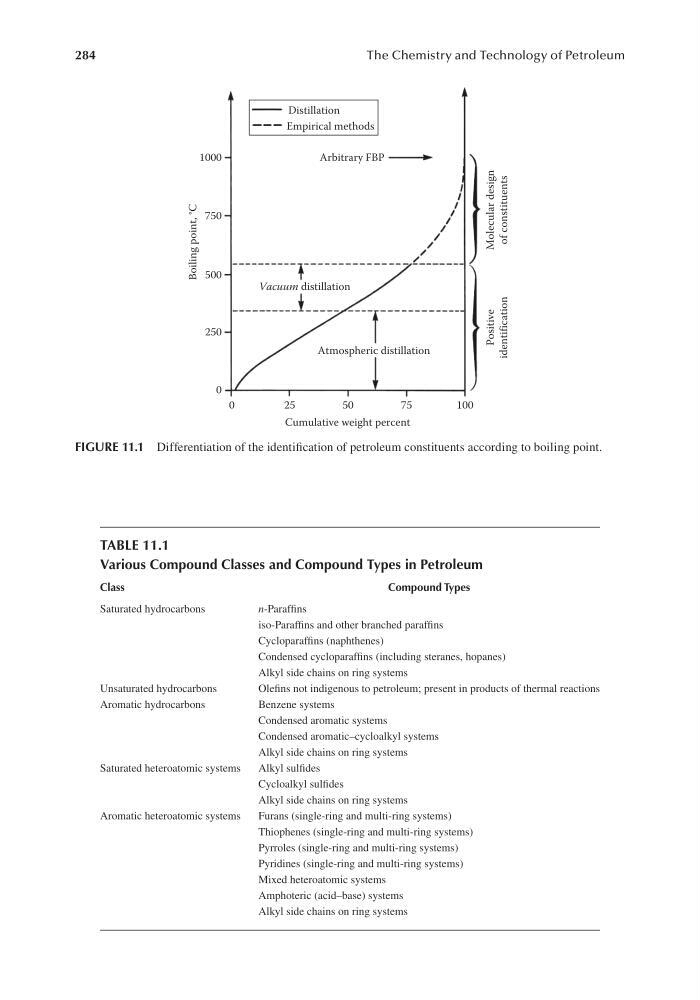
FIGURE 11.1 Differentiation of the identification of petroleum constituents according to boiling point.
TABLE 11.1
Various Compound Classes and Compound Types in Petroleum
Class
Compound Types
Saturated hydrocarbons
n-Paraffins
iso-Paraffins and other branched paraffins
Cycloparaffins (naphthenes)
Condensed cycloparaffins (including steranes, hopanes)
Alkyl side chains on ring systems
Unsaturated hydrocarbons
Olefins not indigenous to petroleum; present in products of thermal reactions
Aromatic hydrocarbons
Benzene systems
Condensed aromatic systems
Condensed aromatic–cycloalkyl systems
Alkyl side chains on ring systems
Saturated heteroatomic systems
Alkyl sulfides
Cycloalkyl sulfides
Alkyl side chains on ring systems
Aromatic heteroatomic systems
Furans (single-ring and multi-ring systems)
Thiophenes (single-ring and multi-ring systems)
Pyrroles (single-ring and multi-ring systems)
Pyridines (single-ring and multi-ring systems)
Mixed heteroatomic systems
Amphoteric (acid–base) systems
Alkyl side chains on ring systems
The Chemistry and Technology of Petroleum
1000
750
500
250
0
0
2 5
5 0
Atmospheric distillation
Vacuum distillation
Boiling point, °C
Arbitrary FBP
Distillation
Empirical methods
Positive
identification
Molecular design
of constituents
75
100
Cumulative weight percent
FIGURE 11.1 Differentiation of the identification of petroleum constituents according to boiling point.
TABLE 11.1
Various Compound Classes and Compound Types in Petroleum
Class
Compound Types
Saturated hydrocarbons
n-Paraffins
iso-Paraffins and other branched paraffins
Cycloparaffins (naphthenes)
Condensed cycloparaffins (including steranes, hopanes)
Alkyl side chains on ring systems
Unsaturated hydrocarbons
Olefins not indigenous to petroleum; present in products of thermal reactions
Aromatic hydrocarbons
Benzene systems
Condensed aromatic systems
Condensed aromatic–cycloalkyl systems
Alkyl side chains on ring systems
Saturated heteroatomic systems
Alkyl sulfides
Cycloalkyl sulfides
Alkyl side chains on ring systems
Aromatic heteroatomic systems
Furans (single-ring and multi-ring systems)
Thiophenes (single-ring and multi-ring systems)
Pyrroles (single-ring and multi-ring systems)
Pyridines (single-ring and multi-ring systems)
Mixed heteroatomic systems
Amphoteric (acid–base) systems
Alkyl side chains on ring systems