

212
The Chemistry and Technology of Petroleum
Chemical fractionation is often but not always successful because of the complex nature of crude
oil. This may result in unprovoked chemical reactions that have an adverse affect on the fractionation and the resulting data. Indeed, caution is advised when using methods that involve chemical
separation of the constituents.
The order in which the several fractionation methods are used is determined not only by the
nature and/or composition of the crude oil but also by the effectiveness of a particular process and
its compatibility with the other separation procedures to be employed. Thus, although there are
wide variations in the nature of crude oil (Chapters 1 and 2), there have been many attempts to
devise standard methods of petroleum fractionation. However, the various laboratories are inclined
to adhere firmly to, and promote, their own particular methods. Recognition that no one particular
method may satisfy all the requirements of petroleum fractionation is the first step in any fractionation study. This is due, in the main part, to the complexity of petroleum not only from the
distribution of the hydrocarbon species (Chapter 8) but also from the distribution of the heteroatom
(nitrogen, oxygen, and sulfur) species (Chapter 9).
It is the purpose of this chapter to present an overview of those methods that have been applied to
the separation of petroleum. This leads to an understanding of not only the separation of petroleum
but also the character of petroleum. Both factors bear a very strong relationship to the processability
of petroleum (van Nes and van Westen, 1951; Traxler, 1961).
9.2 DISTILLATION
Distillation is a means of separating chemical compounds (usually liquids) through differences in
their vapor pressures. The theory of distillation has occupied several large texts and is discussed
only briefly here (Halvorsen and Skogestad, 2000; Petyluk, 2004; Lei et al., 2005).
Simple distillation is effective only when separating a volatile liquid from a nonvolatile substance
or when separating two liquids that differ in boiling point by 50°C or more. If the liquids comprising
the mixture that is being distilled have boiling points that are closer than 50°C to one another, the
distillate collected will be richer in the more volatile compound but not to the degree necessary for
complete separation of the individual compounds. Thus, in the mixture, the components evaporate
n-Heptane
Feedstock
Insolubles
Insolubles
Asphaltenes
Carbon disulfide
or pyridine
Deasphaltened
oil
Benzene or
toluene
Silica or
alumina
3. Benzenemethanol
2. Benzene or 1. Heptane
Saturates
Aromatics
Resins
(polars)
Carbenes
(solubles)
Carboids
(insolubles)
toluene
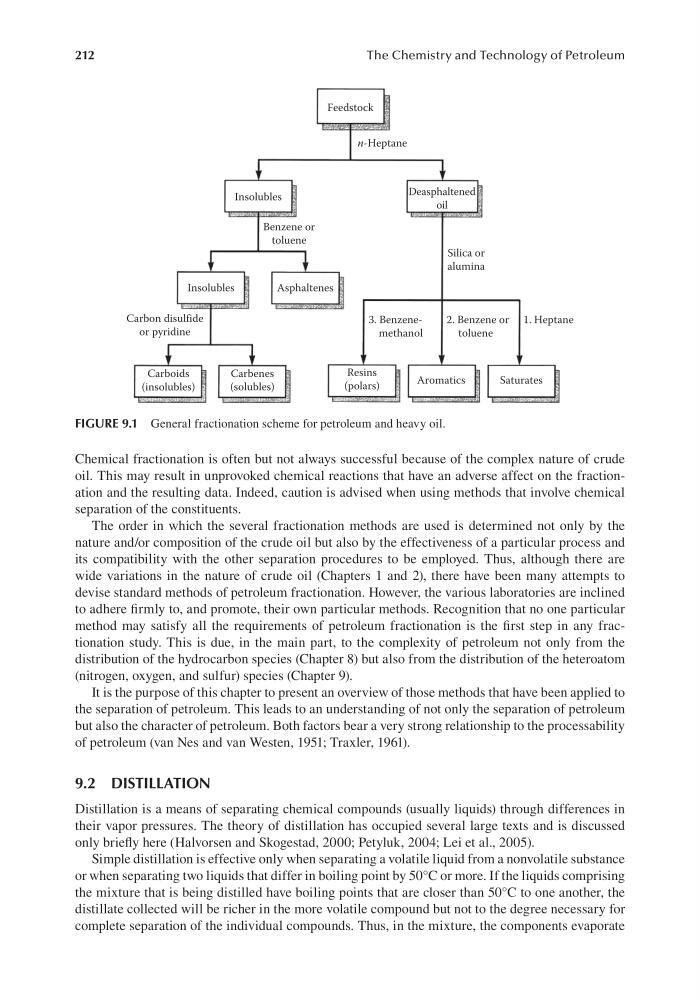
FIGURE 9.1 General fractionation scheme for petroleum and heavy oil.
The Chemistry and Technology of Petroleum
Chemical fractionation is often but not always successful because of the complex nature of crude
oil. This may result in unprovoked chemical reactions that have an adverse affect on the fractionation and the resulting data. Indeed, caution is advised when using methods that involve chemical
separation of the constituents.
The order in which the several fractionation methods are used is determined not only by the
nature and/or composition of the crude oil but also by the effectiveness of a particular process and
its compatibility with the other separation procedures to be employed. Thus, although there are
wide variations in the nature of crude oil (Chapters 1 and 2), there have been many attempts to
devise standard methods of petroleum fractionation. However, the various laboratories are inclined
to adhere firmly to, and promote, their own particular methods. Recognition that no one particular
method may satisfy all the requirements of petroleum fractionation is the first step in any fractionation study. This is due, in the main part, to the complexity of petroleum not only from the
distribution of the hydrocarbon species (Chapter 8) but also from the distribution of the heteroatom
(nitrogen, oxygen, and sulfur) species (Chapter 9).
It is the purpose of this chapter to present an overview of those methods that have been applied to
the separation of petroleum. This leads to an understanding of not only the separation of petroleum
but also the character of petroleum. Both factors bear a very strong relationship to the processability
of petroleum (van Nes and van Westen, 1951; Traxler, 1961).
9.2 DISTILLATION
Distillation is a means of separating chemical compounds (usually liquids) through differences in
their vapor pressures. The theory of distillation has occupied several large texts and is discussed
only briefly here (Halvorsen and Skogestad, 2000; Petyluk, 2004; Lei et al., 2005).
Simple distillation is effective only when separating a volatile liquid from a nonvolatile substance
or when separating two liquids that differ in boiling point by 50°C or more. If the liquids comprising
the mixture that is being distilled have boiling points that are closer than 50°C to one another, the
distillate collected will be richer in the more volatile compound but not to the degree necessary for
complete separation of the individual compounds. Thus, in the mixture, the components evaporate
n-Heptane
Feedstock
Insolubles
Insolubles
Asphaltenes
Carbon disulfide
or pyridine
Deasphaltened
oil
Benzene or
toluene
Silica or
alumina
3. Benzenemethanol
2. Benzene or 1. Heptane
Saturates
Aromatics
Resins
(polars)
Carbenes
(solubles)
Carboids
(insolubles)
toluene
FIGURE 9.1 General fractionation scheme for petroleum and heavy oil.