

90
The Chemistry and Technology of Petroleum
it may be possible to obtain a detailed overview of oil composition that can be used for process
predictions. Thus, fractionation methods also play a role, along with the physical testing methods,
of evaluating heavy oils and the various recovery processes, especially when determining whether
or not in situ upgrading occurs. For example, by careful selection of an appropriate technique it is
possible to obtain a detailed map of heavy oil that can be used for predictions of behavior (Long and
Speight, 1989, 1998; Speight, 2007 and references cited therein).
After removal of the asphaltene fraction, further fractionation of petroleum is also possible by
variation of the hydrocarbon solvent. For example, liquefied gases, such as propane and butane,
precipitate as much as 50% by weight of the residuum or bitumen. The precipitate is a black, tacky,
semisolid material, in contrast to the pentane-precipitated asphaltenes, which are usually brown,
amorphous solids. Treatment of the propane precipitate with pentane then yields the insoluble
brown, amorphous asphaltenes and soluble, near-black, semisolid resins, which are, as closely as
can be determined, equivalent to the resins isolated by adsorption techniques.
Separation by adsorption chromatography essentially commences with the preparation of a
porous bed of finely divided solid, the adsorbent. The adsorbent is usually contained in an open tube
(column chromatography); the sample is introduced at one end of the adsorbent bed and induced
to flow through the bed by means of a suitable solvent. As the sample moves through the bed the
various components are held (adsorbed) to a greater or lesser extent depending on the chemical
nature of the component. Thus, those molecules that are strongly adsorbed spend considerable time
on the adsorbent surface rather than in the moving (solvent) phase, but components that are slightly
adsorbed move through the bed comparatively rapidly.
There are three standard test methods that provide for the separation of heavy oil into four or
five constituent fractions (Speight, 2001; ASTM D2007). It is interesting to note that as the methods
have evolved there has been a change from the use of pentane (ASTM D2006, ASTM D2007) to
heptane (ASTM D4124) to separate asphaltenes. This is, in fact, in keeping with the production of a
more consistent fraction that represents these higher molecular weight, more complex constituents
of petroleum (Girdler, 1965; Speight et al., 1984, 1985).
Two of the methods (ASTM D2007, ASTM D4124) use adsorbents to fractionate the deasphaltened heavy oil (heavy oil with only the asphaltene fraction removed), but the third method
(ASTM D2006) advocates the use of various grades of sulfuric acid to separate the material into
compound types. Caution is advised in the application of this method since the method does not
work well with all feedstocks. For example, when the sulfuric acid method (ASTM D2006) is
applied to the separation of heavy oil, complex emulsions can be produced.
Obviously, there are precautions that must be taken when attempting to separate heavy oil into
constituent fractions. The disadvantages in using ill-defined adsorbents are that adsorbent performance differs with the same feed and, in certain instances, may even cause chemical and physical modification of the feed constituents. The use of a chemical reactant such as sulfuric acid
should only be advocated with caution since feeds react differently and may even cause irreversible
Detector
response
Pure polynuclear aromatic hydrocarbons,
alkylated polynuclear aromatic hydrocarbons
—OH (e.g., hydroxyquinolines)
—OH (e.g., phenols, acids)
N (e.g., acridines, hydroxyquinolines)
NH (e.g., carbazole)
— —
— — —
Time
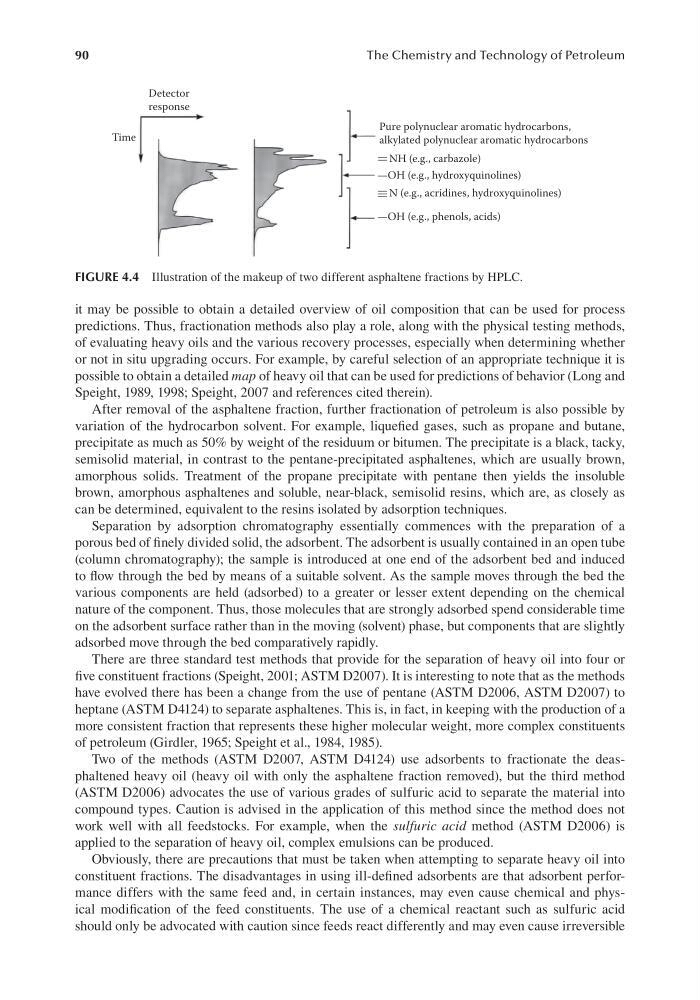
FIGURE 4.4 Illustration of the makeup of two different asphaltene fractions by HPLC.
The Chemistry and Technology of Petroleum
it may be possible to obtain a detailed overview of oil composition that can be used for process
predictions. Thus, fractionation methods also play a role, along with the physical testing methods,
of evaluating heavy oils and the various recovery processes, especially when determining whether
or not in situ upgrading occurs. For example, by careful selection of an appropriate technique it is
possible to obtain a detailed map of heavy oil that can be used for predictions of behavior (Long and
Speight, 1989, 1998; Speight, 2007 and references cited therein).
After removal of the asphaltene fraction, further fractionation of petroleum is also possible by
variation of the hydrocarbon solvent. For example, liquefied gases, such as propane and butane,
precipitate as much as 50% by weight of the residuum or bitumen. The precipitate is a black, tacky,
semisolid material, in contrast to the pentane-precipitated asphaltenes, which are usually brown,
amorphous solids. Treatment of the propane precipitate with pentane then yields the insoluble
brown, amorphous asphaltenes and soluble, near-black, semisolid resins, which are, as closely as
can be determined, equivalent to the resins isolated by adsorption techniques.
Separation by adsorption chromatography essentially commences with the preparation of a
porous bed of finely divided solid, the adsorbent. The adsorbent is usually contained in an open tube
(column chromatography); the sample is introduced at one end of the adsorbent bed and induced
to flow through the bed by means of a suitable solvent. As the sample moves through the bed the
various components are held (adsorbed) to a greater or lesser extent depending on the chemical
nature of the component. Thus, those molecules that are strongly adsorbed spend considerable time
on the adsorbent surface rather than in the moving (solvent) phase, but components that are slightly
adsorbed move through the bed comparatively rapidly.
There are three standard test methods that provide for the separation of heavy oil into four or
five constituent fractions (Speight, 2001; ASTM D2007). It is interesting to note that as the methods
have evolved there has been a change from the use of pentane (ASTM D2006, ASTM D2007) to
heptane (ASTM D4124) to separate asphaltenes. This is, in fact, in keeping with the production of a
more consistent fraction that represents these higher molecular weight, more complex constituents
of petroleum (Girdler, 1965; Speight et al., 1984, 1985).
Two of the methods (ASTM D2007, ASTM D4124) use adsorbents to fractionate the deasphaltened heavy oil (heavy oil with only the asphaltene fraction removed), but the third method
(ASTM D2006) advocates the use of various grades of sulfuric acid to separate the material into
compound types. Caution is advised in the application of this method since the method does not
work well with all feedstocks. For example, when the sulfuric acid method (ASTM D2006) is
applied to the separation of heavy oil, complex emulsions can be produced.
Obviously, there are precautions that must be taken when attempting to separate heavy oil into
constituent fractions. The disadvantages in using ill-defined adsorbents are that adsorbent performance differs with the same feed and, in certain instances, may even cause chemical and physical modification of the feed constituents. The use of a chemical reactant such as sulfuric acid
should only be advocated with caution since feeds react differently and may even cause irreversible
Detector
response
Pure polynuclear aromatic hydrocarbons,
alkylated polynuclear aromatic hydrocarbons
—OH (e.g., hydroxyquinolines)
—OH (e.g., phenols, acids)
N (e.g., acridines, hydroxyquinolines)
NH (e.g., carbazole)
— —
— — —
Time
FIGURE 4.4 Illustration of the makeup of two different asphaltene fractions by HPLC.