

88
The Chemistry and Technology of Petroleum
When pentane and the lower molecular weight hydrocarbon solvents are used in large excess, the
quantity and the composition of the precipitate change with increasing temperature (Mitchell and
Speight, 1973). At ambient temperature, the quantity of precipitate first increases with increasing
ratio of solvent to feedstock and then reaches a maximum. In fact, for many heavy oils, there are
indications that when the proportion of solvent in the mix is <35%, little or no asphaltene constituents are precipitated.
Contact time between the hydrocarbon and the feedstock also plays an important role in asphaltene separation. Yields of the asphaltenes reach a maximum after approximately 8 h, which may be
ascribed to the time required for the asphaltene particles to agglomerate into particles of a filterable
size as well as the diffusion-controlled nature of the process. Heavier feedstocks also need time for
the hydrocarbon to penetrate their mass.
For example, if the precipitation method (deasphalting) involves the use of solvent and heavy oil,
it is essentially a leaching of the soluble constituents from the insoluble constituents and may be
referred to as extraction. However, under the prevailing conditions now in laboratory use, the term
precipitation is perhaps more correct and descriptive of the method. Variation of solvent type also
causes significant changes in asphaltene yield. Thus, the contact time between the feedstock and
the hydrocarbon liquid can have an important influence on the yield and character of the asphaltene
fraction.
At this point, a mention of the phase behavior of asphaltenes and fluids containing asphaltenes
is worthwhile.
The phase behavior of fluid containing asphaltenes is complex. Chemically, asphaltenes are difficult to define in general, and the physics and chemistry underlying the definition of this fraction is
not open to debate; the fraction is a solubility fraction and is, in reality, an artifact of the separation
method (Speight, 2007). In fact, asphaltene fractions possessing similar constituents may exhibit
different properties in their native fluids and in solvent/nonsolvent mixtures. Asphaltene constituents intra-act and interact with one another and with solvent media (Speight, 2007). Phase behavior
and precipitation models must capture the relevant physics and chemistry if derived models are to be
truly predictive. But the issue is the use of average parameters rather than the recognition that the
asphaltene fraction is collection of different molecular types (Figure 4.2), which vary from crude
n-Heptane
Feedstock
Insolubles
Insolubles
Asphaltenes
Carbon disulfide
or pyridine
Deasphaltened
oil
Benzene or
toluene
Silica or
alumina
3. Benzenemethanol
2. Benzene or 1. Heptane
Saturates
Aromatics
Resins
(polars)
Carbenes
(solubles)
Carboids
(insolubles)
toluene
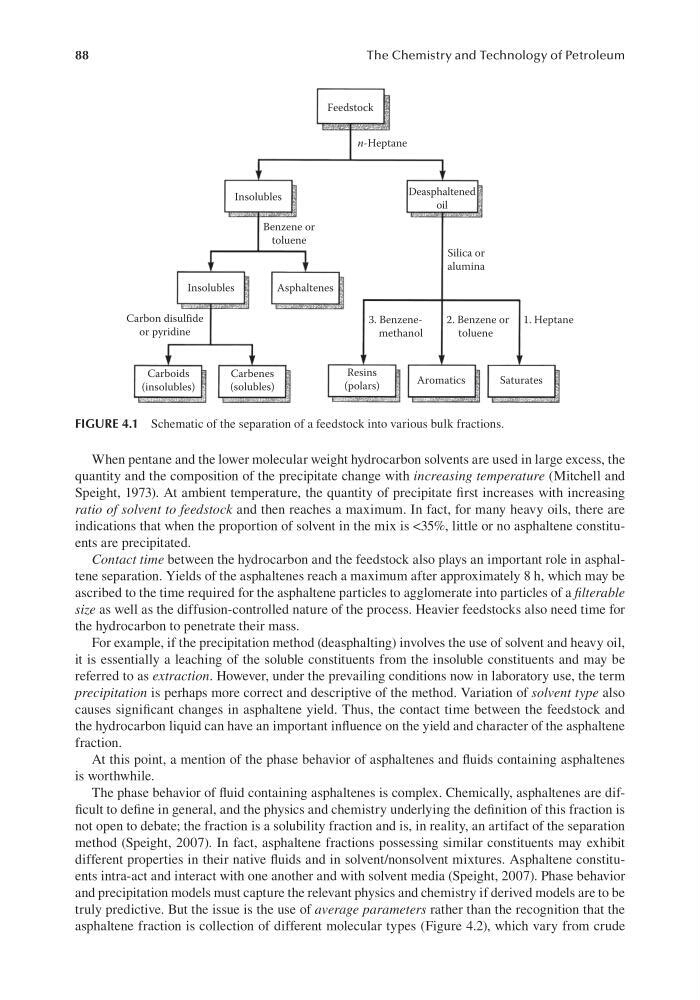
FIGURE 4.1 Schematic of the separation of a feedstock into various bulk fractions.
The Chemistry and Technology of Petroleum
When pentane and the lower molecular weight hydrocarbon solvents are used in large excess, the
quantity and the composition of the precipitate change with increasing temperature (Mitchell and
Speight, 1973). At ambient temperature, the quantity of precipitate first increases with increasing
ratio of solvent to feedstock and then reaches a maximum. In fact, for many heavy oils, there are
indications that when the proportion of solvent in the mix is <35%, little or no asphaltene constituents are precipitated.
Contact time between the hydrocarbon and the feedstock also plays an important role in asphaltene separation. Yields of the asphaltenes reach a maximum after approximately 8 h, which may be
ascribed to the time required for the asphaltene particles to agglomerate into particles of a filterable
size as well as the diffusion-controlled nature of the process. Heavier feedstocks also need time for
the hydrocarbon to penetrate their mass.
For example, if the precipitation method (deasphalting) involves the use of solvent and heavy oil,
it is essentially a leaching of the soluble constituents from the insoluble constituents and may be
referred to as extraction. However, under the prevailing conditions now in laboratory use, the term
precipitation is perhaps more correct and descriptive of the method. Variation of solvent type also
causes significant changes in asphaltene yield. Thus, the contact time between the feedstock and
the hydrocarbon liquid can have an important influence on the yield and character of the asphaltene
fraction.
At this point, a mention of the phase behavior of asphaltenes and fluids containing asphaltenes
is worthwhile.
The phase behavior of fluid containing asphaltenes is complex. Chemically, asphaltenes are difficult to define in general, and the physics and chemistry underlying the definition of this fraction is
not open to debate; the fraction is a solubility fraction and is, in reality, an artifact of the separation
method (Speight, 2007). In fact, asphaltene fractions possessing similar constituents may exhibit
different properties in their native fluids and in solvent/nonsolvent mixtures. Asphaltene constituents intra-act and interact with one another and with solvent media (Speight, 2007). Phase behavior
and precipitation models must capture the relevant physics and chemistry if derived models are to be
truly predictive. But the issue is the use of average parameters rather than the recognition that the
asphaltene fraction is collection of different molecular types (Figure 4.2), which vary from crude
n-Heptane
Feedstock
Insolubles
Insolubles
Asphaltenes
Carbon disulfide
or pyridine
Deasphaltened
oil
Benzene or
toluene
Silica or
alumina
3. Benzenemethanol
2. Benzene or 1. Heptane
Saturates
Aromatics
Resins
(polars)
Carbenes
(solubles)
Carboids
(insolubles)
toluene
FIGURE 4.1 Schematic of the separation of a feedstock into various bulk fractions.