

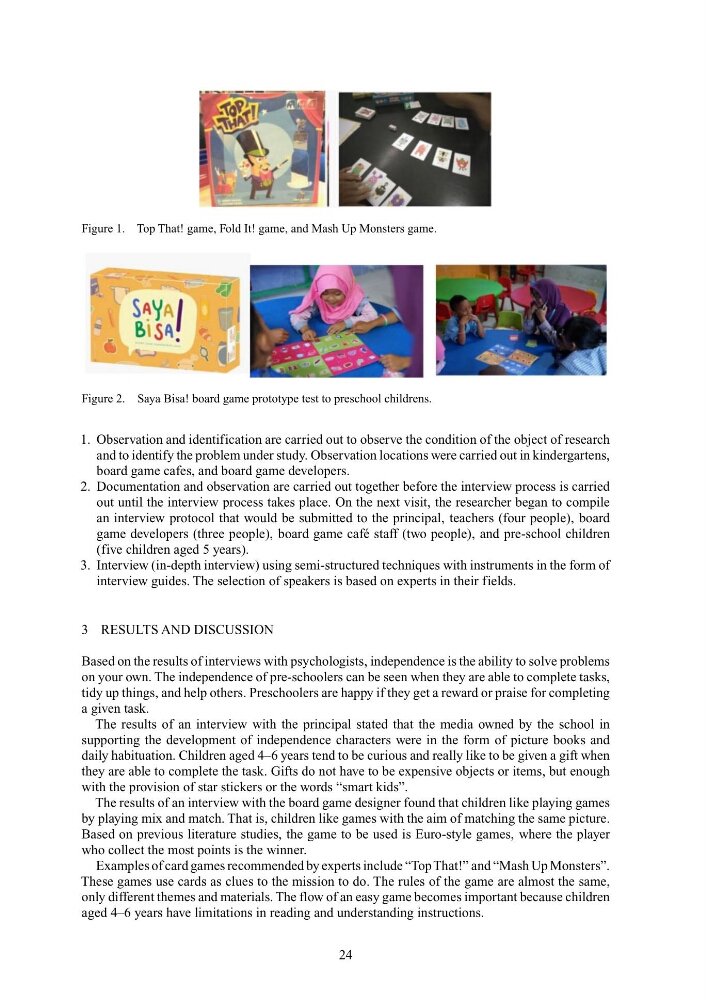
Figure 1. Top That! game, Fold It! game, and Mash Up Monsters game.
Figure 2. Saya Bisa! board game prototype test to preschool childrens.
1. Observation and identification are carried out to observe the condition of the object of research
and to identify the problem under study. Observation locations were carried out in kindergartens,
board game cafes, and board game developers.
2. Documentation and observation are carried out together before the interview process is carried
out until the interview process takes place. On the next visit, the researcher began to compile
an interview protocol that would be submitted to the principal, teachers (four people), board
game developers (three people), board game café staff (two people), and pre-school children
(five children aged 5 years).
3. Interview (in-depth interview) using semi-structured techniques with instruments in the form of
interview guides. The selection of speakers is based on experts in their fields.
3 RESULTS AND DISCUSSION
Based on the results of interviews with psychologists, independence is the ability to solve problems
on your own. The independence of pre-schoolers can be seen when they are able to complete tasks,
tidy up things, and help others. Preschoolers are happy if they get a reward or praise for completing
a given task.
The results of an interview with the principal stated that the media owned by the school in
supporting the development of independence characters were in the form of picture books and
daily habituation. Children aged 4–6 years tend to be curious and really like to be given a gift when
they are able to complete the task. Gifts do not have to be expensive objects or items, but enough
with the provision of star stickers or the words “smart kids”.
The results of an interview with the board game designer found that children like playing games
by playing mix and match. That is, children like games with the aim of matching the same picture.
Based on previous literature studies, the game to be used is Euro-style games, where the player
who collect the most points is the winner.
Examples of card games recommended by experts include “Top That!” and “Mash Up Monsters”.
These games use cards as clues to the mission to do. The rules of the game are almost the same,
only different themes and materials. The flow of an easy game becomes important because children
aged 4–6 years have limitations in reading and understanding instructions.
24
Figure 2. Saya Bisa! board game prototype test to preschool childrens.
1. Observation and identification are carried out to observe the condition of the object of research
and to identify the problem under study. Observation locations were carried out in kindergartens,
board game cafes, and board game developers.
2. Documentation and observation are carried out together before the interview process is carried
out until the interview process takes place. On the next visit, the researcher began to compile
an interview protocol that would be submitted to the principal, teachers (four people), board
game developers (three people), board game café staff (two people), and pre-school children
(five children aged 5 years).
3. Interview (in-depth interview) using semi-structured techniques with instruments in the form of
interview guides. The selection of speakers is based on experts in their fields.
3 RESULTS AND DISCUSSION
Based on the results of interviews with psychologists, independence is the ability to solve problems
on your own. The independence of pre-schoolers can be seen when they are able to complete tasks,
tidy up things, and help others. Preschoolers are happy if they get a reward or praise for completing
a given task.
The results of an interview with the principal stated that the media owned by the school in
supporting the development of independence characters were in the form of picture books and
daily habituation. Children aged 4–6 years tend to be curious and really like to be given a gift when
they are able to complete the task. Gifts do not have to be expensive objects or items, but enough
with the provision of star stickers or the words “smart kids”.
The results of an interview with the board game designer found that children like playing games
by playing mix and match. That is, children like games with the aim of matching the same picture.
Based on previous literature studies, the game to be used is Euro-style games, where the player
who collect the most points is the winner.
Examples of card games recommended by experts include “Top That!” and “Mash Up Monsters”.
These games use cards as clues to the mission to do. The rules of the game are almost the same,
only different themes and materials. The flow of an easy game becomes important because children
aged 4–6 years have limitations in reading and understanding instructions.
24