

Table 1. Triangulation of digital skills based on data collection techniques.
Interview
Observation
Documentation
Cellphones and social media are
not only a lifestyle but a necessity for adolescents. Social media
is a means of actualization and selfexpression for teenagers.
Teens are often caught accessing social media and lifestyle
websites, rather than looking
for study materials.
The results showed that children
aged 11–15 years have an instant
mindset, depend on technology,
and seek popularity through social
media channels.
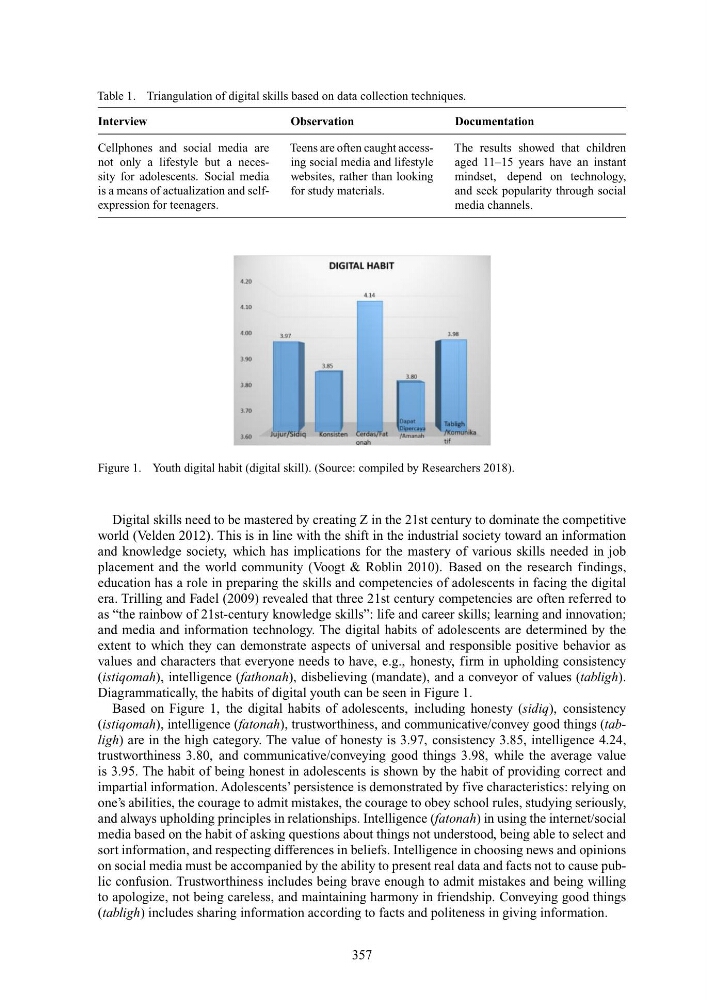
Figure 1. Youth digital habit (digital skill). (Source: compiled by Researchers 2018).
Digital skills need to be mastered by creating Z in the 21st century to dominate the competitive
world (Velden 2012). This is in line with the shift in the industrial society toward an information
and knowledge society, which has implications for the mastery of various skills needed in job
placement and the world community (Voogt & Roblin 2010). Based on the research findings,
education has a role in preparing the skills and competencies of adolescents in facing the digital
era. Trilling and Fadel (2009) revealed that three 21st century competencies are often referred to
as “the rainbow of 21st-century knowledge skills”: life and career skills; learning and innovation;
and media and information technology. The digital habits of adolescents are determined by the
extent to which they can demonstrate aspects of universal and responsible positive behavior as
values and characters that everyone needs to have, e.g., honesty, firm in upholding consistency
(istiqomah), intelligence (fathonah), disbelieving (mandate), and a conveyor of values (tabligh).
Diagrammatically, the habits of digital youth can be seen in Figure 1.
Based on Figure 1, the digital habits of adolescents, including honesty (sidiq), consistency
(istiqomah), intelligence (fatonah), trustworthiness, and communicative/convey good things (tabligh) are in the high category. The value of honesty is 3.97, consistency 3.85, intelligence 4.24,
trustworthiness 3.80, and communicative/conveying good things 3.98, while the average value
is 3.95. The habit of being honest in adolescents is shown by the habit of providing correct and
impartial information. Adolescents’ persistence is demonstrated by five characteristics: relying on
one’s abilities, the courage to admit mistakes, the courage to obey school rules, studying seriously,
and always upholding principles in relationships. Intelligence (fatonah) in using the internet/social
media based on the habit of asking questions about things not understood, being able to select and
sort information, and respecting differences in beliefs. Intelligence in choosing news and opinions
on social media must be accompanied by the ability to present real data and facts not to cause public confusion. Trustworthiness includes being brave enough to admit mistakes and being willing
to apologize, not being careless, and maintaining harmony in friendship. Conveying good things
(tabligh) includes sharing information according to facts and politeness in giving information.
357
Interview
Observation
Documentation
Cellphones and social media are
not only a lifestyle but a necessity for adolescents. Social media
is a means of actualization and selfexpression for teenagers.
Teens are often caught accessing social media and lifestyle
websites, rather than looking
for study materials.
The results showed that children
aged 11–15 years have an instant
mindset, depend on technology,
and seek popularity through social
media channels.
Figure 1. Youth digital habit (digital skill). (Source: compiled by Researchers 2018).
Digital skills need to be mastered by creating Z in the 21st century to dominate the competitive
world (Velden 2012). This is in line with the shift in the industrial society toward an information
and knowledge society, which has implications for the mastery of various skills needed in job
placement and the world community (Voogt & Roblin 2010). Based on the research findings,
education has a role in preparing the skills and competencies of adolescents in facing the digital
era. Trilling and Fadel (2009) revealed that three 21st century competencies are often referred to
as “the rainbow of 21st-century knowledge skills”: life and career skills; learning and innovation;
and media and information technology. The digital habits of adolescents are determined by the
extent to which they can demonstrate aspects of universal and responsible positive behavior as
values and characters that everyone needs to have, e.g., honesty, firm in upholding consistency
(istiqomah), intelligence (fathonah), disbelieving (mandate), and a conveyor of values (tabligh).
Diagrammatically, the habits of digital youth can be seen in Figure 1.
Based on Figure 1, the digital habits of adolescents, including honesty (sidiq), consistency
(istiqomah), intelligence (fatonah), trustworthiness, and communicative/convey good things (tabligh) are in the high category. The value of honesty is 3.97, consistency 3.85, intelligence 4.24,
trustworthiness 3.80, and communicative/conveying good things 3.98, while the average value
is 3.95. The habit of being honest in adolescents is shown by the habit of providing correct and
impartial information. Adolescents’ persistence is demonstrated by five characteristics: relying on
one’s abilities, the courage to admit mistakes, the courage to obey school rules, studying seriously,
and always upholding principles in relationships. Intelligence (fatonah) in using the internet/social
media based on the habit of asking questions about things not understood, being able to select and
sort information, and respecting differences in beliefs. Intelligence in choosing news and opinions
on social media must be accompanied by the ability to present real data and facts not to cause public confusion. Trustworthiness includes being brave enough to admit mistakes and being willing
to apologize, not being careless, and maintaining harmony in friendship. Conveying good things
(tabligh) includes sharing information according to facts and politeness in giving information.
357