

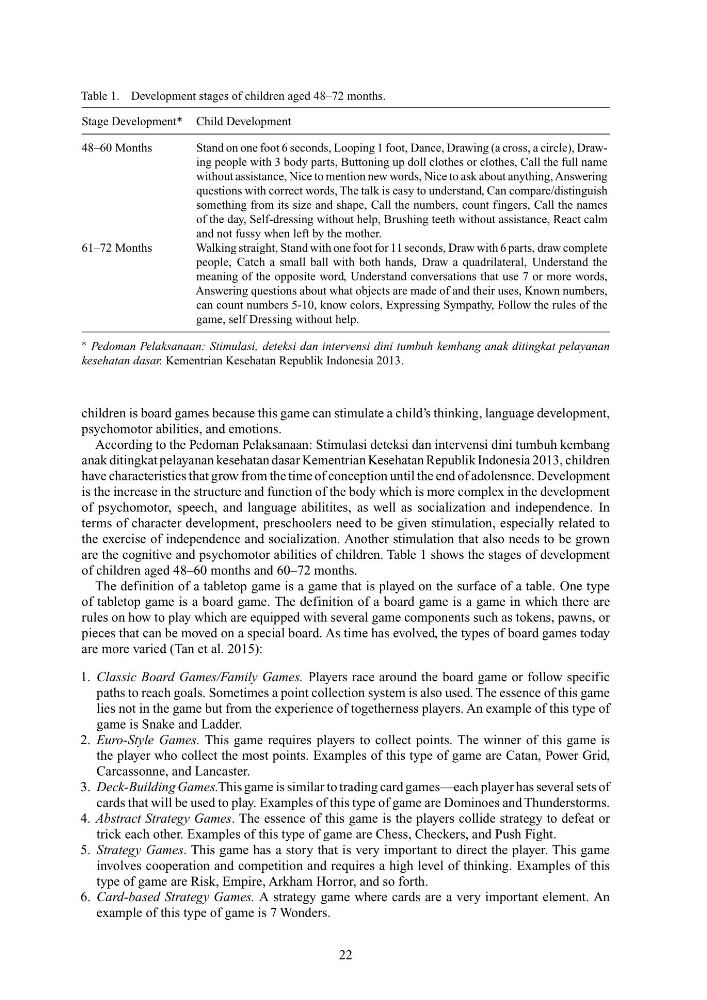
Table 1. Development stages of children aged 48–72 months.
Stage Development* Child Development
48–60 Months
Stand on one foot 6 seconds, Looping 1 foot, Dance, Drawing (a cross, a circle), Drawing people with 3 body parts, Buttoning up doll clothes or clothes, Call the full name
without assistance, Nice to mention new words, Nice to ask about anything, Answering
questions with correct words, The talk is easy to understand, Can compare/distinguish
something from its size and shape, Call the numbers, count fingers, Call the names
of the day, Self-dressing without help, Brushing teeth without assistance, React calm
and not fussy when left by the mother.
61–72 Months
Walking straight, Stand with one foot for 11 seconds, Draw with 6 parts, draw complete
people, Catch a small ball with both hands, Draw a quadrilateral, Understand the
meaning of the opposite word, Understand conversations that use 7 or more words,
Answering questions about what objects are made of and their uses, Known numbers,
can count numbers 5-10, know colors, Expressing Sympathy, Follow the rules of the
game, self Dressing without help.
∗ Pedoman Pelaksanaan: Stimulasi, deteksi dan intervensi dini tumbuh kembang anak ditingkat pelayanan
kesehatan dasar. Kementrian Kesehatan Republik Indonesia 2013.
children is board games because this game can stimulate a child’s thinking, language development,
psychomotor abilities, and emotions.
According to the Pedoman Pelaksanaan: Stimulasi deteksi dan intervensi dini tumbuh kembang
anak ditingkat pelayanan kesehatan dasar Kementrian Kesehatan Republik Indonesia 2013, children
have characteristics that grow from the time of conception until the end of adolensnce. Development
is the increase in the structure and function of the body which is more complex in the development
of psychomotor, speech, and language abilitites, as well as socialization and independence. In
terms of character development, preschoolers need to be given stimulation, especially related to
the exercise of independence and socialization. Another stimulation that also needs to be grown
are the cognitive and psychomotor abilities of children. Table 1 shows the stages of development
of children aged 48–60 months and 60–72 months.
The definition of a tabletop game is a game that is played on the surface of a table. One type
of tabletop game is a board game. The definition of a board game is a game in which there are
rules on how to play which are equipped with several game components such as tokens, pawns, or
pieces that can be moved on a special board. As time has evolved, the types of board games today
are more varied (Tan et al. 2015):
1. Classic Board Games/Family Games. Players race around the board game or follow specific
paths to reach goals. Sometimes a point collection system is also used. The essence of this game
lies not in the game but from the experience of togetherness players. An example of this type of
game is Snake and Ladder.
2. Euro-Style Games. This game requires players to collect points. The winner of this game is
the player who collect the most points. Examples of this type of game are Catan, Power Grid,
Carcassonne, and Lancaster.
3. Deck-Building Games.This game is similar to trading card games—each player has several sets of
cards that will be used to play. Examples of this type of game are Dominoes and Thunderstorms.
4. Abstract Strategy Games. The essence of this game is the players collide strategy to defeat or
trick each other. Examples of this type of game are Chess, Checkers, and Push Fight.
5. Strategy Games. This game has a story that is very important to direct the player. This game
involves cooperation and competition and requires a high level of thinking. Examples of this
type of game are Risk, Empire, Arkham Horror, and so forth.
6. Card-based Strategy Games. A strategy game where cards are a very important element. An
example of this type of game is 7 Wonders.
22
Stage Development* Child Development
48–60 Months
Stand on one foot 6 seconds, Looping 1 foot, Dance, Drawing (a cross, a circle), Drawing people with 3 body parts, Buttoning up doll clothes or clothes, Call the full name
without assistance, Nice to mention new words, Nice to ask about anything, Answering
questions with correct words, The talk is easy to understand, Can compare/distinguish
something from its size and shape, Call the numbers, count fingers, Call the names
of the day, Self-dressing without help, Brushing teeth without assistance, React calm
and not fussy when left by the mother.
61–72 Months
Walking straight, Stand with one foot for 11 seconds, Draw with 6 parts, draw complete
people, Catch a small ball with both hands, Draw a quadrilateral, Understand the
meaning of the opposite word, Understand conversations that use 7 or more words,
Answering questions about what objects are made of and their uses, Known numbers,
can count numbers 5-10, know colors, Expressing Sympathy, Follow the rules of the
game, self Dressing without help.
∗ Pedoman Pelaksanaan: Stimulasi, deteksi dan intervensi dini tumbuh kembang anak ditingkat pelayanan
kesehatan dasar. Kementrian Kesehatan Republik Indonesia 2013.
children is board games because this game can stimulate a child’s thinking, language development,
psychomotor abilities, and emotions.
According to the Pedoman Pelaksanaan: Stimulasi deteksi dan intervensi dini tumbuh kembang
anak ditingkat pelayanan kesehatan dasar Kementrian Kesehatan Republik Indonesia 2013, children
have characteristics that grow from the time of conception until the end of adolensnce. Development
is the increase in the structure and function of the body which is more complex in the development
of psychomotor, speech, and language abilitites, as well as socialization and independence. In
terms of character development, preschoolers need to be given stimulation, especially related to
the exercise of independence and socialization. Another stimulation that also needs to be grown
are the cognitive and psychomotor abilities of children. Table 1 shows the stages of development
of children aged 48–60 months and 60–72 months.
The definition of a tabletop game is a game that is played on the surface of a table. One type
of tabletop game is a board game. The definition of a board game is a game in which there are
rules on how to play which are equipped with several game components such as tokens, pawns, or
pieces that can be moved on a special board. As time has evolved, the types of board games today
are more varied (Tan et al. 2015):
1. Classic Board Games/Family Games. Players race around the board game or follow specific
paths to reach goals. Sometimes a point collection system is also used. The essence of this game
lies not in the game but from the experience of togetherness players. An example of this type of
game is Snake and Ladder.
2. Euro-Style Games. This game requires players to collect points. The winner of this game is
the player who collect the most points. Examples of this type of game are Catan, Power Grid,
Carcassonne, and Lancaster.
3. Deck-Building Games.This game is similar to trading card games—each player has several sets of
cards that will be used to play. Examples of this type of game are Dominoes and Thunderstorms.
4. Abstract Strategy Games. The essence of this game is the players collide strategy to defeat or
trick each other. Examples of this type of game are Chess, Checkers, and Push Fight.
5. Strategy Games. This game has a story that is very important to direct the player. This game
involves cooperation and competition and requires a high level of thinking. Examples of this
type of game are Risk, Empire, Arkham Horror, and so forth.
6. Card-based Strategy Games. A strategy game where cards are a very important element. An
example of this type of game is 7 Wonders.
22