

Figure 4. Kujang monument, Google street view 2019.
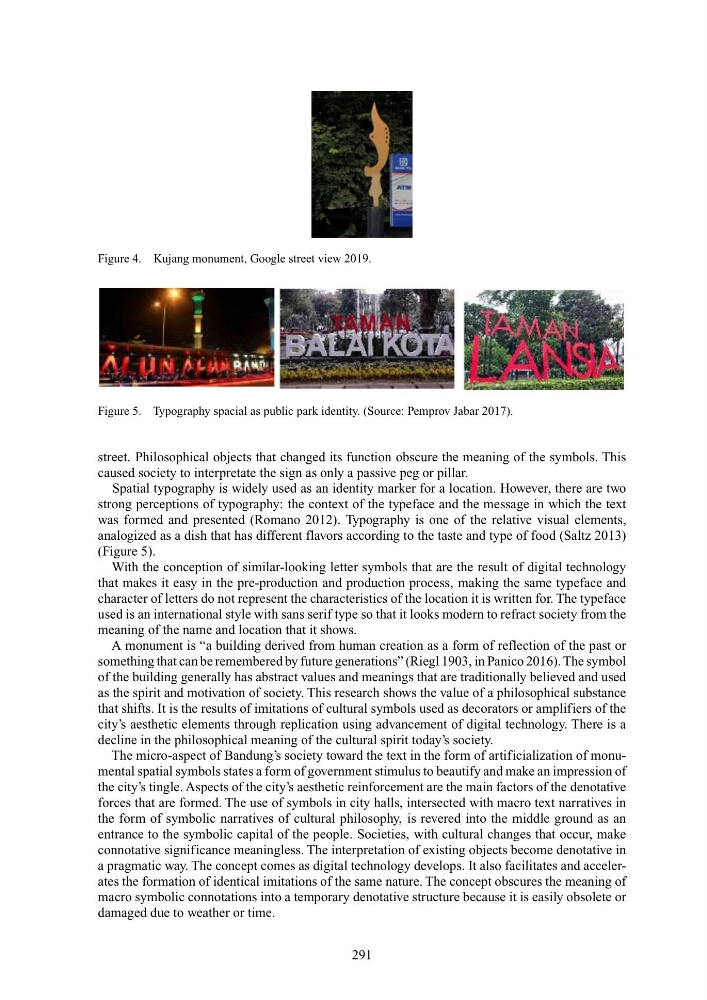
Figure 5. Typography spacial as public park identity. (Source: Pemprov Jabar 2017).
street. Philosophical objects that changed its function obscure the meaning of the symbols. This
caused society to interpretate the sign as only a passive peg or pillar.
Spatial typography is widely used as an identity marker for a location. However, there are two
strong perceptions of typography: the context of the typeface and the message in which the text
was formed and presented (Romano 2012). Typography is one of the relative visual elements,
analogized as a dish that has different flavors according to the taste and type of food (Saltz 2013)
(Figure 5).
With the conception of similar-looking letter symbols that are the result of digital technology
that makes it easy in the pre-production and production process, making the same typeface and
character of letters do not represent the characteristics of the location it is written for. The typeface
used is an international style with sans serif type so that it looks modern to refract society from the
meaning of the name and location that it shows.
A monument is “a building derived from human creation as a form of reflection of the past or
something that can be remembered by future generations” (Riegl 1903, in Panico 2016). The symbol
of the building generally has abstract values and meanings that are traditionally believed and used
as the spirit and motivation of society. This research shows the value of a philosophical substance
that shifts. It is the results of imitations of cultural symbols used as decorators or amplifiers of the
city’s aesthetic elements through replication using advancement of digital technology. There is a
decline in the philosophical meaning of the cultural spirit today’s society.
The micro-aspect of Bandung’s society toward the text in the form of artificialization of monumental spatial symbols states a form of government stimulus to beautify and make an impression of
the city’s tingle. Aspects of the city’s aesthetic reinforcement are the main factors of the denotative
forces that are formed. The use of symbols in city halls, intersected with macro text narratives in
the form of symbolic narratives of cultural philosophy, is revered into the middle ground as an
entrance to the symbolic capital of the people. Societies, with cultural changes that occur, make
connotative significance meaningless. The interpretation of existing objects become denotative in
a pragmatic way. The concept comes as digital technology develops. It also facilitates and accelerates the formation of identical imitations of the same nature. The concept obscures the meaning of
macro symbolic connotations into a temporary denotative structure because it is easily obsolete or
damaged due to weather or time.
291
Figure 5. Typography spacial as public park identity. (Source: Pemprov Jabar 2017).
street. Philosophical objects that changed its function obscure the meaning of the symbols. This
caused society to interpretate the sign as only a passive peg or pillar.
Spatial typography is widely used as an identity marker for a location. However, there are two
strong perceptions of typography: the context of the typeface and the message in which the text
was formed and presented (Romano 2012). Typography is one of the relative visual elements,
analogized as a dish that has different flavors according to the taste and type of food (Saltz 2013)
(Figure 5).
With the conception of similar-looking letter symbols that are the result of digital technology
that makes it easy in the pre-production and production process, making the same typeface and
character of letters do not represent the characteristics of the location it is written for. The typeface
used is an international style with sans serif type so that it looks modern to refract society from the
meaning of the name and location that it shows.
A monument is “a building derived from human creation as a form of reflection of the past or
something that can be remembered by future generations” (Riegl 1903, in Panico 2016). The symbol
of the building generally has abstract values and meanings that are traditionally believed and used
as the spirit and motivation of society. This research shows the value of a philosophical substance
that shifts. It is the results of imitations of cultural symbols used as decorators or amplifiers of the
city’s aesthetic elements through replication using advancement of digital technology. There is a
decline in the philosophical meaning of the cultural spirit today’s society.
The micro-aspect of Bandung’s society toward the text in the form of artificialization of monumental spatial symbols states a form of government stimulus to beautify and make an impression of
the city’s tingle. Aspects of the city’s aesthetic reinforcement are the main factors of the denotative
forces that are formed. The use of symbols in city halls, intersected with macro text narratives in
the form of symbolic narratives of cultural philosophy, is revered into the middle ground as an
entrance to the symbolic capital of the people. Societies, with cultural changes that occur, make
connotative significance meaningless. The interpretation of existing objects become denotative in
a pragmatic way. The concept comes as digital technology develops. It also facilitates and accelerates the formation of identical imitations of the same nature. The concept obscures the meaning of
macro symbolic connotations into a temporary denotative structure because it is easily obsolete or
damaged due to weather or time.
291