

in supermarkets and train stations. The magazines analyzed were Femina, Kartini, Bazaar, Vogue,
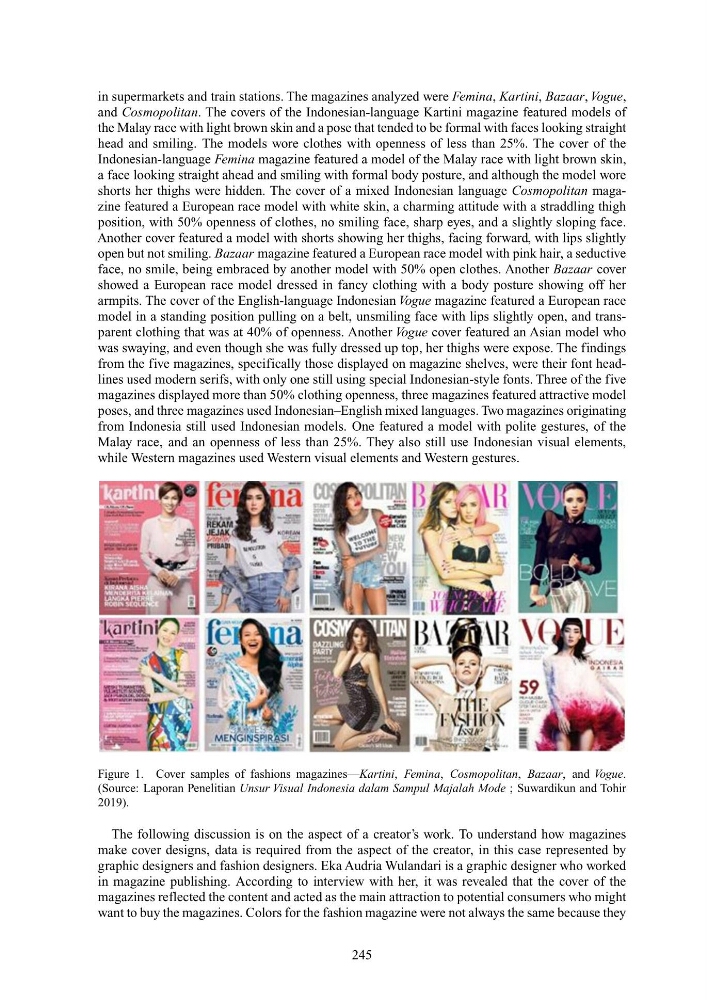
and Cosmopolitan. The covers of the Indonesian-language Kartini magazine featured models of
the Malay race with light brown skin and a pose that tended to be formal with faces looking straight
head and smiling. The models wore clothes with openness of less than 25%. The cover of the
Indonesian-language Femina magazine featured a model of the Malay race with light brown skin,
a face looking straight ahead and smiling with formal body posture, and although the model wore
shorts her thighs were hidden. The cover of a mixed Indonesian language Cosmopolitan magazine featured a European race model with white skin, a charming attitude with a straddling thigh
position, with 50% openness of clothes, no smiling face, sharp eyes, and a slightly sloping face.
Another cover featured a model with shorts showing her thighs, facing forward, with lips slightly
open but not smiling. Bazaar magazine featured a European race model with pink hair, a seductive
face, no smile, being embraced by another model with 50% open clothes. Another Bazaar cover
showed a European race model dressed in fancy clothing with a body posture showing off her
armpits. The cover of the English-language Indonesian Vogue magazine featured a European race
model in a standing position pulling on a belt, unsmiling face with lips slightly open, and transparent clothing that was at 40% of openness. Another Vogue cover featured an Asian model who
was swaying, and even though she was fully dressed up top, her thighs were expose. The findings
from the five magazines, specifically those displayed on magazine shelves, were their font headlines used modern serifs, with only one still using special Indonesian-style fonts. Three of the five
magazines displayed more than 50% clothing openness, three magazines featured attractive model
poses, and three magazines used Indonesian–English mixed languages. Two magazines originating
from Indonesia still used Indonesian models. One featured a model with polite gestures, of the
Malay race, and an openness of less than 25%. They also still use Indonesian visual elements,
while Western magazines used Western visual elements and Western gestures.
Figure 1. Cover samples of fashions magazines—Kartini, Femina, Cosmopolitan, Bazaar, and Vogue.
(Source: Laporan Penelitian Unsur Visual Indonesia dalam Sampul Majalah Mode ; Suwardikun and Tohir
2019).
The following discussion is on the aspect of a creator’s work. To understand how magazines
make cover designs, data is required from the aspect of the creator, in this case represented by
graphic designers and fashion designers. Eka Audria Wulandari is a graphic designer who worked
in magazine publishing. According to interview with her, it was revealed that the cover of the
magazines reflected the content and acted as the main attraction to potential consumers who might
want to buy the magazines. Colors for the fashion magazine were not always the same because they
245
and Cosmopolitan. The covers of the Indonesian-language Kartini magazine featured models of
the Malay race with light brown skin and a pose that tended to be formal with faces looking straight
head and smiling. The models wore clothes with openness of less than 25%. The cover of the
Indonesian-language Femina magazine featured a model of the Malay race with light brown skin,
a face looking straight ahead and smiling with formal body posture, and although the model wore
shorts her thighs were hidden. The cover of a mixed Indonesian language Cosmopolitan magazine featured a European race model with white skin, a charming attitude with a straddling thigh
position, with 50% openness of clothes, no smiling face, sharp eyes, and a slightly sloping face.
Another cover featured a model with shorts showing her thighs, facing forward, with lips slightly
open but not smiling. Bazaar magazine featured a European race model with pink hair, a seductive
face, no smile, being embraced by another model with 50% open clothes. Another Bazaar cover
showed a European race model dressed in fancy clothing with a body posture showing off her
armpits. The cover of the English-language Indonesian Vogue magazine featured a European race
model in a standing position pulling on a belt, unsmiling face with lips slightly open, and transparent clothing that was at 40% of openness. Another Vogue cover featured an Asian model who
was swaying, and even though she was fully dressed up top, her thighs were expose. The findings
from the five magazines, specifically those displayed on magazine shelves, were their font headlines used modern serifs, with only one still using special Indonesian-style fonts. Three of the five
magazines displayed more than 50% clothing openness, three magazines featured attractive model
poses, and three magazines used Indonesian–English mixed languages. Two magazines originating
from Indonesia still used Indonesian models. One featured a model with polite gestures, of the
Malay race, and an openness of less than 25%. They also still use Indonesian visual elements,
while Western magazines used Western visual elements and Western gestures.
Figure 1. Cover samples of fashions magazines—Kartini, Femina, Cosmopolitan, Bazaar, and Vogue.
(Source: Laporan Penelitian Unsur Visual Indonesia dalam Sampul Majalah Mode ; Suwardikun and Tohir
2019).
The following discussion is on the aspect of a creator’s work. To understand how magazines
make cover designs, data is required from the aspect of the creator, in this case represented by
graphic designers and fashion designers. Eka Audria Wulandari is a graphic designer who worked
in magazine publishing. According to interview with her, it was revealed that the cover of the
magazines reflected the content and acted as the main attraction to potential consumers who might
want to buy the magazines. Colors for the fashion magazine were not always the same because they
245