

2 METHODOLOGY
2.1 Research method
In this study, the authors conducted a case study on one of the skateboarding communities in
Bandung, precisely in the Pasupati Skatepark area. The area is a gathering place for several skateboarding communities in Bandung that are interconnected. In this design, the authors conducted
research with observation and interview techniques.
2.2 Design strategies
1. Divergent and convergent thinking analysis were used in managing design problems both in
process and practice, which is the decision-making conduct of the event of specifying design
materials, working relationships, and ethical responsibilities (Best 2006). Designers are required
to narrow the problem space to solve the problem, and there are four basic cognitive steps:
generation, exploration, comparison, and selection (Stempfle & Badke-Schaub 2002).
Considerable imagination is required by designers and can often be unpredictable in its outcome,
hence the creative process to manage design problem enhances the Divergent and Convergent
Thinking, which are the most crucial things in brainstorming (Yudiarti & Lantu 2017).
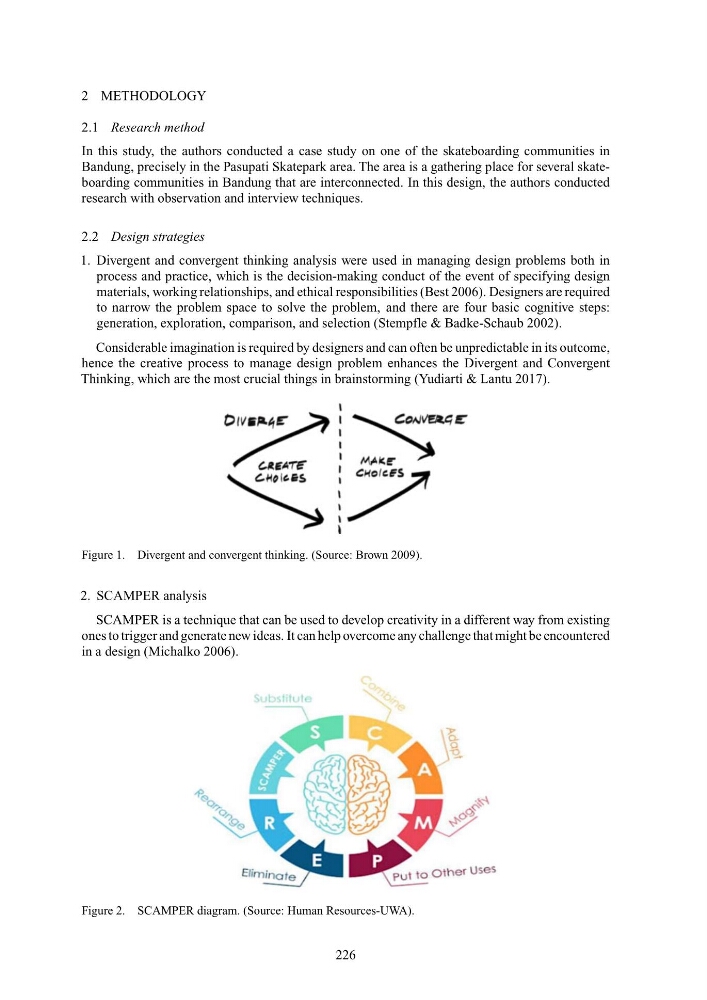
Figure 1. Divergent and convergent thinking. (Source: Brown 2009).
2. SCAMPER analysis
SCAMPER is a technique that can be used to develop creativity in a different way from existing
ones to trigger and generate new ideas. It can help overcome any challenge that might be encountered
in a design (Michalko 2006).
Figure 2. SCAMPER diagram. (Source: Human Resources-UWA).
226
2.1 Research method
In this study, the authors conducted a case study on one of the skateboarding communities in
Bandung, precisely in the Pasupati Skatepark area. The area is a gathering place for several skateboarding communities in Bandung that are interconnected. In this design, the authors conducted
research with observation and interview techniques.
2.2 Design strategies
1. Divergent and convergent thinking analysis were used in managing design problems both in
process and practice, which is the decision-making conduct of the event of specifying design
materials, working relationships, and ethical responsibilities (Best 2006). Designers are required
to narrow the problem space to solve the problem, and there are four basic cognitive steps:
generation, exploration, comparison, and selection (Stempfle & Badke-Schaub 2002).
Considerable imagination is required by designers and can often be unpredictable in its outcome,
hence the creative process to manage design problem enhances the Divergent and Convergent
Thinking, which are the most crucial things in brainstorming (Yudiarti & Lantu 2017).
Figure 1. Divergent and convergent thinking. (Source: Brown 2009).
2. SCAMPER analysis
SCAMPER is a technique that can be used to develop creativity in a different way from existing
ones to trigger and generate new ideas. It can help overcome any challenge that might be encountered
in a design (Michalko 2006).
Figure 2. SCAMPER diagram. (Source: Human Resources-UWA).
226