

pump degenerate four-wave mixing (RP-D4WM) [29, 30]. These two techniques
isolate the same components of the fifth-order response function but differ in how
vibrational spectra are obtained. For example, data acquisition is generally faster in
FSRS because only one delay time is scanned due to its use of frequency-domain
detection. FSRS and RP-D4WM are usually conducted by measuring onedimensional vibrational spectra of a product with respect to a variable population
time. Vibrational coherences in two dimensions have been reported in recent FSRS
applications (this is the same nonlinearity detected with 2DRR) [31, 32]. In
addition, Harel and co-workers have developed a new fifth-order four-dimensional
experiment that, like our version of 2DRR, yields a 2D vibrational spectrum for
Raman active modes; however, this technique also possesses two dimensions
associated with electronic resonance frequencies [33–35].
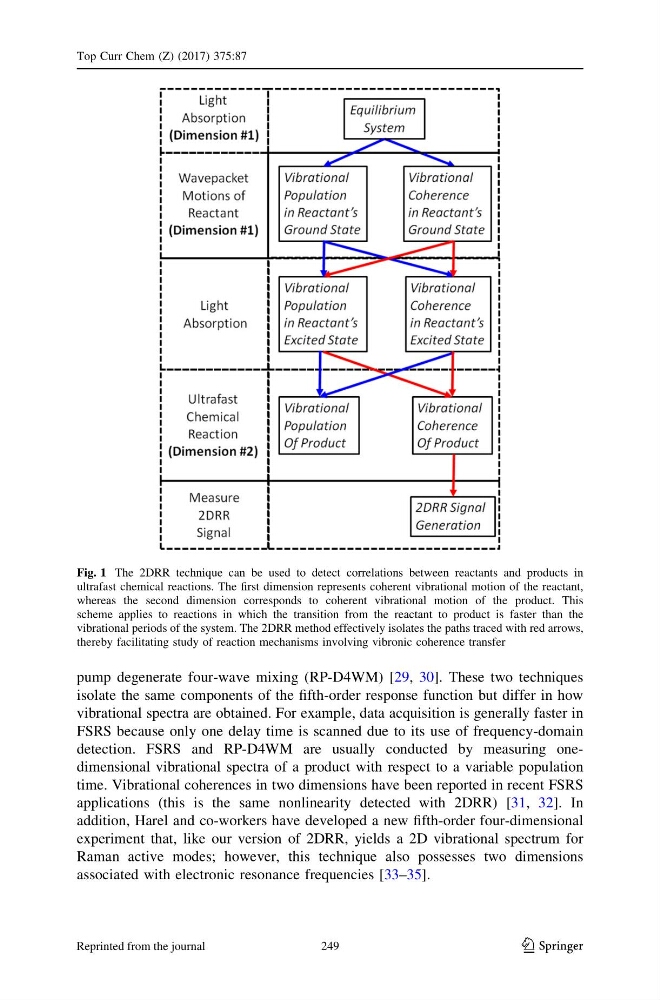
Fig. 1 The 2DRR technique can be used to detect correlations between reactants and products in
ultrafast chemical reactions. The first dimension represents coherent vibrational motion of the reactant,
whereas the second dimension corresponds to coherent vibrational motion of the product. This
scheme applies to reactions in which the transition from the reactant to product is faster than the
vibrational periods of the system. The 2DRR method effectively isolates the paths traced with red arrows,
thereby facilitating study of reaction mechanisms involving vibronic coherence transfer
Top Curr Chem (Z) (2017) 375:87
123
249
Reprinted from the journal
isolate the same components of the fifth-order response function but differ in how
vibrational spectra are obtained. For example, data acquisition is generally faster in
FSRS because only one delay time is scanned due to its use of frequency-domain
detection. FSRS and RP-D4WM are usually conducted by measuring onedimensional vibrational spectra of a product with respect to a variable population
time. Vibrational coherences in two dimensions have been reported in recent FSRS
applications (this is the same nonlinearity detected with 2DRR) [31, 32]. In
addition, Harel and co-workers have developed a new fifth-order four-dimensional
experiment that, like our version of 2DRR, yields a 2D vibrational spectrum for
Raman active modes; however, this technique also possesses two dimensions
associated with electronic resonance frequencies [33–35].
Fig. 1 The 2DRR technique can be used to detect correlations between reactants and products in
ultrafast chemical reactions. The first dimension represents coherent vibrational motion of the reactant,
whereas the second dimension corresponds to coherent vibrational motion of the product. This
scheme applies to reactions in which the transition from the reactant to product is faster than the
vibrational periods of the system. The 2DRR method effectively isolates the paths traced with red arrows,
thereby facilitating study of reaction mechanisms involving vibronic coherence transfer
Top Curr Chem (Z) (2017) 375:87
123
249
Reprinted from the journal