

modes (reporters) over a broad spectral range is determined for a series of time
delays. Several types of tags and reporters have been investigated and the speed
with which the excitation propagates through the sample has been determined in
detail. In general, energy deposited in a certain high-frequency mode of a molecule
may propagate towards other functional groups in a ‘‘through-bond’’ manner via
mechanical or anharmonic coupling either in a diffusive or a ballistic way [75, 170].
Indeed, both types of propagation have been observed experimentally and show
clear trends with respect to the chemical nature of the molecules. That is, ballistic
energy transfer was observed for molecules with linear chains of decisive repeating
units such as alkanes, poly(ethyleneglycoles), or perfluoroalkanes. Ballistic energy
transport occurs with a faster speed than diffusive type transport and has been
suggested to take place via the excitation of wave packets from delocalized chains
states. In contrast, diffusive energy transport is generally described by the physics of
thermal conduction in materials. Ballistic transport has been demonstrated
extending up to distances of 60 A ˚ between tags and reporters and is suggested to
be limited by the mean free path length of associated phonon modes [150]. In
contrast, a diffusive type of transport was determined for molecules without such
repeating units, thus termed disordered.
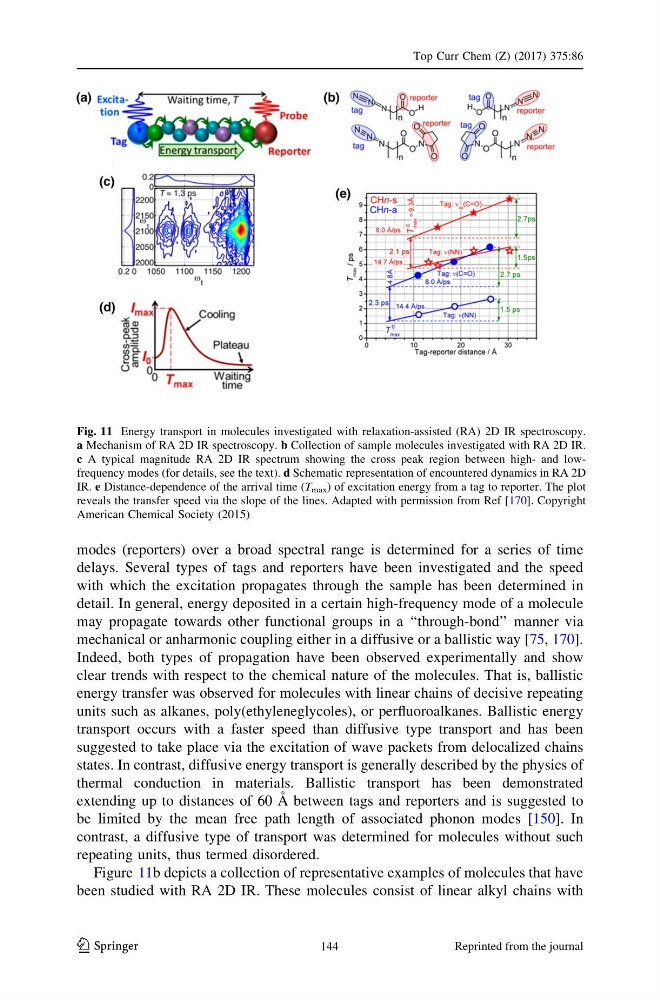
Figure 11b depicts a collection of representative examples of molecules that have
been studied with RA 2D IR. These molecules consist of linear alkyl chains with
Fig. 11 Energy transport in molecules investigated with relaxation-assisted (RA) 2D IR spectroscopy.
a Mechanism of RA 2D IR spectroscopy. b Collection of sample molecules investigated with RA 2D IR.
c A typical magnitude RA 2D IR spectrum showing the cross peak region between high- and lowfrequency modes (for details, see the text). d Schematic representation of encountered dynamics in RA 2D
IR. e Distance-dependence of the arrival time (T max ) of excitation energy from a tag to reporter. The plot
reveals the transfer speed via the slope of the lines. Adapted with permission from Ref [170]. Copyright
American Chemical Society (2015)
Top Curr Chem (Z) (2017) 375:86
123
144
Reprinted from the journal
delays. Several types of tags and reporters have been investigated and the speed
with which the excitation propagates through the sample has been determined in
detail. In general, energy deposited in a certain high-frequency mode of a molecule
may propagate towards other functional groups in a ‘‘through-bond’’ manner via
mechanical or anharmonic coupling either in a diffusive or a ballistic way [75, 170].
Indeed, both types of propagation have been observed experimentally and show
clear trends with respect to the chemical nature of the molecules. That is, ballistic
energy transfer was observed for molecules with linear chains of decisive repeating
units such as alkanes, poly(ethyleneglycoles), or perfluoroalkanes. Ballistic energy
transport occurs with a faster speed than diffusive type transport and has been
suggested to take place via the excitation of wave packets from delocalized chains
states. In contrast, diffusive energy transport is generally described by the physics of
thermal conduction in materials. Ballistic transport has been demonstrated
extending up to distances of 60 A ˚ between tags and reporters and is suggested to
be limited by the mean free path length of associated phonon modes [150]. In
contrast, a diffusive type of transport was determined for molecules without such
repeating units, thus termed disordered.
Figure 11b depicts a collection of representative examples of molecules that have
been studied with RA 2D IR. These molecules consist of linear alkyl chains with
Fig. 11 Energy transport in molecules investigated with relaxation-assisted (RA) 2D IR spectroscopy.
a Mechanism of RA 2D IR spectroscopy. b Collection of sample molecules investigated with RA 2D IR.
c A typical magnitude RA 2D IR spectrum showing the cross peak region between high- and lowfrequency modes (for details, see the text). d Schematic representation of encountered dynamics in RA 2D
IR. e Distance-dependence of the arrival time (T max ) of excitation energy from a tag to reporter. The plot
reveals the transfer speed via the slope of the lines. Adapted with permission from Ref [170]. Copyright
American Chemical Society (2015)
Top Curr Chem (Z) (2017) 375:86
123
144
Reprinted from the journal