

48
3 Sonication in Neoteric Solvents. A Further Look …
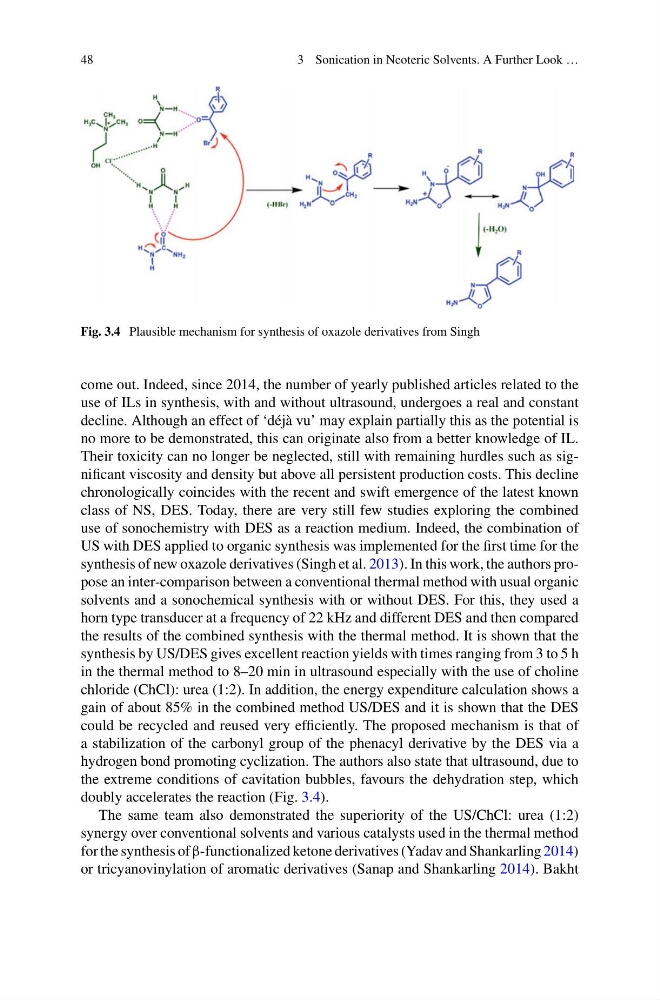
Fig. 3.4 Plausible mechanism for synthesis of oxazole derivatives from Singh
come out. Indeed, since 2014, the number of yearly published articles related to the
use of ILs in synthesis, with and without ultrasound, undergoes a real and constant
decline. Although an effect of ‘déjà vu’ may explain partially this as the potential is
no more to be demonstrated, this can originate also from a better knowledge of IL.
Their toxicity can no longer be neglected, still with remaining hurdles such as significant viscosity and density but above all persistent production costs. This decline
chronologically coincides with the recent and swift emergence of the latest known
class of NS, DES. Today, there are very still few studies exploring the combined
use of sonochemistry with DES as a reaction medium. Indeed, the combination of
US with DES applied to organic synthesis was implemented for the first time for the
synthesis of new oxazole derivatives (Singh et al. 2013). In this work, the authors propose an inter-comparison between a conventional thermal method with usual organic
solvents and a sonochemical synthesis with or without DES. For this, they used a
horn type transducer at a frequency of 22 kHz and different DES and then compared
the results of the combined synthesis with the thermal method. It is shown that the
synthesis by US/DES gives excellent reaction yields with times ranging from 3 to 5 h
in the thermal method to 8–20 min in ultrasound especially with the use of choline
chloride (ChCl): urea (1:2). In addition, the energy expenditure calculation shows a
gain of about 85% in the combined method US/DES and it is shown that the DES
could be recycled and reused very efficiently. The proposed mechanism is that of
a stabilization of the carbonyl group of the phenacyl derivative by the DES via a
hydrogen bond promoting cyclization. The authors also state that ultrasound, due to
the extreme conditions of cavitation bubbles, favours the dehydration step, which
doubly accelerates the reaction (Fig. 3.4).
The same team also demonstrated the superiority of the US/ChCl: urea (1:2)
synergy over conventional solvents and various catalysts used in the thermal method
for the synthesis of β-functionalized ketone derivatives (Yadav and Shankarling 2014)
or tricyanovinylation of aromatic derivatives (Sanap and Shankarling 2014). Bakht
3 Sonication in Neoteric Solvents. A Further Look …
Fig. 3.4 Plausible mechanism for synthesis of oxazole derivatives from Singh
come out. Indeed, since 2014, the number of yearly published articles related to the
use of ILs in synthesis, with and without ultrasound, undergoes a real and constant
decline. Although an effect of ‘déjà vu’ may explain partially this as the potential is
no more to be demonstrated, this can originate also from a better knowledge of IL.
Their toxicity can no longer be neglected, still with remaining hurdles such as significant viscosity and density but above all persistent production costs. This decline
chronologically coincides with the recent and swift emergence of the latest known
class of NS, DES. Today, there are very still few studies exploring the combined
use of sonochemistry with DES as a reaction medium. Indeed, the combination of
US with DES applied to organic synthesis was implemented for the first time for the
synthesis of new oxazole derivatives (Singh et al. 2013). In this work, the authors propose an inter-comparison between a conventional thermal method with usual organic
solvents and a sonochemical synthesis with or without DES. For this, they used a
horn type transducer at a frequency of 22 kHz and different DES and then compared
the results of the combined synthesis with the thermal method. It is shown that the
synthesis by US/DES gives excellent reaction yields with times ranging from 3 to 5 h
in the thermal method to 8–20 min in ultrasound especially with the use of choline
chloride (ChCl): urea (1:2). In addition, the energy expenditure calculation shows a
gain of about 85% in the combined method US/DES and it is shown that the DES
could be recycled and reused very efficiently. The proposed mechanism is that of
a stabilization of the carbonyl group of the phenacyl derivative by the DES via a
hydrogen bond promoting cyclization. The authors also state that ultrasound, due to
the extreme conditions of cavitation bubbles, favours the dehydration step, which
doubly accelerates the reaction (Fig. 3.4).
The same team also demonstrated the superiority of the US/ChCl: urea (1:2)
synergy over conventional solvents and various catalysts used in the thermal method
for the synthesis of β-functionalized ketone derivatives (Yadav and Shankarling 2014)
or tricyanovinylation of aromatic derivatives (Sanap and Shankarling 2014). Bakht