

20
2 Efficient Organic Synthesis: What Ultrasound Makes Easier
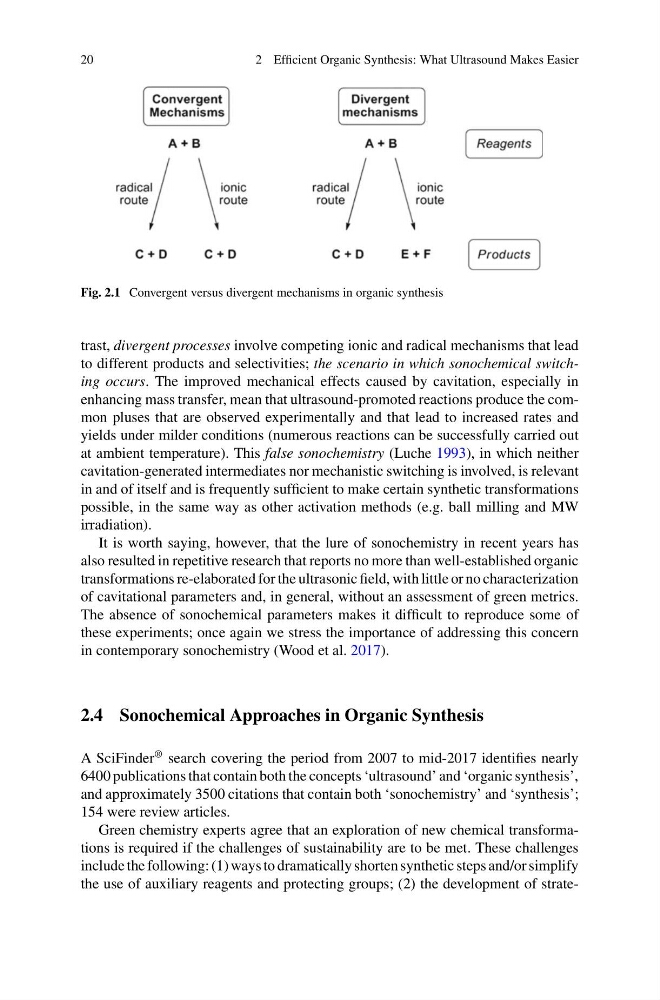
Fig. 2.1 Convergent versus divergent mechanisms in organic synthesis
trast, divergent processes involve competing ionic and radical mechanisms that lead
to different products and selectivities; the scenario in which sonochemical switching occurs. The improved mechanical effects caused by cavitation, especially in
enhancing mass transfer, mean that ultrasound-promoted reactions produce the common pluses that are observed experimentally and that lead to increased rates and
yields under milder conditions (numerous reactions can be successfully carried out
at ambient temperature). This false sonochemistry (Luche 1993), in which neither
cavitation-generated intermediates nor mechanistic switching is involved, is relevant
in and of itself and is frequently sufficient to make certain synthetic transformations
possible, in the same way as other activation methods (e.g. ball milling and MW
irradiation).
It is worth saying, however, that the lure of sonochemistry in recent years has
also resulted in repetitive research that reports no more than well-established organic
transformations re-elaborated for the ultrasonic field, with little or no characterization
of cavitational parameters and, in general, without an assessment of green metrics.
The absence of sonochemical parameters makes it difficult to reproduce some of
these experiments; once again we stress the importance of addressing this concern
in contemporary sonochemistry (Wood et al. 2017).
2.4 Sonochemical Approaches in Organic Synthesis
A SciFinder
® search covering the period from 2007 to mid-2017 identifies nearly
6400 publications that contain both the concepts ‘ultrasound’ and ‘organic synthesis’,
and approximately 3500 citations that contain both ‘sonochemistry’ and ‘synthesis’;
154 were review articles.
Green chemistry experts agree that an exploration of new chemical transformations is required if the challenges of sustainability are to be met. These challenges
include the following: (1) ways to dramatically shorten synthetic steps and/or simplify
the use of auxiliary reagents and protecting groups; (2) the development of strate-
2 Efficient Organic Synthesis: What Ultrasound Makes Easier
Fig. 2.1 Convergent versus divergent mechanisms in organic synthesis
trast, divergent processes involve competing ionic and radical mechanisms that lead
to different products and selectivities; the scenario in which sonochemical switching occurs. The improved mechanical effects caused by cavitation, especially in
enhancing mass transfer, mean that ultrasound-promoted reactions produce the common pluses that are observed experimentally and that lead to increased rates and
yields under milder conditions (numerous reactions can be successfully carried out
at ambient temperature). This false sonochemistry (Luche 1993), in which neither
cavitation-generated intermediates nor mechanistic switching is involved, is relevant
in and of itself and is frequently sufficient to make certain synthetic transformations
possible, in the same way as other activation methods (e.g. ball milling and MW
irradiation).
It is worth saying, however, that the lure of sonochemistry in recent years has
also resulted in repetitive research that reports no more than well-established organic
transformations re-elaborated for the ultrasonic field, with little or no characterization
of cavitational parameters and, in general, without an assessment of green metrics.
The absence of sonochemical parameters makes it difficult to reproduce some of
these experiments; once again we stress the importance of addressing this concern
in contemporary sonochemistry (Wood et al. 2017).
2.4 Sonochemical Approaches in Organic Synthesis
A SciFinder
® search covering the period from 2007 to mid-2017 identifies nearly
6400 publications that contain both the concepts ‘ultrasound’ and ‘organic synthesis’,
and approximately 3500 citations that contain both ‘sonochemistry’ and ‘synthesis’;
154 were review articles.
Green chemistry experts agree that an exploration of new chemical transformations is required if the challenges of sustainability are to be met. These challenges
include the following: (1) ways to dramatically shorten synthetic steps and/or simplify
the use of auxiliary reagents and protecting groups; (2) the development of strate-