

100
7 Hybrid Technologies in Action: Sonochemistry and Beyond
0
5
10
15
20
25
30
35
40
45
1995
1998
1999
2000
2001
2002
2003
2004
2005
2006
2007
2008
2009
2010
2011
2012
2013
2014
2015
2016
2017
2018
Journal
Patent
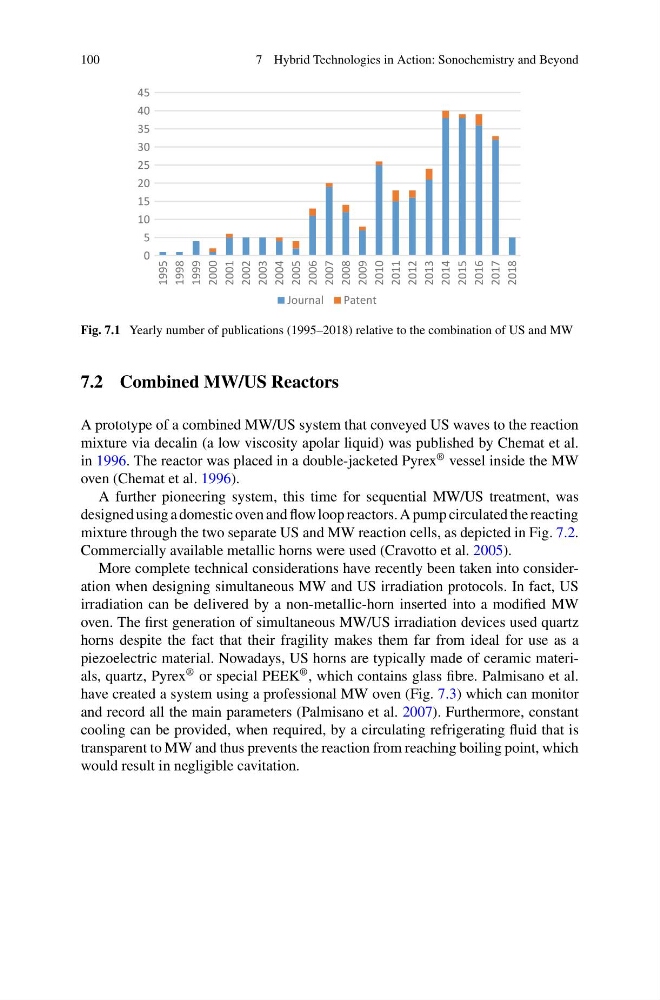
Fig. 7.1 Yearly number of publications (1995–2018) relative to the combination of US and MW
7.2 Combined MW/US Reactors
A prototype of a combined MW/US system that conveyed US waves to the reaction
mixture via decalin (a low viscosity apolar liquid) was published by Chemat et al.
in 1996. The reactor was placed in a double-jacketed Pyrex
® vessel inside the MW
oven (Chemat et al. 1996).
A further pioneering system, this time for sequential MW/US treatment, was
designed using a domestic oven and flow loop reactors. A pump circulated the reacting
mixture through the two separate US and MW reaction cells, as depicted in Fig. 7.2.
Commercially available metallic horns were used (Cravotto et al. 2005).
More complete technical considerations have recently been taken into consideration when designing simultaneous MW and US irradiation protocols. In fact, US
irradiation can be delivered by a non-metallic-horn inserted into a modified MW
oven. The first generation of simultaneous MW/US irradiation devices used quartz
horns despite the fact that their fragility makes them far from ideal for use as a
piezoelectric material. Nowadays, US horns are typically made of ceramic materials, quartz, Pyrex
® or special PEEK
® , which contains glass fibre. Palmisano et al.
have created a system using a professional MW oven (Fig. 7.3) which can monitor
and record all the main parameters (Palmisano et al. 2007). Furthermore, constant
cooling can be provided, when required, by a circulating refrigerating fluid that is
transparent to MW and thus prevents the reaction from reaching boiling point, which
would result in negligible cavitation.
7 Hybrid Technologies in Action: Sonochemistry and Beyond
0
5
10
15
20
25
30
35
40
45
1995
1998
1999
2000
2001
2002
2003
2004
2005
2006
2007
2008
2009
2010
2011
2012
2013
2014
2015
2016
2017
2018
Journal
Patent
Fig. 7.1 Yearly number of publications (1995–2018) relative to the combination of US and MW
7.2 Combined MW/US Reactors
A prototype of a combined MW/US system that conveyed US waves to the reaction
mixture via decalin (a low viscosity apolar liquid) was published by Chemat et al.
in 1996. The reactor was placed in a double-jacketed Pyrex
® vessel inside the MW
oven (Chemat et al. 1996).
A further pioneering system, this time for sequential MW/US treatment, was
designed using a domestic oven and flow loop reactors. A pump circulated the reacting
mixture through the two separate US and MW reaction cells, as depicted in Fig. 7.2.
Commercially available metallic horns were used (Cravotto et al. 2005).
More complete technical considerations have recently been taken into consideration when designing simultaneous MW and US irradiation protocols. In fact, US
irradiation can be delivered by a non-metallic-horn inserted into a modified MW
oven. The first generation of simultaneous MW/US irradiation devices used quartz
horns despite the fact that their fragility makes them far from ideal for use as a
piezoelectric material. Nowadays, US horns are typically made of ceramic materials, quartz, Pyrex
® or special PEEK
® , which contains glass fibre. Palmisano et al.
have created a system using a professional MW oven (Fig. 7.3) which can monitor
and record all the main parameters (Palmisano et al. 2007). Furthermore, constant
cooling can be provided, when required, by a circulating refrigerating fluid that is
transparent to MW and thus prevents the reaction from reaching boiling point, which
would result in negligible cavitation.