

6.4 Structure–Property Relationships
95
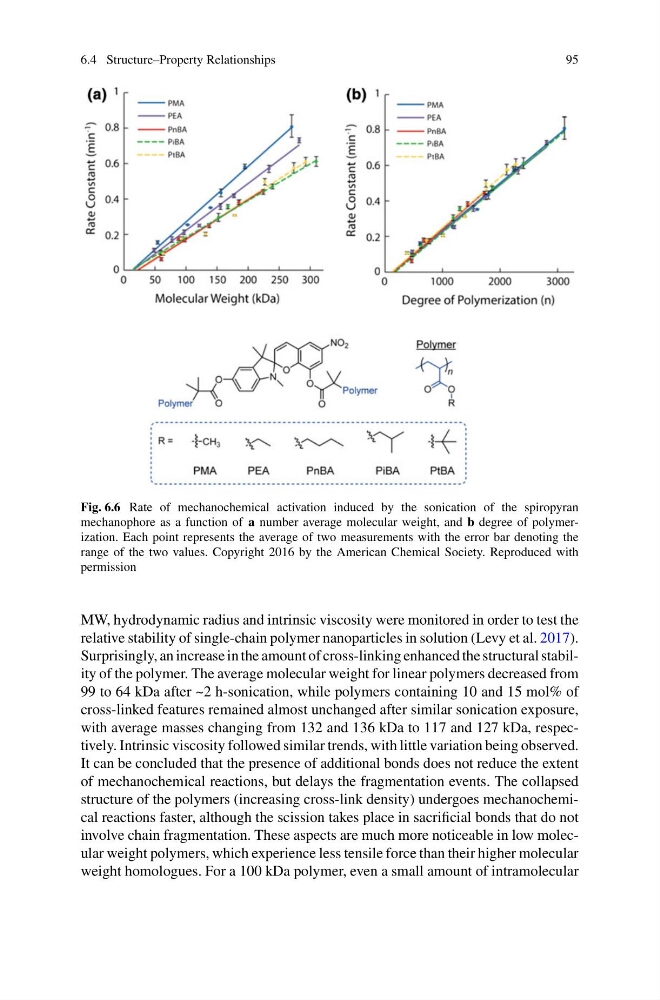
Fig. 6.6 Rate of mechanochemical activation induced by the sonication of the spiropyran
mechanophore as a function of a number average molecular weight, and b degree of polymerization. Each point represents the average of two measurements with the error bar denoting the
range of the two values. Copyright 2016 by the American Chemical Society. Reproduced with
permission
MW, hydrodynamic radius and intrinsic viscosity were monitored in order to test the
relative stability of single-chain polymer nanoparticles in solution (Levy et al. 2017).
Surprisingly, an increase in the amount of cross-linking enhanced the structural stability of the polymer. The average molecular weight for linear polymers decreased from
99 to 64 kDa after ~2 h-sonication, while polymers containing 10 and 15 mol% of
cross-linked features remained almost unchanged after similar sonication exposure,
with average masses changing from 132 and 136 kDa to 117 and 127 kDa, respectively. Intrinsic viscosity followed similar trends, with little variation being observed.
It can be concluded that the presence of additional bonds does not reduce the extent
of mechanochemical reactions, but delays the fragmentation events. The collapsed
structure of the polymers (increasing cross-link density) undergoes mechanochemical reactions faster, although the scission takes place in sacrificial bonds that do not
involve chain fragmentation. These aspects are much more noticeable in low molecular weight polymers, which experience less tensile force than their higher molecular
weight homologues. For a 100 kDa polymer, even a small amount of intramolecular
95
Fig. 6.6 Rate of mechanochemical activation induced by the sonication of the spiropyran
mechanophore as a function of a number average molecular weight, and b degree of polymerization. Each point represents the average of two measurements with the error bar denoting the
range of the two values. Copyright 2016 by the American Chemical Society. Reproduced with
permission
MW, hydrodynamic radius and intrinsic viscosity were monitored in order to test the
relative stability of single-chain polymer nanoparticles in solution (Levy et al. 2017).
Surprisingly, an increase in the amount of cross-linking enhanced the structural stability of the polymer. The average molecular weight for linear polymers decreased from
99 to 64 kDa after ~2 h-sonication, while polymers containing 10 and 15 mol% of
cross-linked features remained almost unchanged after similar sonication exposure,
with average masses changing from 132 and 136 kDa to 117 and 127 kDa, respectively. Intrinsic viscosity followed similar trends, with little variation being observed.
It can be concluded that the presence of additional bonds does not reduce the extent
of mechanochemical reactions, but delays the fragmentation events. The collapsed
structure of the polymers (increasing cross-link density) undergoes mechanochemical reactions faster, although the scission takes place in sacrificial bonds that do not
involve chain fragmentation. These aspects are much more noticeable in low molecular weight polymers, which experience less tensile force than their higher molecular
weight homologues. For a 100 kDa polymer, even a small amount of intramolecular