

697
The perception layer is the forefront of the IoT for mines and is responsible for the task
of perceiving data (Hu et al., 2014). However, the sensors in the current mine are still limited
to the specific subsystems. The lack of distributed and networked mine sensing technology
and applications make it impossible for us to achieve distributed monitoring and control.
This kind of “islanding” implementation method makes it difficult to achieve perceptual data
fusion and reduces the trustworthiness of perceptual data. This is contrary to the interconnection in the IoT. At the same time, there are few novel sensing technologies in the perception
layer. We also lack the networked and distributed monitoring theory and methods. Thus, we
cannot really meet the requirements of connecting everything and ubiquitous perception of
things in the IoT for mines, resulting in an opaque state of mine production to a large extent.
The transport layer is a “neural” channel for the steady and reliable transmission of information. It is the key to connect the perception layer and the application layer. It generally includes
two main parts, i.e. the backbone network and the perceptual network. However, the backbone
network of each mine is the 1000 M (10 G for individual coal mine) of industrial automation
network. These industrial Ethernet networks do not have the capability of accurate time
synchronization for the whole network. Thus, they cannot provide the time-based services, such
as the real-time tracking and management of events occurring in the whole mine. Therefore, it
is impossible to describe the mine production process from the aspects of space and time. The
time synchronization of the entire network needs to be carried out. The WiFi and WSN are
widely used for the perceptual network. However, it is difficult for these wireless communication
technologies to meet the needs of long-distance multi-hop transmission, multi-service bearer, selforganizing network on demand and reconstruction after disasters. It is necessary to develop a new
kind of network. We need the new communication technologies and the perception network. At
the same time, the use of 6LoWPan should be encouraged to promote the transition from IPv4 to
IPv6 in order to manage and efficiently use the massive terminals deployed in these mines.
The application layer is the ultimate goal of IoT for the construction of the mines. The
applications are important tools for data presentation, operation management, decision support and service provision. Although the integrated automation system of mines realized the
integration of the functions of each subsystem, it only realized the linkage between a few systems. The deep information mining and integration of applications among multiple systems
were not achieved. From the point of view of mine safety, the single factor reveals only onesided reasons for disasters. We should deploy a number of subsystems and focus on the important observations in order to achieve the fusion analysis. Only in this way can we fully reveal
the multi-coupling of disasters and achieve the accurate and timely pre-disaster warning.
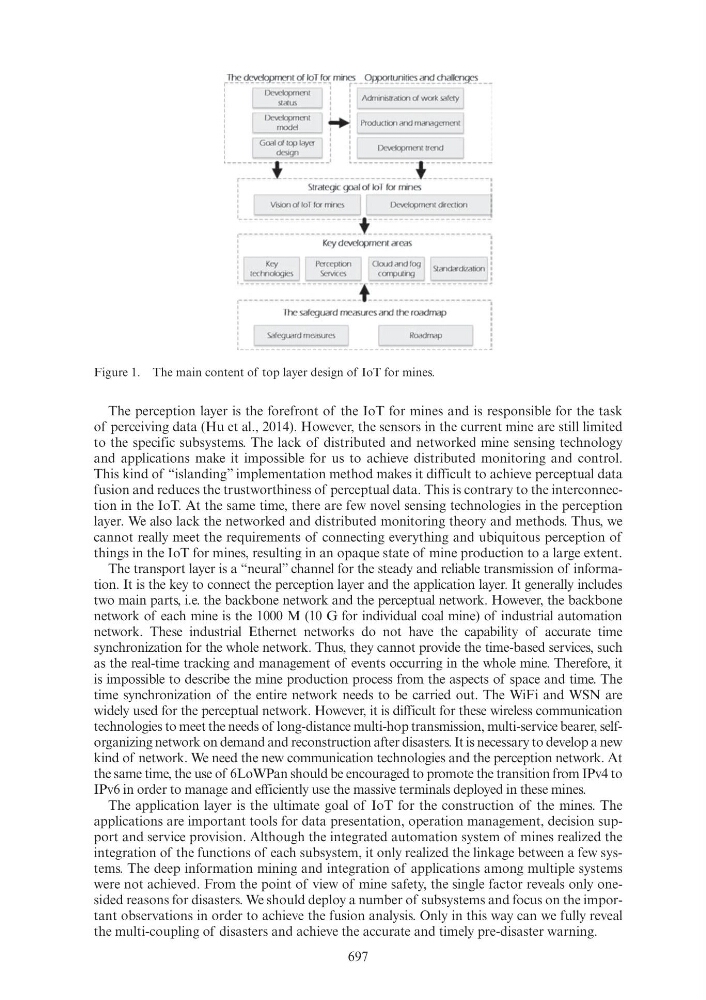
Figure 1. The main content of top layer design of IoT for mines.
The sarE"guard measures and the roadrnap
l
I
~eguard measu~
Roadrnap I l
: ------------------------------------------------ ~