

568
(Wide Area Network, often the Internet access line) to and from mine sites are usually very
limited. Besides, hence the OTN is specifically designed for control systems and production
tasks it wouldn’t make sense to have all this sensitive traffic to leave the mine site, even though
link data encryption mechanisms are available for that purpose.
5 CONCLUSIONS
LTE is a wireless communication technology that promises better traffic control, higher bit
rates and low latency. Tailored solutions and the possibility for mining operators to deploy
their own private LTE core and RAN has turned this technology into a very interesting long
term option for all industries, including mining.
As OEMs and system integrators we need to adapt, learn and collaborate in order to
ensure proper operation and outstanding performance of our connected machines and automation systems.
FURTHER READING
SIMS, Sustainable Intelligent Mining Systems (https://www.simsmining.eu/).
PIMM-DMA, Pilot for Industrial Mobile Communication in Mining – Digitalized Mining Area
https://www.sics.se/projects/pimm.
LTE bands and spectrum – http://niviuk.free.fr/lte_band.php.
LTE throughput calculation – https://tools.pedroc.co.uk/4g-speed/
REFERENCES
Dahlman, E., Parkvall, S., Sköld, J., 4G LTE-Advanced Pro and The Road to 5G, Academic Press,
2016.
3GPP, The Mobile Broadband Standard (www.3gpp.org).
Various, Compilation, Communications engineering desk reference, Academic Press, 2009.
GMG – Global Mining Guidelines Group, Underground Mine Communications Infrastructure (https://
gmggroup.org/projects/underground-communications-infrastructure/).
Wireless standards chart, National Instruments, (www.ni.com/rf).
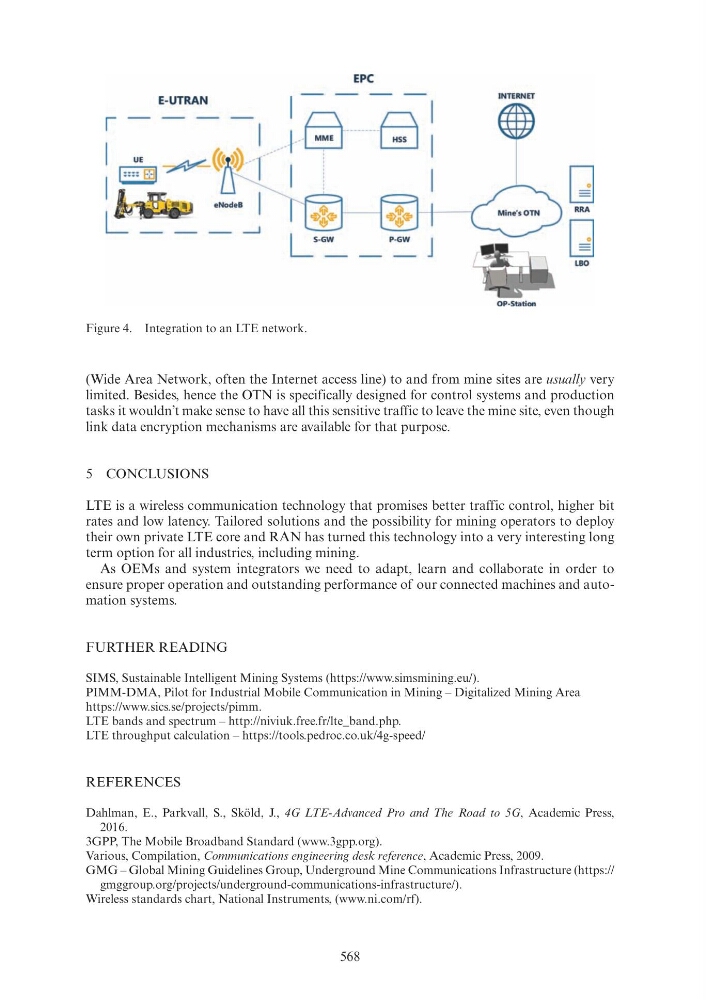
Figure 4. Integration to an LTE network.
EPC
E-UTRAN
I - - ~ I
r - - - -I f§ L~~ I
I I "'~·Ell ~ {(II)) r I i
I
! ~ _•Nodes__JI
,
L_
L s- G.:_ _ P ::_ J
INTERNET
~
RRA
~
LBO
OP·Station