

558
2.2 Predictive maintenance
Maintenance strategies generally fall into three large categories, namely corrective, preventive
or predictive. The first one, corrective, is the equivalent of having no strategy and consists
of performing maintenance operations on equipment only at times of failure. The second
one, preventive maintenance, corresponds to performing maintenance operations at fixed
time intervals on equipment with no regards to the conditions of the equipment. This strategy has the advantage of preventing many costly failures through a somewhat “excessive”
maintenance protocol but has the drawback of requiring many more maintenance operations than needed, as demonstrated by (Hashemian and Bean 2011). Finally, predictive maintenance relies on equipment condition indicators to perform maintenance operations only
when needed i.e. when conditions indicating an imminent failure are detected. This has the
advantages of needing less maintenance operations and catching failure events from fast degradation that could fall in between scheduled preventive maintenance. It is also very valuable
as it allows for the maintenance to be planned when it disrupts the least the production. In
practice, maintenance strategies consist most often of preventive maintenance with the addition of predictive maintenance where indicators are available, and some unplanned corrective
maintenance occasionally.
There is a lot of literature on the subject of predictive or condition-based maintenance
and the point here is not to review it all, but such review can be found in the article of (Peng,
Dong, and Zuo 2010). (Schwabacher and Goebel 2007) also published a review specifically
on the subject of artificial intelligence in predictive maintenance and a state of the art of the
wider field of maintenance optimization can be found in the work of (Sharma, Yadava, and
Deshmukh 2011).
For mobile equipment in underground mines, to the best of the author’s knowledge, no
publications about predictive maintenance using AI are available. A probable cause of this
is the scarce availability of data in such contexts. This does not however mean that maintenance improvements are not studied in underground mines. For example (Mkemai 2011)
uses two mine sites to evaluate maintenance practices and possible improvements for their
underground mobile fleet. Another example of this are the preliminary results presented
by (Laukka et al. 2016) who use vibration data from specifically installed accelerometers to
try identifying potential faults on mobile equipment. The paper concludes that more data is
required in order to achieve results and that a wireless data transfer system would help solve
the problem.
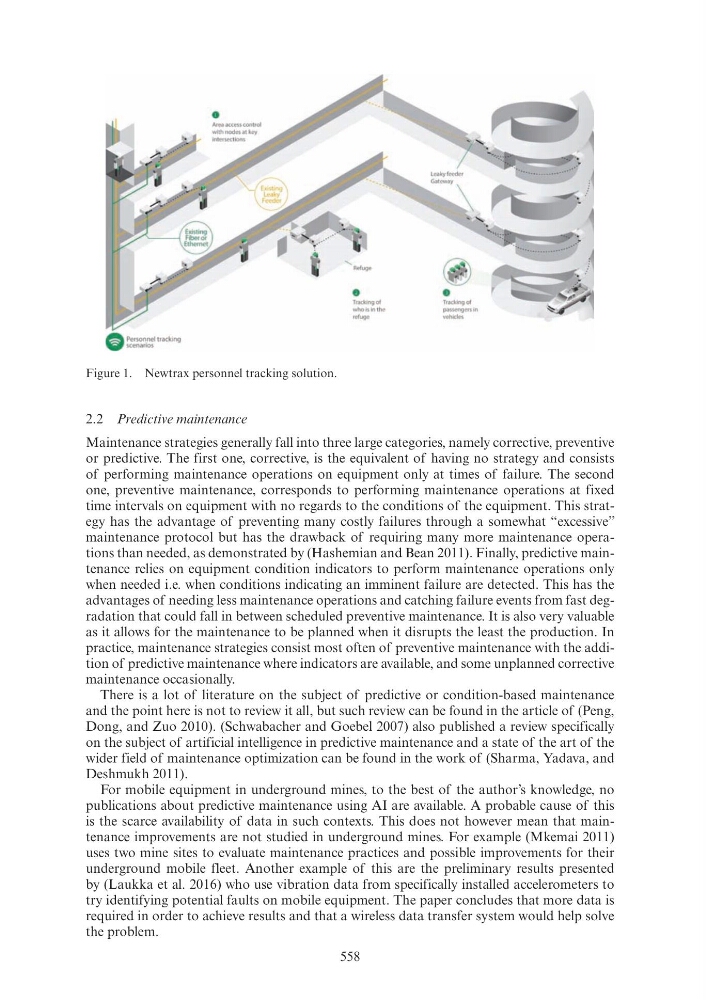
Figure 1. Newtrax personnel tracking solution.
~ Person.nel tracking
~ scenanos
0
Tracking of
whoisinthe
refuge
~
0
Tracking of
passengers in
vehicles