

478
ϕ
ϕ
ϕ
ϕ
out
sk
s
out
p
p
p
x x V k
dt t
d
x x V d
p t t
→
( )
x
ϕ k
ϕ
+
(
)
→
( )
x
ϕ
+
( (
)
,
,
1
1
x
1
x
ϕ
ϕ
ϕ ϕ
ϕ
ϕ
out
d
out
ϕ ϕ
lk
lk
→
( ) ϕ d
ϕ (
)
d
x x V d
d t t
x
+
( )
t
ϕ lk
ϕ (
)
lk
x x V d
lk t t
x
+ lk
V d
lk t
+
ϕ lk
ϕ lk ( x x x x
⎧ ⎧
⎨
⎪
⎧ ⎧ ⎧ ⎧
⎪
⎪ ⎪
⎪
⎪ ⎪
⎪
⎨ ⎨
⎪ ⎪
⎩
⎪
⎨ ⎨
⎪
⎪ ⎪
⎪
⎪ ⎪
⎪ ⎩ ⎩
⎪ ⎪
(10)
3 SIMULATION RESULT
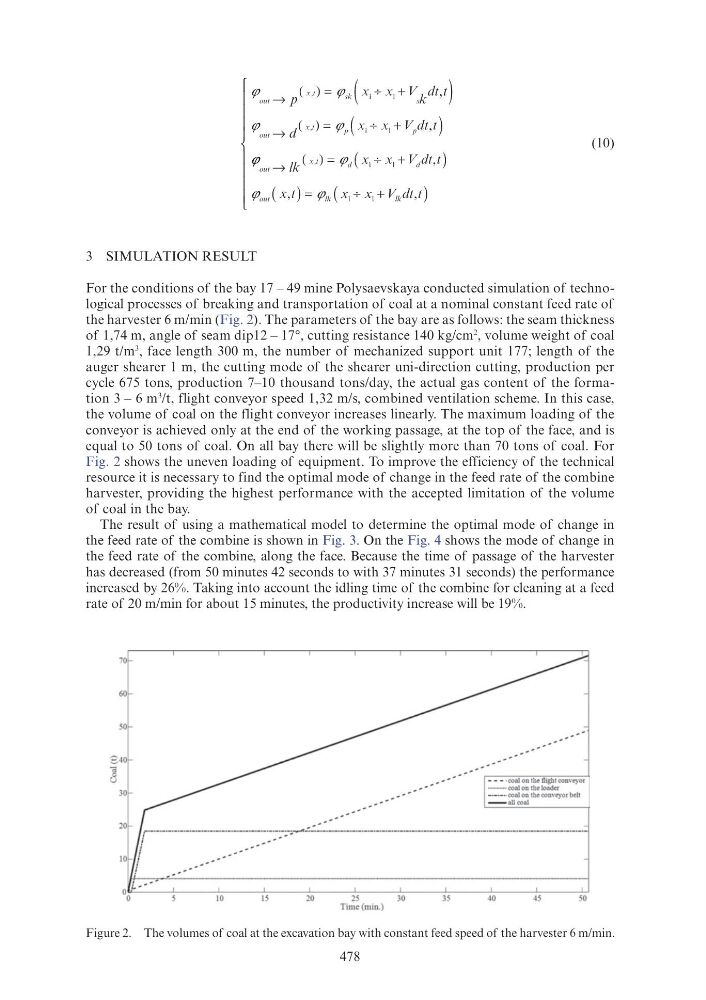
For the conditions of the bay 17 – 49 mine Polysaevskaya conducted simulation of technological processes of breaking and transportation of coal at a nominal constant feed rate of
the harvester 6 m/min (Fig. 2). The parameters of the bay are as follows: the seam thickness
of 1,74 m, angle of seam dip12 – 17°, cutting resistance 140 kg/cm
2 , volume weight of coal
1,29 t/m
3 , face length 300 m, the number of mechanized support unit 177; length of the
auger shearer 1 m, the cutting mode of the shearer uni-direction cutting, production per
cycle 675 tons, production 7–10 thousand tons/day, the actual gas content of the formation 3 – 6 m
3 /t, flight conveyor speed 1,32 m/s, combined ventilation scheme. In this case,
the volume of coal on the flight conveyor increases linearly. The maximum loading of the
conveyor is achieved only at the end of the working passage, at the top of the face, and is
equal to 50 tons of coal. On all bay there will be slightly more than 70 tons of coal. For
Fig. 2 shows the uneven loading of equipment. To improve the efficiency of the technical
resource it is necessary to find the optimal mode of change in the feed rate of the combine
harvester, providing the highest performance with the accepted limitation of the volume
of coal in the bay.
The result of using a mathematical model to determine the optimal mode of change in
the feed rate of the combine is shown in Fig. 3. On the Fig. 4 shows the mode of change in
the feed rate of the combine, along the face. Because the time of passage of the harvester
has decreased (from 50 minutes 42 seconds to with 37 minutes 31 seconds) the performance
increased by 26%. Taking into account the idling time of the combine for cleaning at a feed
rate of 20 m/min for about 15 minutes, the productivity increase will be 19%.
Figure 2. The volumes of coal at the excavation bay with constant feed speed of the harvester 6 m/min.
70
60
50
8 40
8
30
- - - ·coal on the flight conveyor
·············coal on the loader
-·- ·- ··coal on the conveyor belt
- - all coal
i-·-·-·-·-·-·-·-·-·-·-·-·-·-·-·-·-·-·-·-·---~-~--..-;.---·-·-·-·-·-·-·-·-·-·-·-·-·-·-·-·-·-·-·-·-·-·-·-·-·-·-·-·-·-·-·-·-·-·-·-·-·-·-·-·-·-·-·-·-·-·-·;
!
i
o J>
10
15
20
25
Time (min.)
30
35
40
45
50
ϕ
ϕ
ϕ
ϕ
out
sk
s
out
p
p
p
x x V k
dt t
d
x x V d
p t t
→
( )
x
ϕ k
ϕ
+
(
)
→
( )
x
ϕ
+
( (
)
,
,
1
1
x
1
x
ϕ
ϕ
ϕ ϕ
ϕ
ϕ
out
d
out
ϕ ϕ
lk
lk
→
( ) ϕ d
ϕ (
)
d
x x V d
d t t
x
+
( )
t
ϕ lk
ϕ (
)
lk
x x V d
lk t t
x
+ lk
V d
lk t
+
ϕ lk
ϕ lk ( x x x x
⎧ ⎧
⎨
⎪
⎧ ⎧ ⎧ ⎧
⎪
⎪ ⎪
⎪
⎪ ⎪
⎪
⎨ ⎨
⎪ ⎪
⎩
⎪
⎨ ⎨
⎪
⎪ ⎪
⎪
⎪ ⎪
⎪ ⎩ ⎩
⎪ ⎪
(10)
3 SIMULATION RESULT
For the conditions of the bay 17 – 49 mine Polysaevskaya conducted simulation of technological processes of breaking and transportation of coal at a nominal constant feed rate of
the harvester 6 m/min (Fig. 2). The parameters of the bay are as follows: the seam thickness
of 1,74 m, angle of seam dip12 – 17°, cutting resistance 140 kg/cm
2 , volume weight of coal
1,29 t/m
3 , face length 300 m, the number of mechanized support unit 177; length of the
auger shearer 1 m, the cutting mode of the shearer uni-direction cutting, production per
cycle 675 tons, production 7–10 thousand tons/day, the actual gas content of the formation 3 – 6 m
3 /t, flight conveyor speed 1,32 m/s, combined ventilation scheme. In this case,
the volume of coal on the flight conveyor increases linearly. The maximum loading of the
conveyor is achieved only at the end of the working passage, at the top of the face, and is
equal to 50 tons of coal. On all bay there will be slightly more than 70 tons of coal. For
Fig. 2 shows the uneven loading of equipment. To improve the efficiency of the technical
resource it is necessary to find the optimal mode of change in the feed rate of the combine
harvester, providing the highest performance with the accepted limitation of the volume
of coal in the bay.
The result of using a mathematical model to determine the optimal mode of change in
the feed rate of the combine is shown in Fig. 3. On the Fig. 4 shows the mode of change in
the feed rate of the combine, along the face. Because the time of passage of the harvester
has decreased (from 50 minutes 42 seconds to with 37 minutes 31 seconds) the performance
increased by 26%. Taking into account the idling time of the combine for cleaning at a feed
rate of 20 m/min for about 15 minutes, the productivity increase will be 19%.
Figure 2. The volumes of coal at the excavation bay with constant feed speed of the harvester 6 m/min.
70
60
50
8 40
8
30
- - - ·coal on the flight conveyor
·············coal on the loader
-·- ·- ··coal on the conveyor belt
- - all coal
i-·-·-·-·-·-·-·-·-·-·-·-·-·-·-·-·-·-·-·-·---~-~--..-;.---·-·-·-·-·-·-·-·-·-·-·-·-·-·-·-·-·-·-·-·-·-·-·-·-·-·-·-·-·-·-·-·-·-·-·-·-·-·-·-·-·-·-·-·-·-·-·;
!
i
o J>
10
15
20
25
Time (min.)
30
35
40
45
50