

438
data collection environment that includes a web-based configuration console. The data was
captured as relational transactional data within an SQL database as well as using big data,
namely Javascript Object Notation (JSON) objects generated by the tablet subsequently
parsed and loaded into the relational environment.
2 INERTIAL SENSING
Due to economies of scale from consumer-focused products, smart devices have become
sophisticated computers packed with sensors. For example, smart devices typically have
sophisticated inertial chips where inclination and other movements can be tracked, namely
a solid-state gyroscope and tri-axial accelerometer alongside a separate chip that monitors
inertial movement and can provide calculated or sensed actions directly within the operating
system. For example, the devices automatically detect driving, walking, or ‘look at screen’
movements, and therefore an app can behave differently, as well, a system can automatically
calculate the total time the device was driven, carried on foot, or left on a desk. Direct calculation of triaxial g-forces with a calculated assumed orientation would allow one to capture
peak g-forces at a high rate of capture, automatically detecting rough road conditions, including those that could pose a health hazard to the operator driving with the device.
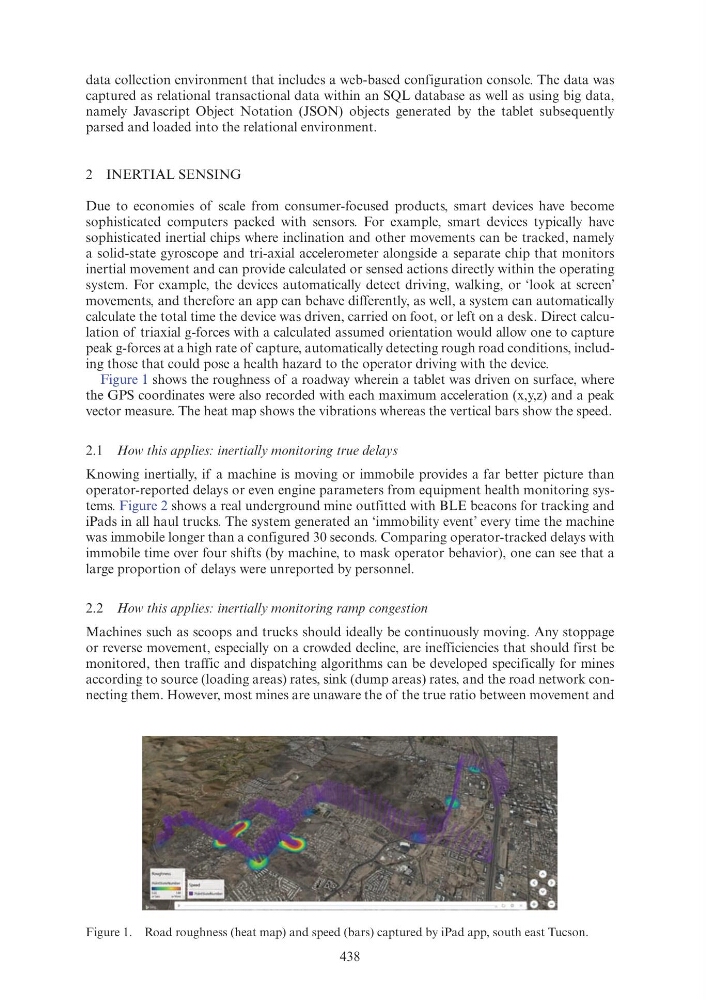
Figure 1 shows the roughness of a roadway wherein a tablet was driven on surface, where
the GPS coordinates were also recorded with each maximum acceleration (x,y,z) and a peak
vector measure. The heat map shows the vibrations whereas the vertical bars show the speed.
2.1 How this applies: inertially monitoring true delays
Knowing inertially, if a machine is moving or immobile provides a far better picture than
operator-reported delays or even engine parameters from equipment health monitoring systems. Figure 2 shows a real underground mine outfitted with BLE beacons for tracking and
iPads in all haul trucks. The system generated an ‘immobility event’ every time the machine
was immobile longer than a configured 30 seconds. Comparing operator-tracked delays with
immobile time over four shifts (by machine, to mask operator behavior), one can see that a
large proportion of delays were unreported by personnel.
2.2 How this applies: inertially monitoring ramp congestion
Machines such as scoops and trucks should ideally be continuously moving. Any stoppage
or reverse movement, especially on a crowded decline, are inefficiencies that should first be
monitored, then traffic and dispatching algorithms can be developed specifically for mines
according to source (loading areas) rates, sink (dump areas) rates, and the road network connecting them. However, most mines are unaware the of the true ratio between movement and
Figure 1. Road roughness (heat map) and speed (bars) captured by iPad app, south east Tucson.
data collection environment that includes a web-based configuration console. The data was
captured as relational transactional data within an SQL database as well as using big data,
namely Javascript Object Notation (JSON) objects generated by the tablet subsequently
parsed and loaded into the relational environment.
2 INERTIAL SENSING
Due to economies of scale from consumer-focused products, smart devices have become
sophisticated computers packed with sensors. For example, smart devices typically have
sophisticated inertial chips where inclination and other movements can be tracked, namely
a solid-state gyroscope and tri-axial accelerometer alongside a separate chip that monitors
inertial movement and can provide calculated or sensed actions directly within the operating
system. For example, the devices automatically detect driving, walking, or ‘look at screen’
movements, and therefore an app can behave differently, as well, a system can automatically
calculate the total time the device was driven, carried on foot, or left on a desk. Direct calculation of triaxial g-forces with a calculated assumed orientation would allow one to capture
peak g-forces at a high rate of capture, automatically detecting rough road conditions, including those that could pose a health hazard to the operator driving with the device.
Figure 1 shows the roughness of a roadway wherein a tablet was driven on surface, where
the GPS coordinates were also recorded with each maximum acceleration (x,y,z) and a peak
vector measure. The heat map shows the vibrations whereas the vertical bars show the speed.
2.1 How this applies: inertially monitoring true delays
Knowing inertially, if a machine is moving or immobile provides a far better picture than
operator-reported delays or even engine parameters from equipment health monitoring systems. Figure 2 shows a real underground mine outfitted with BLE beacons for tracking and
iPads in all haul trucks. The system generated an ‘immobility event’ every time the machine
was immobile longer than a configured 30 seconds. Comparing operator-tracked delays with
immobile time over four shifts (by machine, to mask operator behavior), one can see that a
large proportion of delays were unreported by personnel.
2.2 How this applies: inertially monitoring ramp congestion
Machines such as scoops and trucks should ideally be continuously moving. Any stoppage
or reverse movement, especially on a crowded decline, are inefficiencies that should first be
monitored, then traffic and dispatching algorithms can be developed specifically for mines
according to source (loading areas) rates, sink (dump areas) rates, and the road network connecting them. However, most mines are unaware the of the true ratio between movement and
Figure 1. Road roughness (heat map) and speed (bars) captured by iPad app, south east Tucson.