

320
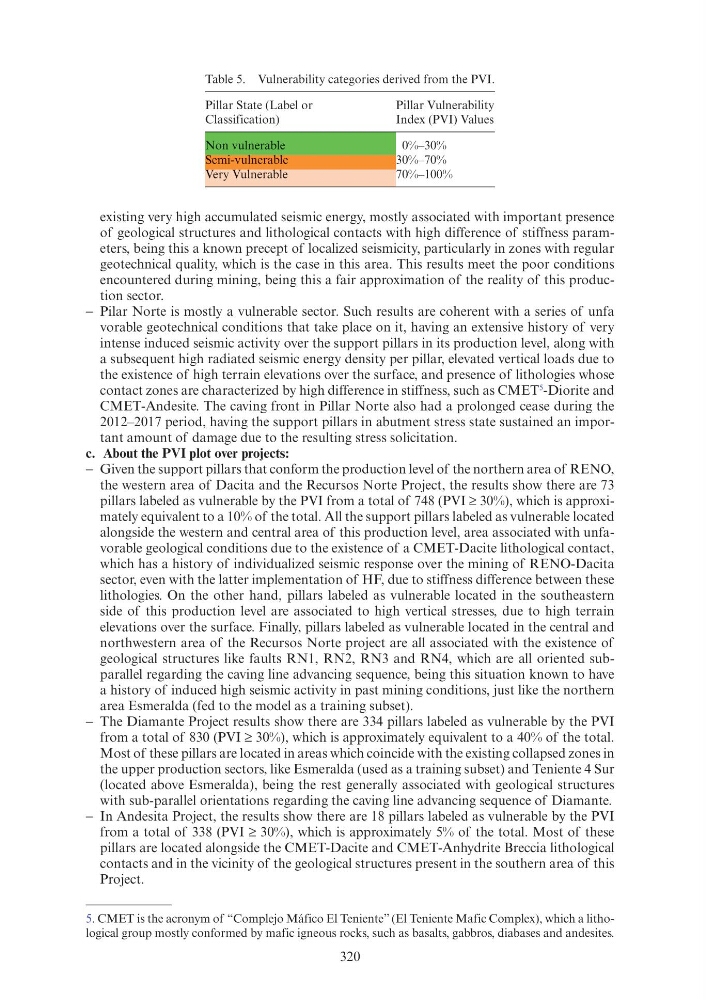
Table 5. Vulnerability categories derived from the PVI.
Pillar State (Label or
Classification)
Pillar Vulnerability
Index (PVI) Values
Non vulnerable
0%–30%
Semi-vulnerable
30%–70%
Very Vulnerable
70%–100%
existing very high accumulated seismic energy, mostly associated with important presence
of geological structures and lithological contacts with high difference of stiffness parameters, being this a known precept of localized seismicity, particularly in zones with regular
geotechnical quality, which is the case in this area. This results meet the poor conditions
encountered during mining, being this a fair approximation of the reality of this production sector.
− Pilar Norte is mostly a vulnerable sector. Such results are coherent with a series of unfa
vorable geotechnical conditions that take place on it, having an extensive history of very
intense induced seismic activity over the support pillars in its production level, along with
a subsequent high radiated seismic energy density per pillar, elevated vertical loads due to
the existence of high terrain elevations over the surface, and presence of lithologies whose
contact zones are characterized by high difference in stiffness, such as CMET
5
-Diorite and
CMET-Andesite. The caving front in Pillar Norte also had a prolonged cease during the
2012–2017 period, having the support pillars in abutment stress state sustained an important amount of damage due to the resulting stress solicitation.
c. About the PVI plot over projects:
− Given the support pillars that conform the production level of the northern area of RENO,
the western area of Dacita and the Recursos Norte Project, the results show there are 73
pillars labeled as vulnerable by the PVI from a total of 748 (PVI ≥ 30%), which is approximately equivalent to a 10% of the total. All the support pillars labeled as vulnerable located
alongside the western and central area of this production level, area associated with unfavorable geological conditions due to the existence of a CMET-Dacite lithological contact,
which has a history of individualized seismic response over the mining of RENO-Dacita
sector, even with the latter implementation of HF, due to stiffness difference between these
lithologies. On the other hand, pillars labeled as vulnerable located in the southeastern
side of this production level are associated to high vertical stresses, due to high terrain
elevations over the surface. Finally, pillars labeled as vulnerable located in the central and
northwestern area of the Recursos Norte project are all associated with the existence of
geological structures like faults RN1, RN2, RN3 and RN4, which are all oriented subparallel regarding the caving line advancing sequence, being this situation known to have
a history of induced high seismic activity in past mining conditions, just like the northern
area Esmeralda (fed to the model as a training subset).
− The Diamante Project results show there are 334 pillars labeled as vulnerable by the PVI
from a total of 830 (PVI ≥ 30%), which is approximately equivalent to a 40% of the total.
Most of these pillars are located in areas which coincide with the existing collapsed zones in
the upper production sectors, like Esmeralda (used as a training subset) and Teniente 4 Sur
(located above Esmeralda), being the rest generally associated with geological structures
with sub-parallel orientations regarding the caving line advancing sequence of Diamante.
− In Andesita Project, the results show there are 18 pillars labeled as vulnerable by the PVI
from a total of 338 (PVI ≥ 30%), which is approximately 5% of the total. Most of these
pillars are located alongside the CMET-Dacite and CMET-Anhydrite Breccia lithological
contacts and in the vicinity of the geological structures present in the southern area of this
Project.
5. CMET is the acronym of “Complejo Máfico El Teniente” (El Teniente Mafic Complex), which a lithological group mostly conformed by mafic igneous rocks, such as basalts, gabbros, diabases and andesites.
Table 5. Vulnerability categories derived from the PVI.
Pillar State (Label or
Classification)
Pillar Vulnerability
Index (PVI) Values
Non vulnerable
0%–30%
Semi-vulnerable
30%–70%
Very Vulnerable
70%–100%
existing very high accumulated seismic energy, mostly associated with important presence
of geological structures and lithological contacts with high difference of stiffness parameters, being this a known precept of localized seismicity, particularly in zones with regular
geotechnical quality, which is the case in this area. This results meet the poor conditions
encountered during mining, being this a fair approximation of the reality of this production sector.
− Pilar Norte is mostly a vulnerable sector. Such results are coherent with a series of unfa
vorable geotechnical conditions that take place on it, having an extensive history of very
intense induced seismic activity over the support pillars in its production level, along with
a subsequent high radiated seismic energy density per pillar, elevated vertical loads due to
the existence of high terrain elevations over the surface, and presence of lithologies whose
contact zones are characterized by high difference in stiffness, such as CMET
5
-Diorite and
CMET-Andesite. The caving front in Pillar Norte also had a prolonged cease during the
2012–2017 period, having the support pillars in abutment stress state sustained an important amount of damage due to the resulting stress solicitation.
c. About the PVI plot over projects:
− Given the support pillars that conform the production level of the northern area of RENO,
the western area of Dacita and the Recursos Norte Project, the results show there are 73
pillars labeled as vulnerable by the PVI from a total of 748 (PVI ≥ 30%), which is approximately equivalent to a 10% of the total. All the support pillars labeled as vulnerable located
alongside the western and central area of this production level, area associated with unfavorable geological conditions due to the existence of a CMET-Dacite lithological contact,
which has a history of individualized seismic response over the mining of RENO-Dacita
sector, even with the latter implementation of HF, due to stiffness difference between these
lithologies. On the other hand, pillars labeled as vulnerable located in the southeastern
side of this production level are associated to high vertical stresses, due to high terrain
elevations over the surface. Finally, pillars labeled as vulnerable located in the central and
northwestern area of the Recursos Norte project are all associated with the existence of
geological structures like faults RN1, RN2, RN3 and RN4, which are all oriented subparallel regarding the caving line advancing sequence, being this situation known to have
a history of induced high seismic activity in past mining conditions, just like the northern
area Esmeralda (fed to the model as a training subset).
− The Diamante Project results show there are 334 pillars labeled as vulnerable by the PVI
from a total of 830 (PVI ≥ 30%), which is approximately equivalent to a 40% of the total.
Most of these pillars are located in areas which coincide with the existing collapsed zones in
the upper production sectors, like Esmeralda (used as a training subset) and Teniente 4 Sur
(located above Esmeralda), being the rest generally associated with geological structures
with sub-parallel orientations regarding the caving line advancing sequence of Diamante.
− In Andesita Project, the results show there are 18 pillars labeled as vulnerable by the PVI
from a total of 338 (PVI ≥ 30%), which is approximately 5% of the total. Most of these
pillars are located alongside the CMET-Dacite and CMET-Anhydrite Breccia lithological
contacts and in the vicinity of the geological structures present in the southern area of this
Project.
5. CMET is the acronym of “Complejo Máfico El Teniente” (El Teniente Mafic Complex), which a lithological group mostly conformed by mafic igneous rocks, such as basalts, gabbros, diabases and andesites.