

3.3 Results for the Adducts of Arzanol with More Than One
Water Molecule
A total of 84 adducts of ARZ with 4–12 water molecules were calculated, with
greater number of adducts with 7, 8 or 9 water molecules. What the calculation of
such adducts may contribute in a study of this type is not an exhaustive inclusion of
all possible options, but a sufficiently representative selection highlighting the
variety of possibilities and some recurrent patterns. The geometries present a high
variety of possible arrangements of the water molecules around the ARZ molecule.
Figure 7 shows some geometries of adducts with different numbers of water
molecules.
Figure 8 illustrates some relevant aspects in the arrangement of water molecules,
including some recurrent patterns. The water molecules tend to keep away from the
region of an IHB, as it is a hydrophobic region [17, 33]. Shapes already encountered for adducts of other ACPLs [17] appear with a certain frequency, such as a
pentagon of O atoms formed by the atoms engaged in an IHB and the O atoms of
the water molecules keeping away from it. The whole region of two cooperative
IHBs appears to be hydrophobic, and the water molecules may form a larger ring
(e.g., seven O atoms) while keeping away from it.
Differently from the adducts with one water molecule, a water molecule may
break an O-H⋯O IMHB and insert itself between the donor and the acceptor; the
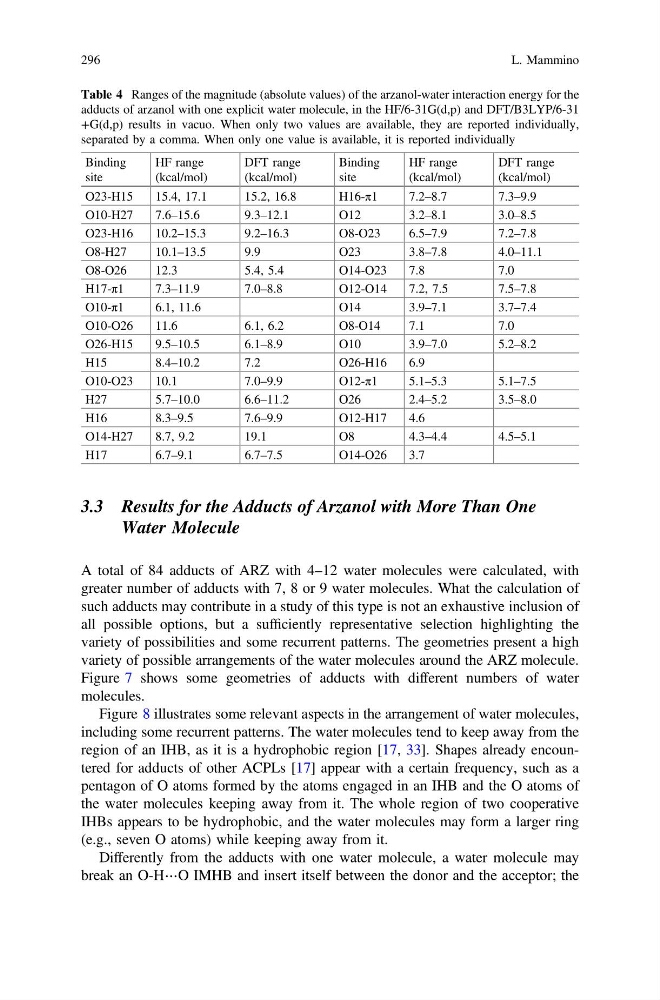
Table 4 Ranges of the magnitude (absolute values) of the arzanol-water interaction energy for the
adducts of arzanol with one explicit water molecule, in the HF/6-31G(d,p) and DFT/B3LYP/6-31
+G(d,p) results in vacuo. When only two values are available, they are reported individually,
separated by a comma. When only one value is available, it is reported individually
Binding
site
HF range
(kcal/mol)
DFT range
(kcal/mol)
Binding
site
HF range
(kcal/mol)
DFT range
(kcal/mol)
O23-H15
15.4, 17.1
15.2, 16.8
H16-π1
7.2–8.7
7.3–9.9
O10-H27
7.6–15.6
9.3–12.1
O12
3.2–8.1
3.0–8.5
O23-H16
10.2–15.3
9.2–16.3
O8-O23
6.5–7.9
7.2–7.8
O8-H27
10.1–13.5
9.9
O23
3.8–7.8
4.0–11.1
O8-O26
12.3
5.4, 5.4
O14-O23
7.8
7.0
H17-π1
7.3–11.9
7.0–8.8
O12-O14
7.2, 7.5
7.5–7.8
O10-π1
6.1, 11.6
O14
3.9–7.1
3.7–7.4
O10-O26
11.6
6.1, 6.2
O8-O14
7.1
7.0
O26-H15
9.5–10.5
6.1–8.9
O10
3.9–7.0
5.2–8.2
H15
8.4–10.2
7.2
O26-H16
6.9
O10-O23
10.1
7.0–9.9
O12-π1
5.1–5.3
5.1–7.5
H27
5.7–10.0
6.6–11.2
O26
2.4–5.2
3.5–8.0
H16
8.3–9.5
7.6–9.9
O12-H17
4.6
O14-H27
8.7, 9.2
19.1
O8
4.3–4.4
4.5–5.1
H17
6.7–9.1
6.7–7.5
O14-O26
3.7
296
L. Mammino
Water Molecule
A total of 84 adducts of ARZ with 4–12 water molecules were calculated, with
greater number of adducts with 7, 8 or 9 water molecules. What the calculation of
such adducts may contribute in a study of this type is not an exhaustive inclusion of
all possible options, but a sufficiently representative selection highlighting the
variety of possibilities and some recurrent patterns. The geometries present a high
variety of possible arrangements of the water molecules around the ARZ molecule.
Figure 7 shows some geometries of adducts with different numbers of water
molecules.
Figure 8 illustrates some relevant aspects in the arrangement of water molecules,
including some recurrent patterns. The water molecules tend to keep away from the
region of an IHB, as it is a hydrophobic region [17, 33]. Shapes already encountered for adducts of other ACPLs [17] appear with a certain frequency, such as a
pentagon of O atoms formed by the atoms engaged in an IHB and the O atoms of
the water molecules keeping away from it. The whole region of two cooperative
IHBs appears to be hydrophobic, and the water molecules may form a larger ring
(e.g., seven O atoms) while keeping away from it.
Differently from the adducts with one water molecule, a water molecule may
break an O-H⋯O IMHB and insert itself between the donor and the acceptor; the
Table 4 Ranges of the magnitude (absolute values) of the arzanol-water interaction energy for the
adducts of arzanol with one explicit water molecule, in the HF/6-31G(d,p) and DFT/B3LYP/6-31
+G(d,p) results in vacuo. When only two values are available, they are reported individually,
separated by a comma. When only one value is available, it is reported individually
Binding
site
HF range
(kcal/mol)
DFT range
(kcal/mol)
Binding
site
HF range
(kcal/mol)
DFT range
(kcal/mol)
O23-H15
15.4, 17.1
15.2, 16.8
H16-π1
7.2–8.7
7.3–9.9
O10-H27
7.6–15.6
9.3–12.1
O12
3.2–8.1
3.0–8.5
O23-H16
10.2–15.3
9.2–16.3
O8-O23
6.5–7.9
7.2–7.8
O8-H27
10.1–13.5
9.9
O23
3.8–7.8
4.0–11.1
O8-O26
12.3
5.4, 5.4
O14-O23
7.8
7.0
H17-π1
7.3–11.9
7.0–8.8
O12-O14
7.2, 7.5
7.5–7.8
O10-π1
6.1, 11.6
O14
3.9–7.1
3.7–7.4
O10-O26
11.6
6.1, 6.2
O8-O14
7.1
7.0
O26-H15
9.5–10.5
6.1–8.9
O10
3.9–7.0
5.2–8.2
H15
8.4–10.2
7.2
O26-H16
6.9
O10-O23
10.1
7.0–9.9
O12-π1
5.1–5.3
5.1–7.5
H27
5.7–10.0
6.6–11.2
O26
2.4–5.2
3.5–8.0
H16
8.3–9.5
7.6–9.9
O12-H17
4.6
O14-H27
8.7, 9.2
19.1
O8
4.3–4.4
4.5–5.1
H17
6.7–9.1
6.7–7.5
O14-O26
3.7
296
L. Mammino