

been reported as optimized [27, 55, 57], and are markedly different from those
obtained by us using the same method of calculation. It seems that in those calculations, geometries reported as the minimum energy were not optimized at the
DFT level, probably assuming predefined structures obtained by molecular dynamic
or similar methods.
The series of PBE calculations was also initiated with the geometry presented in
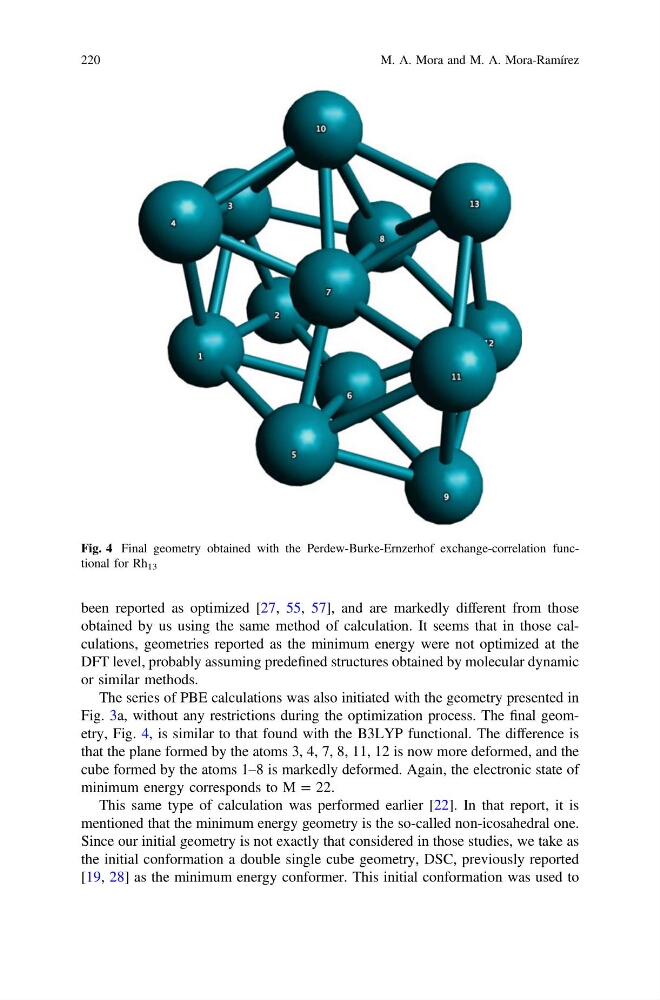
Fig. 3a, without any restrictions during the optimization process. The final geometry, Fig. 4, is similar to that found with the B3LYP functional. The difference is
that the plane formed by the atoms 3, 4, 7, 8, 11, 12 is now more deformed, and the
cube formed by the atoms 1–8 is markedly deformed. Again, the electronic state of
minimum energy corresponds to M = 22.
This same type of calculation was performed earlier [22]. In that report, it is
mentioned that the minimum energy geometry is the so-called non-icosahedral one.
Since our initial geometry is not exactly that considered in those studies, we take as
the initial conformation a double single cube geometry, DSC, previously reported
[19, 28] as the minimum energy conformer. This initial conformation was used to
Fig. 4 Final geometry obtained with the Perdew-Burke-Ernzerhof exchange-correlation functional for Rh 13
220
M. A. Mora and M. A. Mora-Ramírez
obtained by us using the same method of calculation. It seems that in those calculations, geometries reported as the minimum energy were not optimized at the
DFT level, probably assuming predefined structures obtained by molecular dynamic
or similar methods.
The series of PBE calculations was also initiated with the geometry presented in
Fig. 3a, without any restrictions during the optimization process. The final geometry, Fig. 4, is similar to that found with the B3LYP functional. The difference is
that the plane formed by the atoms 3, 4, 7, 8, 11, 12 is now more deformed, and the
cube formed by the atoms 1–8 is markedly deformed. Again, the electronic state of
minimum energy corresponds to M = 22.
This same type of calculation was performed earlier [22]. In that report, it is
mentioned that the minimum energy geometry is the so-called non-icosahedral one.
Since our initial geometry is not exactly that considered in those studies, we take as
the initial conformation a double single cube geometry, DSC, previously reported
[19, 28] as the minimum energy conformer. This initial conformation was used to
Fig. 4 Final geometry obtained with the Perdew-Burke-Ernzerhof exchange-correlation functional for Rh 13
220
M. A. Mora and M. A. Mora-Ramírez