

1s orbital but also hydrogen 2s orbital. Mulliken charge densities of helium and
hydrogen are 0.00 and –1.00, respectively.
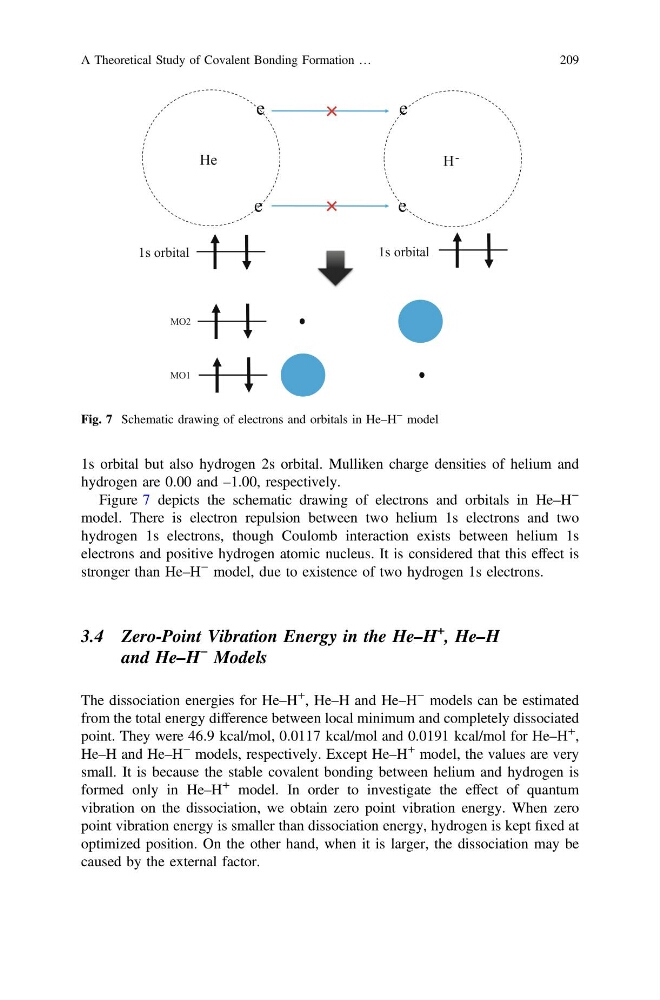
Figure 7 depicts the schematic drawing of electrons and orbitals in He–H
−
model. There is electron repulsion between two helium 1s electrons and two
hydrogen 1s electrons, though Coulomb interaction exists between helium 1s
electrons and positive hydrogen atomic nucleus. It is considered that this effect is
stronger than He–H
− model, due to existence of two hydrogen 1s electrons.
3.4 Zero-Point Vibration Energy in the He–H
+ , He–H
and He–H
− Models
The dissociation energies for He–H
+ , He–H and He–H
− models can be estimated
from the total energy difference between local minimum and completely dissociated
point. They were 46.9 kcal/mol, 0.0117 kcal/mol and 0.0191 kcal/mol for He–H
+
,
He–H and He–H
− models, respectively. Except He–H
+ model, the values are very
small. It is because the stable covalent bonding between helium and hydrogen is
formed only in He–H
+ model. In order to investigate the effect of quantum
vibration on the dissociation, we obtain zero point vibration energy. When zero
point vibration energy is smaller than dissociation energy, hydrogen is kept fixed at
optimized position. On the other hand, when it is larger, the dissociation may be
caused by the external factor.
1s orbital
1s orbital
He
e
e
e
e
H -
MO1
MO2
Fig. 7 Schematic drawing of electrons and orbitals in He–H
− model
A Theoretical Study of Covalent Bonding Formation …
209
hydrogen are 0.00 and –1.00, respectively.
Figure 7 depicts the schematic drawing of electrons and orbitals in He–H
−
model. There is electron repulsion between two helium 1s electrons and two
hydrogen 1s electrons, though Coulomb interaction exists between helium 1s
electrons and positive hydrogen atomic nucleus. It is considered that this effect is
stronger than He–H
− model, due to existence of two hydrogen 1s electrons.
3.4 Zero-Point Vibration Energy in the He–H
+ , He–H
and He–H
− Models
The dissociation energies for He–H
+ , He–H and He–H
− models can be estimated
from the total energy difference between local minimum and completely dissociated
point. They were 46.9 kcal/mol, 0.0117 kcal/mol and 0.0191 kcal/mol for He–H
+
,
He–H and He–H
− models, respectively. Except He–H
+ model, the values are very
small. It is because the stable covalent bonding between helium and hydrogen is
formed only in He–H
+ model. In order to investigate the effect of quantum
vibration on the dissociation, we obtain zero point vibration energy. When zero
point vibration energy is smaller than dissociation energy, hydrogen is kept fixed at
optimized position. On the other hand, when it is larger, the dissociation may be
caused by the external factor.
1s orbital
1s orbital
He
e
e
e
e
H -
MO1
MO2
Fig. 7 Schematic drawing of electrons and orbitals in He–H
− model
A Theoretical Study of Covalent Bonding Formation …
209