

of the microbially treated concrete revealed that the repair is done only at the surface
layer, and often the part of the crack deep inside the concrete remains unsealed
[121]. One of the factors that contributed to this phenomenon is the oxygen limitation in the deeper zone of the crack that hampers the activities of the microbes and
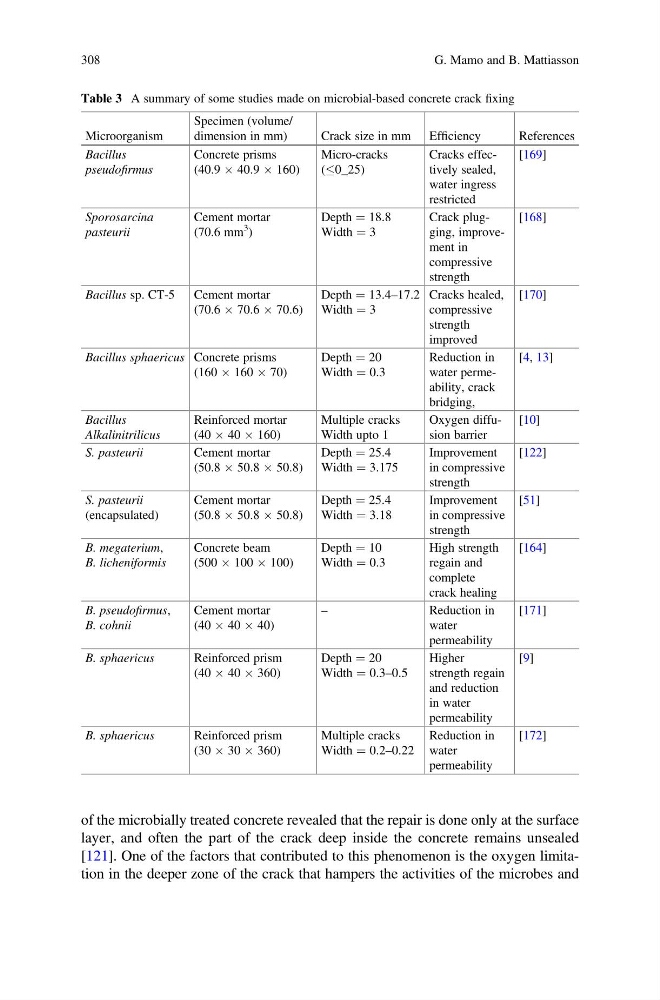
Table 3 A summary of some studies made on microbial-based concrete crack fixing
Microorganism
Specimen (volume/
dimension in mm)
Crack size in mm Efficiency
References
Bacillus
pseudofirmus
Concrete prisms
(40.9 Â 40.9 Â 160)
Micro-cracks
( 0_25)
Cracks effectively sealed,
water ingress
restricted
[169]
Sporosarcina
pasteurii
Cement mortar
(70.6 mm
3
)
Depth ¼ 18.8
Width ¼ 3
Crack plugging, improvement in
compressive
strength
[168]
Bacillus sp. CT-5
Cement mortar
(70.6 Â 70.6 Â 70.6)
Depth ¼ 13.4–17.2
Width ¼ 3
Cracks healed,
compressive
strength
improved
[170]
Bacillus sphaericus Concrete prisms
(160 Â 160 Â 70)
Depth ¼ 20
Width ¼ 0.3
Reduction in
water permeability, crack
bridging,
[4, 13]
Bacillus
Alkalinitrilicus
Reinforced mortar
(40 Â 40 Â 160)
Multiple cracks
Width upto 1
Oxygen diffusion barrier
[10]
S. pasteurii
Cement mortar
(50.8 Â 50.8 Â 50.8)
Depth ¼ 25.4
Width ¼ 3.175
Improvement
in compressive
strength
[122]
S. pasteurii
(encapsulated)
Cement mortar
(50.8 Â 50.8 Â 50.8)
Depth ¼ 25.4
Width ¼ 3.18
Improvement
in compressive
strength
[51]
B. megaterium,
B. licheniformis
Concrete beam
(500 Â 100 Â 100)
Depth ¼ 10
Width ¼ 0.3
High strength
regain and
complete
crack healing
[164]
B. pseudofirmus,
B. cohnii
Cement mortar
(40 Â 40 Â 40)
–
Reduction in
water
permeability
[171]
B. sphaericus
Reinforced prism
(40 Â 40 Â 360)
Depth ¼ 20
Width ¼ 0.3–0.5
Higher
strength regain
and reduction
in water
permeability
[9]
B. sphaericus
Reinforced prism
(30 Â 30 Â 360)
Multiple cracks
Width ¼ 0.2–0.22
Reduction in
water
permeability
[172]
308
G. Mamo and B. Mattiasson
layer, and often the part of the crack deep inside the concrete remains unsealed
[121]. One of the factors that contributed to this phenomenon is the oxygen limitation in the deeper zone of the crack that hampers the activities of the microbes and
Table 3 A summary of some studies made on microbial-based concrete crack fixing
Microorganism
Specimen (volume/
dimension in mm)
Crack size in mm Efficiency
References
Bacillus
pseudofirmus
Concrete prisms
(40.9 Â 40.9 Â 160)
Micro-cracks
( 0_25)
Cracks effectively sealed,
water ingress
restricted
[169]
Sporosarcina
pasteurii
Cement mortar
(70.6 mm
3
)
Depth ¼ 18.8
Width ¼ 3
Crack plugging, improvement in
compressive
strength
[168]
Bacillus sp. CT-5
Cement mortar
(70.6 Â 70.6 Â 70.6)
Depth ¼ 13.4–17.2
Width ¼ 3
Cracks healed,
compressive
strength
improved
[170]
Bacillus sphaericus Concrete prisms
(160 Â 160 Â 70)
Depth ¼ 20
Width ¼ 0.3
Reduction in
water permeability, crack
bridging,
[4, 13]
Bacillus
Alkalinitrilicus
Reinforced mortar
(40 Â 40 Â 160)
Multiple cracks
Width upto 1
Oxygen diffusion barrier
[10]
S. pasteurii
Cement mortar
(50.8 Â 50.8 Â 50.8)
Depth ¼ 25.4
Width ¼ 3.175
Improvement
in compressive
strength
[122]
S. pasteurii
(encapsulated)
Cement mortar
(50.8 Â 50.8 Â 50.8)
Depth ¼ 25.4
Width ¼ 3.18
Improvement
in compressive
strength
[51]
B. megaterium,
B. licheniformis
Concrete beam
(500 Â 100 Â 100)
Depth ¼ 10
Width ¼ 0.3
High strength
regain and
complete
crack healing
[164]
B. pseudofirmus,
B. cohnii
Cement mortar
(40 Â 40 Â 40)
–
Reduction in
water
permeability
[171]
B. sphaericus
Reinforced prism
(40 Â 40 Â 360)
Depth ¼ 20
Width ¼ 0.3–0.5
Higher
strength regain
and reduction
in water
permeability
[9]
B. sphaericus
Reinforced prism
(30 Â 30 Â 360)
Multiple cracks
Width ¼ 0.2–0.22
Reduction in
water
permeability
[172]
308
G. Mamo and B. Mattiasson