

requires extensive washing and neutralization before it is hydrolyzed by neutral or
acid active enzymes. This is not only cost incurring but also is time-consuming. On
the other hand, the use of alkaline active enzymes allows direct hydrolysis of alkaliextracted hemicellulose. This has motivated the evaluation of alkaline active
hemicellulases in production of the oligosaccharides. Alkaline active xylanases
have been successfully used to produce XOS [181–184]. Similarly, production of
MOS by alkaline active mannanases has been reported [103, 105, 106].
6.5 Hemicellulose Biorefinery
Biorefinery is a concept of an integrated process which valorizes biomass to different
value-added products in a way a petroleum refinery produces various petrochemicals
from crude oil. Biorefineries primarily separate the major constituents of plant
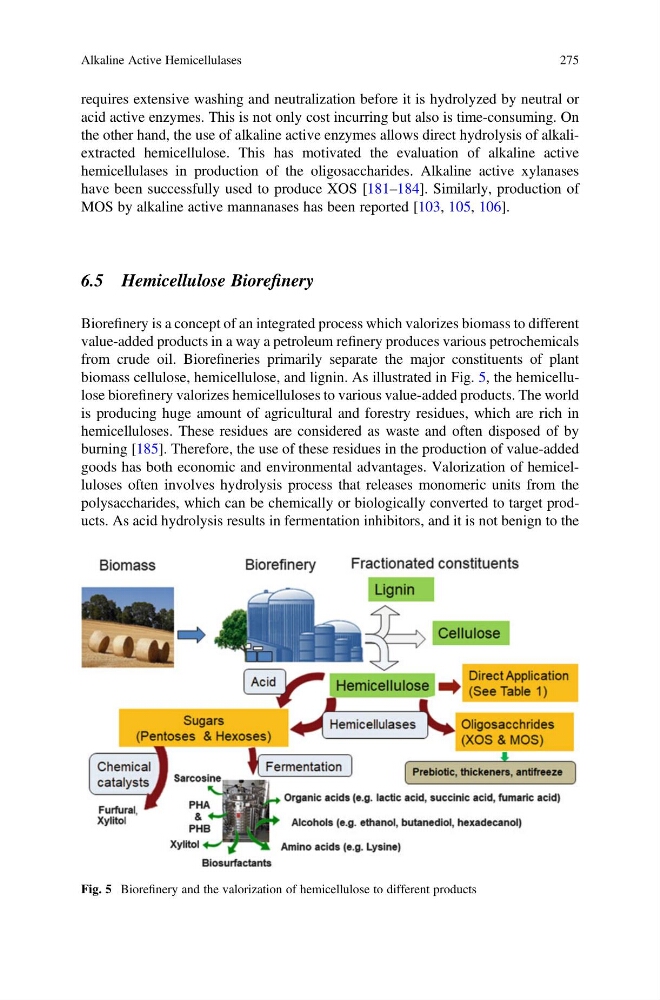
biomass cellulose, hemicellulose, and lignin. As illustrated in Fig. 5, the hemicellulose biorefinery valorizes hemicelluloses to various value-added products. The world
is producing huge amount of agricultural and forestry residues, which are rich in
hemicelluloses. These residues are considered as waste and often disposed of by
burning [185]. Therefore, the use of these residues in the production of value-added
goods has both economic and environmental advantages. Valorization of hemicelluloses often involves hydrolysis process that releases monomeric units from the
polysaccharides, which can be chemically or biologically converted to target products. As acid hydrolysis results in fermentation inhibitors, and it is not benign to the
Fig. 5 Biorefinery and the valorization of hemicellulose to different products
Alkaline Active Hemicellulases
275
acid active enzymes. This is not only cost incurring but also is time-consuming. On
the other hand, the use of alkaline active enzymes allows direct hydrolysis of alkaliextracted hemicellulose. This has motivated the evaluation of alkaline active
hemicellulases in production of the oligosaccharides. Alkaline active xylanases
have been successfully used to produce XOS [181–184]. Similarly, production of
MOS by alkaline active mannanases has been reported [103, 105, 106].
6.5 Hemicellulose Biorefinery
Biorefinery is a concept of an integrated process which valorizes biomass to different
value-added products in a way a petroleum refinery produces various petrochemicals
from crude oil. Biorefineries primarily separate the major constituents of plant
biomass cellulose, hemicellulose, and lignin. As illustrated in Fig. 5, the hemicellulose biorefinery valorizes hemicelluloses to various value-added products. The world
is producing huge amount of agricultural and forestry residues, which are rich in
hemicelluloses. These residues are considered as waste and often disposed of by
burning [185]. Therefore, the use of these residues in the production of value-added
goods has both economic and environmental advantages. Valorization of hemicelluloses often involves hydrolysis process that releases monomeric units from the
polysaccharides, which can be chemically or biologically converted to target products. As acid hydrolysis results in fermentation inhibitors, and it is not benign to the
Fig. 5 Biorefinery and the valorization of hemicellulose to different products
Alkaline Active Hemicellulases
275