

2 Scope of Enzymes that Act on Starch
Enzymes that act on starch are a very diverse group that exhibit a wide variety
of substrate and product specificity. They are divided into four groups based on
the reactions they catalyse and the products formed by their action on starch.
These include (1) endoamylases, (2) exoamylases, (3) debranching enzymes and
(4) transferases [2–5]. Starch-modifying enzymes can be obtained from animals,
plants and microorganisms. However, it is those from fungal and bacterial origin
that are widely applied in the industries.
2.1 Endoamylases
This group of enzymes cleaves the α-1-4 glycosidic bonds present in the inner part
of the amylose and amylopectin polymers, to produce linear and branched oligosaccharides of varying lengths referred to as α-limit dextrins. The products formed are
in the α-anomeric configuration as a result of the retaining mechanism of bond
cleavage. An example of endoamylase is α-amylase (EC 3.2.1.1). Endoamylases
are further divided into two categories according to the degree of hydrolysis of
substrates: liquefying (30–40%) and saccharifying (50–60%) amylases [6].
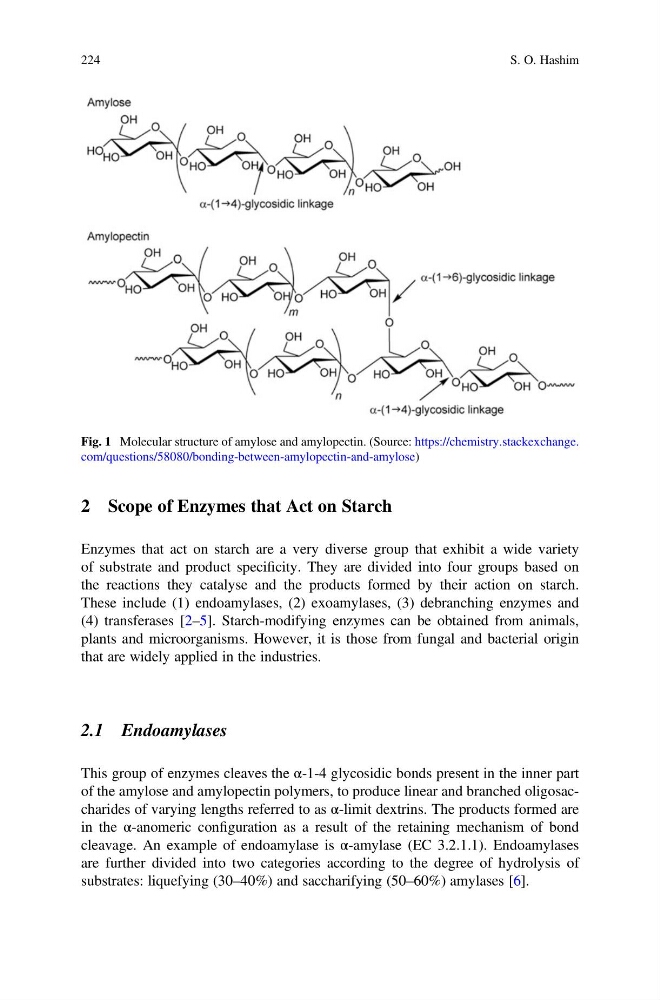
Fig. 1 Molecular structure of amylose and amylopectin. (Source: https://chemistry.stackexchange.
com/questions/58080/bonding-between-amylopectin-and-amylose)
224
S. O. Hashim
Enzymes that act on starch are a very diverse group that exhibit a wide variety
of substrate and product specificity. They are divided into four groups based on
the reactions they catalyse and the products formed by their action on starch.
These include (1) endoamylases, (2) exoamylases, (3) debranching enzymes and
(4) transferases [2–5]. Starch-modifying enzymes can be obtained from animals,
plants and microorganisms. However, it is those from fungal and bacterial origin
that are widely applied in the industries.
2.1 Endoamylases
This group of enzymes cleaves the α-1-4 glycosidic bonds present in the inner part
of the amylose and amylopectin polymers, to produce linear and branched oligosaccharides of varying lengths referred to as α-limit dextrins. The products formed are
in the α-anomeric configuration as a result of the retaining mechanism of bond
cleavage. An example of endoamylase is α-amylase (EC 3.2.1.1). Endoamylases
are further divided into two categories according to the degree of hydrolysis of
substrates: liquefying (30–40%) and saccharifying (50–60%) amylases [6].
Fig. 1 Molecular structure of amylose and amylopectin. (Source: https://chemistry.stackexchange.
com/questions/58080/bonding-between-amylopectin-and-amylose)
224
S. O. Hashim