

80 PETROLEUM TECHNOLOGY, ECONOMICS, AND POLITICS
pumps on the surface or submerged (electrical submersible pumps,
ESPs), are used to bring the oil to the surface. Other secondary
recovery techniques increase the reservoir's pressure by water
injection and gas injection, which injects air or some other gas into
the reservoir are used.
Together, primary recovery and secondary recovery allow 25%
to 35% of the reservoir's oil to be recovered.
Primary (or conventional) recovery can leave as much as 70%
of the petroleum in the reservoir. Thus, there are two main objectives in secondary crude oil production: (1) to supplement the
depleted reservoir energy pressure and (2) to sweep the crude oil
from the injection well toward and into the production well. In fact,
secondary oil recovery involves the introduction of energy into a
reservoir to produce more oil. For example, the addition of materials to reduce the interfacial tension of the oil results in a higher
recovery of oil.
The most common follow-up, or secondary recovery, operations
usually involve the application of pumping operations or of injection of materials into a well to encourage movement and recovery
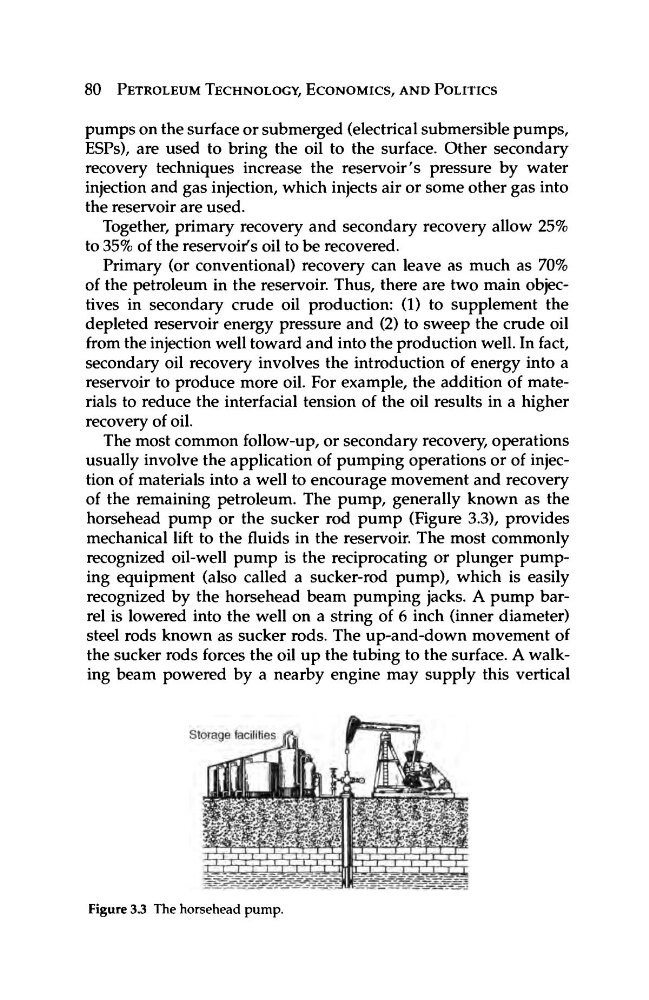
of the remaining petroleum. The pump, generally known as the
horsehead pump or the sucker rod pump (Figure 3.3), provides
mechanical lift to the fluids in the reservoir. The most commonly
recognized oil-well pump is the reciprocating or plunger pumping equipment (also called a sucker-rod pump), which is easily
recognized by the horsehead beam pumping jacks. A pump barrel is lowered into the well on a string of 6 inch (inner diameter)
steel rods known as sucker rods. The up-and-down movement of
the sucker rods forces the oil up the tubing to the surface. A walking beam powered by a nearby engine may supply this vertical
Figure 3.3 The horsehead pump.
pumps on the surface or submerged (electrical submersible pumps,
ESPs), are used to bring the oil to the surface. Other secondary
recovery techniques increase the reservoir's pressure by water
injection and gas injection, which injects air or some other gas into
the reservoir are used.
Together, primary recovery and secondary recovery allow 25%
to 35% of the reservoir's oil to be recovered.
Primary (or conventional) recovery can leave as much as 70%
of the petroleum in the reservoir. Thus, there are two main objectives in secondary crude oil production: (1) to supplement the
depleted reservoir energy pressure and (2) to sweep the crude oil
from the injection well toward and into the production well. In fact,
secondary oil recovery involves the introduction of energy into a
reservoir to produce more oil. For example, the addition of materials to reduce the interfacial tension of the oil results in a higher
recovery of oil.
The most common follow-up, or secondary recovery, operations
usually involve the application of pumping operations or of injection of materials into a well to encourage movement and recovery
of the remaining petroleum. The pump, generally known as the
horsehead pump or the sucker rod pump (Figure 3.3), provides
mechanical lift to the fluids in the reservoir. The most commonly
recognized oil-well pump is the reciprocating or plunger pumping equipment (also called a sucker-rod pump), which is easily
recognized by the horsehead beam pumping jacks. A pump barrel is lowered into the well on a string of 6 inch (inner diameter)
steel rods known as sucker rods. The up-and-down movement of
the sucker rods forces the oil up the tubing to the surface. A walking beam powered by a nearby engine may supply this vertical
Figure 3.3 The horsehead pump.