

32 PETROLEUM TECHNOLOGY, ECONOMICS, AND POLITICS
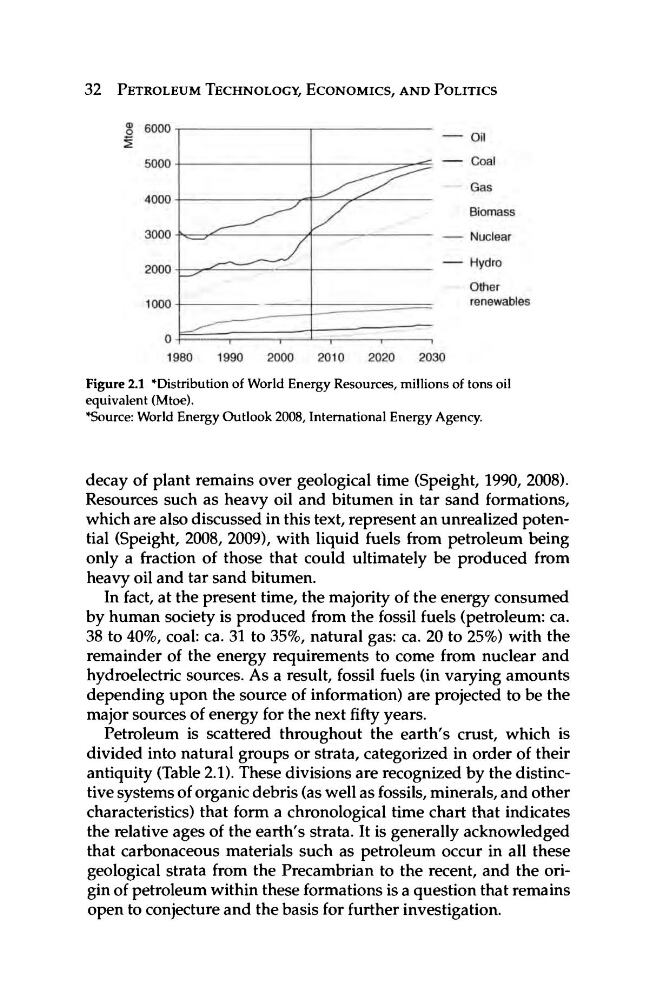
Figure 2.1 *Distribution of World Energy Resources, millions of tons oil
equivalent (Mtoe).
*Source: World Energy Outlook 2008, International Energy Agency.
decay of plant remains over geological time (Speight, 1990, 2008).
Resources such as heavy oil and bitumen in tar sand formations,
which are also discussed in this text, represent an unrealized potential (Speight, 2008, 2009), with liquid fuels from petroleum being
only a fraction of those that could ultimately be produced from
heavy oil and tar sand bitumen.
In fact, at the present time, the majority of the energy consumed
by human society is produced from the fossil fuels (petroleum: ca.
38 to 40%, coal: ca. 31 to 35%, natural gas: ca. 20 to 25%) with the
remainder of the energy requirements to come from nuclear and
hydroelectric sources. As a result, fossil fuels (in varying amounts
depending upon the source of information) are projected to be the
major sources of energy for the next fifty years.
Petroleum is scattered throughout the earth's crust, which is
divided into natural groups or strata, categorized in order of their
antiquity (Table 2.1). These divisions are recognized by the distinctive systems of organic debris (as well as fossils, minerals, and other
characteristics) that form a chronological time chart that indicates
the relative ages of the earth's strata. It is generally acknowledged
that carbonaceous materials such as petroleum occur in all these
geological strata from the Precambrian to the recent, and the origin of petroleum within these formations is a question that remains
open to conjecture and the basis for further investigation.
Figure 2.1 *Distribution of World Energy Resources, millions of tons oil
equivalent (Mtoe).
*Source: World Energy Outlook 2008, International Energy Agency.
decay of plant remains over geological time (Speight, 1990, 2008).
Resources such as heavy oil and bitumen in tar sand formations,
which are also discussed in this text, represent an unrealized potential (Speight, 2008, 2009), with liquid fuels from petroleum being
only a fraction of those that could ultimately be produced from
heavy oil and tar sand bitumen.
In fact, at the present time, the majority of the energy consumed
by human society is produced from the fossil fuels (petroleum: ca.
38 to 40%, coal: ca. 31 to 35%, natural gas: ca. 20 to 25%) with the
remainder of the energy requirements to come from nuclear and
hydroelectric sources. As a result, fossil fuels (in varying amounts
depending upon the source of information) are projected to be the
major sources of energy for the next fifty years.
Petroleum is scattered throughout the earth's crust, which is
divided into natural groups or strata, categorized in order of their
antiquity (Table 2.1). These divisions are recognized by the distinctive systems of organic debris (as well as fossils, minerals, and other
characteristics) that form a chronological time chart that indicates
the relative ages of the earth's strata. It is generally acknowledged
that carbonaceous materials such as petroleum occur in all these
geological strata from the Precambrian to the recent, and the origin of petroleum within these formations is a question that remains
open to conjecture and the basis for further investigation.