

HISTORY AND TERMINOLOGY OF CRUDE OIL 19
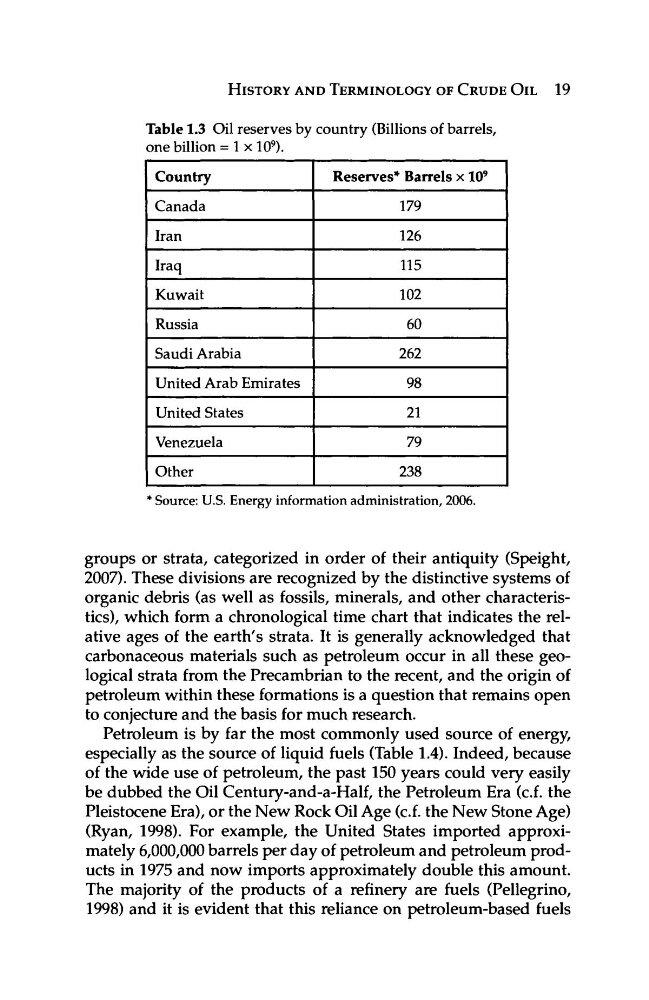
Table 1.3 Oil reserves by country (Billions of barrels,
one billion = 1 x 10
9
).
Country
Canada
Iran
Iraq
Kuwait
Russia
Saudi Arabia
United Arab Emirates
United States
Venezuela
Other
Reserves* Barrels x 10'
179
126
115
102
60
262
98
21
79
238
* Source: U.S. Energy information administration, 2006.
groups or strata, categorized in order of their antiquity (Speight,
2007). These divisions are recognized by the distinctive systems of
organic debris (as well as fossils, minerals, and other characteristics), which form a chronological time chart that indicates the relative ages of the earth's strata. It is generally acknowledged that
carbonaceous materials such as petroleum occur in all these geological strata from the Precambrian to the recent, and the origin of
petroleum within these formations is a question that remains open
to conjecture and the basis for much research.
Petroleum is by far the most commonly used source of energy,
especially as the source of liquid fuels (Table 1.4). Indeed, because
of the wide use of petroleum, the past 150 years could very easily
be dubbed the Oil Century-and-a-Half, the Petroleum Era (cf. the
Pleistocene Era), or the New Rock Oil Age (cf. the New Stone Age)
(Ryan, 1998). For example, the United States imported approximately 6,000,000 barrels per day of petroleum and petroleum products in 1975 and now imports approximately double this amount.
The majority of the products of a refinery are fuels (Pellegrino,
1998) and it is evident that this reliance on petroleum-based fuels
Table 1.3 Oil reserves by country (Billions of barrels,
one billion = 1 x 10
9
).
Country
Canada
Iran
Iraq
Kuwait
Russia
Saudi Arabia
United Arab Emirates
United States
Venezuela
Other
Reserves* Barrels x 10'
179
126
115
102
60
262
98
21
79
238
* Source: U.S. Energy information administration, 2006.
groups or strata, categorized in order of their antiquity (Speight,
2007). These divisions are recognized by the distinctive systems of
organic debris (as well as fossils, minerals, and other characteristics), which form a chronological time chart that indicates the relative ages of the earth's strata. It is generally acknowledged that
carbonaceous materials such as petroleum occur in all these geological strata from the Precambrian to the recent, and the origin of
petroleum within these formations is a question that remains open
to conjecture and the basis for much research.
Petroleum is by far the most commonly used source of energy,
especially as the source of liquid fuels (Table 1.4). Indeed, because
of the wide use of petroleum, the past 150 years could very easily
be dubbed the Oil Century-and-a-Half, the Petroleum Era (cf. the
Pleistocene Era), or the New Rock Oil Age (cf. the New Stone Age)
(Ryan, 1998). For example, the United States imported approximately 6,000,000 barrels per day of petroleum and petroleum products in 1975 and now imports approximately double this amount.
The majority of the products of a refinery are fuels (Pellegrino,
1998) and it is evident that this reliance on petroleum-based fuels