

108
PETROLEUM TECHNOLOGY, ECONOMICS, AND POLITICS
f Gas
Natural gas
Organic
sediments
I
Associated gas
Crude oil
Heavy oil
Tar sand bitumen
\ Soli< Solid
Coal
Oil shale
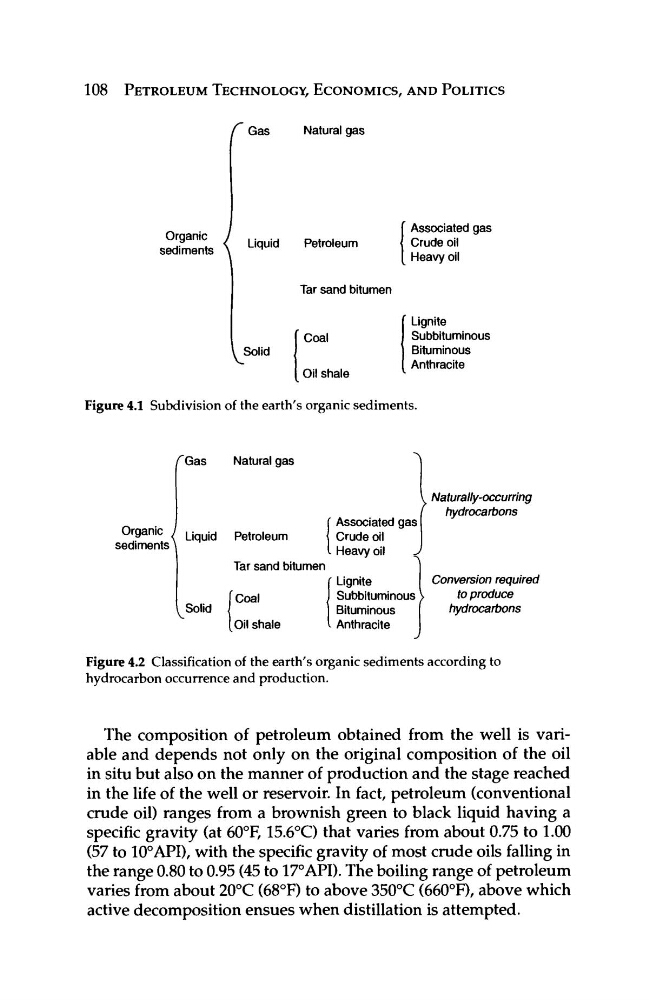
Figure 4.1 Subdivision of the earth's organic sediments.
Lignite
Subbituminous
Bituminous
Anthracite
(Gas
Natural gas
Λ
f
. 1
C Associated gas
Organic I u ¡ d P e t r o | e u m
Crude oil
sediments ^
I Heavy oil
J
Tar sand bitumen
I
Lignite
Subbituminous V
Bituminous
Anthracite
V Naturally-occurring
hydrocarbons
Conversion required
to produce
hydrocarbons
Figure 4.2 Classification of the earth's organic sediments according to
hydrocarbon occurrence and production.
The composition of petroleum obtained from the well is variable and depends not only on the original composition of the oil
in situ but also on the manner of production and the stage reached
in the life of the well or reservoir. In fact, petroleum (conventional
crude oil) ranges from a brownish green to black liquid having a
specific gravity (at 60°F> 15.6°C) that varies from about 0.75 to 1.00
(57 to 10°API), with the specific gravity of most crude oils falling in
the range 0.80 to 0.95 (45 to 17°API). The boiling range of petroleum
varies from about 20°C (68°F) to above 350°C (660°F), above which
active decomposition ensues when distillation is attempted.
PETROLEUM TECHNOLOGY, ECONOMICS, AND POLITICS
f Gas
Natural gas
Organic
sediments
I
Associated gas
Crude oil
Heavy oil
Tar sand bitumen
\ Soli< Solid
Coal
Oil shale
Figure 4.1 Subdivision of the earth's organic sediments.
Lignite
Subbituminous
Bituminous
Anthracite
(Gas
Natural gas
Λ
f
. 1
C Associated gas
Organic I u ¡ d P e t r o | e u m
Crude oil
sediments ^
I Heavy oil
J
Tar sand bitumen
I
Lignite
Subbituminous V
Bituminous
Anthracite
V Naturally-occurring
hydrocarbons
Conversion required
to produce
hydrocarbons
Figure 4.2 Classification of the earth's organic sediments according to
hydrocarbon occurrence and production.
The composition of petroleum obtained from the well is variable and depends not only on the original composition of the oil
in situ but also on the manner of production and the stage reached
in the life of the well or reservoir. In fact, petroleum (conventional
crude oil) ranges from a brownish green to black liquid having a
specific gravity (at 60°F> 15.6°C) that varies from about 0.75 to 1.00
(57 to 10°API), with the specific gravity of most crude oils falling in
the range 0.80 to 0.95 (45 to 17°API). The boiling range of petroleum
varies from about 20°C (68°F) to above 350°C (660°F), above which
active decomposition ensues when distillation is attempted.