

The difference in energy between multiple different conformations was found to be
quite small, and as a result the distance between the metal fragments was poorly
defined. This result tended to undermine attempts to correlate the activity of the
catalysts with their metalÀmetal separation, and no such correlation could be made
(Fig. 3).
In an effort to constrain the flexibility in this type of bimetallic catalyst, complex
46 was synthesised which contains imidazolyl-imine ligands attached directly to the
1,2-phenylene scaffold via the imine nitrogen (Scheme 17) [91]. This arrangement
significantly reduces the degree of conformational freedom for complex 46, which
OH
1 mol% Rh
100 o C, CD 2 Cl 4
OH
O
O
O
O
+
N
N
N
N
Rh
CO
CO
[BAr F
4 ]
N
N
N
N
Rh
OC
OC
N
N
N
N
Rh
CO
CO
[BAr F
4 ] 2
37, 754 h -1
41, (n= 2), 2617 h -1
42, (n= 3), 2713 h -1
n
N
N
N
N
Rh
CO
CO
[BAr F
4 ] 2
38, 3174 h -1
N
N
N
N
Rh
OC
OC
Fe
N
N
N
N
Rh
CO
CO
N
N
N
N
Rh
OC
OC
[BAr F
4 ] 2
43, 2500 h -1
[BAr F
4 ] 2
39, 5988 h -1
N
N
N
N
Rh
OC
OC
N
N
N
N
Rh
CO
CO
O
[BAr F
4 ] 2
N
N
N
N
Rh
CO
CO
N
N
N
N
Rh
CO
OC
44, 3774 h -1
O
N
N
N
N
Rh
CO
OC
N
N
N
N
Rh
CO
CO
[BAr F
4 ] 2
N
N
N
N
Rh
CO
OC
N
N
N
N
Rh
OC
CO
[BAr F
4 ] 2
40, 9523 h -1
45, 5497 h -1
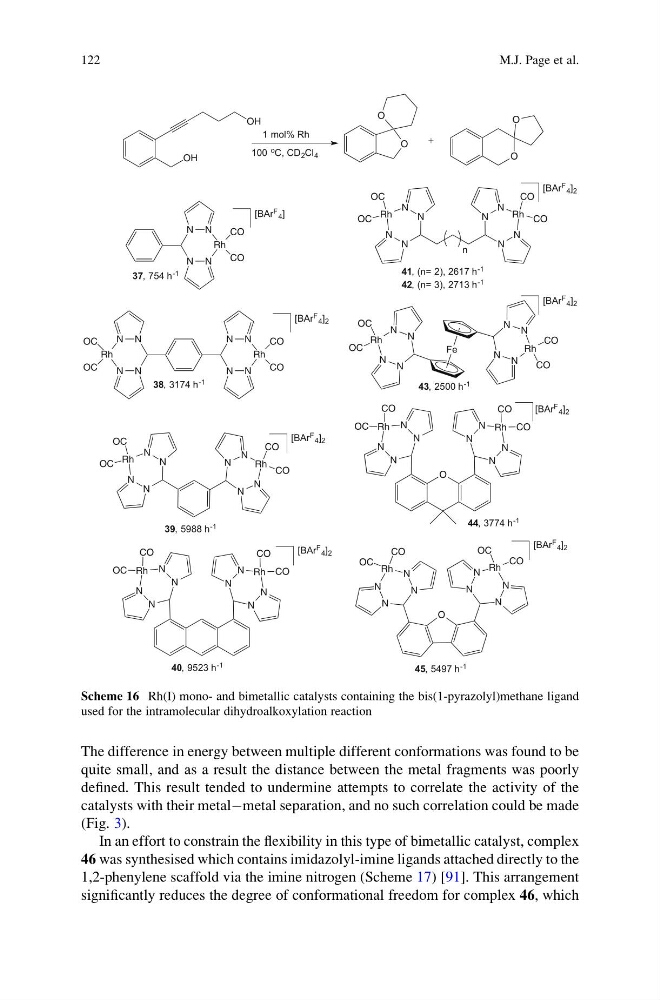
Scheme 16 Rh(I) mono- and bimetallic catalysts containing the bis(1-pyrazolyl)methane ligand
used for the intramolecular dihydroalkoxylation reaction
122
M.J. Page et al.
quite small, and as a result the distance between the metal fragments was poorly
defined. This result tended to undermine attempts to correlate the activity of the
catalysts with their metalÀmetal separation, and no such correlation could be made
(Fig. 3).
In an effort to constrain the flexibility in this type of bimetallic catalyst, complex
46 was synthesised which contains imidazolyl-imine ligands attached directly to the
1,2-phenylene scaffold via the imine nitrogen (Scheme 17) [91]. This arrangement
significantly reduces the degree of conformational freedom for complex 46, which
OH
1 mol% Rh
100 o C, CD 2 Cl 4
OH
O
O
O
O
+
N
N
N
N
Rh
CO
CO
[BAr F
4 ]
N
N
N
N
Rh
OC
OC
N
N
N
N
Rh
CO
CO
[BAr F
4 ] 2
37, 754 h -1
41, (n= 2), 2617 h -1
42, (n= 3), 2713 h -1
n
N
N
N
N
Rh
CO
CO
[BAr F
4 ] 2
38, 3174 h -1
N
N
N
N
Rh
OC
OC
Fe
N
N
N
N
Rh
CO
CO
N
N
N
N
Rh
OC
OC
[BAr F
4 ] 2
43, 2500 h -1
[BAr F
4 ] 2
39, 5988 h -1
N
N
N
N
Rh
OC
OC
N
N
N
N
Rh
CO
CO
O
[BAr F
4 ] 2
N
N
N
N
Rh
CO
CO
N
N
N
N
Rh
CO
OC
44, 3774 h -1
O
N
N
N
N
Rh
CO
OC
N
N
N
N
Rh
CO
CO
[BAr F
4 ] 2
N
N
N
N
Rh
CO
OC
N
N
N
N
Rh
OC
CO
[BAr F
4 ] 2
40, 9523 h -1
45, 5497 h -1
Scheme 16 Rh(I) mono- and bimetallic catalysts containing the bis(1-pyrazolyl)methane ligand
used for the intramolecular dihydroalkoxylation reaction
122
M.J. Page et al.