

provide data on their proprietary processes, as may the refining company’s own
research department.
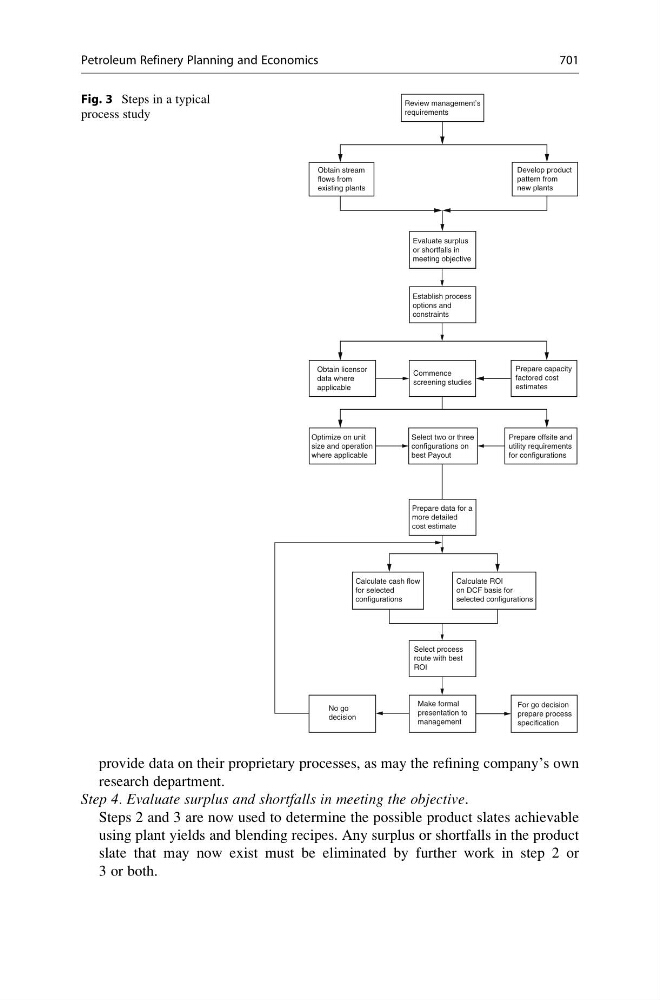
Step 4. Evaluate surplus and shortfalls in meeting the objective.
Steps 2 and 3 are now used to determine the possible product slates achievable
using plant yields and blending recipes. Any surplus or shortfalls in the product
slate that may now exist must be eliminated by further work in step 2 or
3 or both.
Review management’s
requirements
Obtain stream
flows from
existing plants
Evaluate surplus
or shortfalls in
meeting objective
Establish process
options and
constraints
Obtain licensor
data where
applicable
Optimize on unit
size and operation
where applicable
Select two or three
configurations on
best Payout
Prepare data for a
more detailed
cost estimate
Calculate cash flow
for selected
configurations
Prepare offsite and
utility requirements
for configurations
Commence
screening studies
Prepare capacity
factored cost
estimates
Develop product
pattern from
new plants
Calculate ROI
on DCF basis for
selected configurations
Select process
route with best
ROI
No go
decision
Make formal
presentation to
management
For go decision
prepare process
specification
Fig. 3 Steps in a typical
process study
Petroleum Refinery Planning and Economics
701