

Once a unit is operating, it is worthwhile to have your PSA vendor periodically
review the operation and fine-tune it (say, annually). They can help spot potential
issues that may not be obvious.
Monitoring
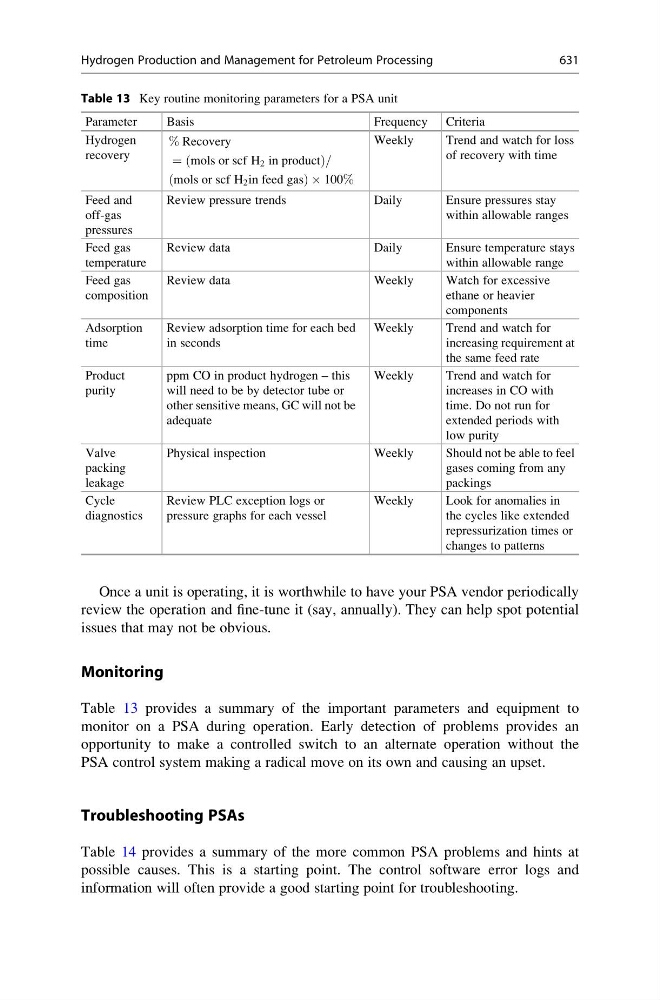
Table 13 provides a summary of the important parameters and equipment to
monitor on a PSA during operation. Early detection of problems provides an
opportunity to make a controlled switch to an alternate operation without the
PSA control system making a radical move on its own and causing an upset.
Troubleshooting PSAs
Table 14 provides a summary of the more common PSA problems and hints at
possible causes. This is a starting point. The control software error logs and
information will often provide a good starting point for troubleshooting.
Table 13 Key routine monitoring parameters for a PSA unit
Parameter
Basis
Frequency Criteria
Hydrogen
recovery
% Recovery
¼ mols or scf H 2 in product
ð
Þ =
mols or scf H 2 in feed gas
ð
Þ Â 100%
Weekly
Trend and watch for loss
of recovery with time
Feed and
off-gas
pressures
Review pressure trends
Daily
Ensure pressures stay
within allowable ranges
Feed gas
temperature
Review data
Daily
Ensure temperature stays
within allowable range
Feed gas
composition
Review data
Weekly
Watch for excessive
ethane or heavier
components
Adsorption
time
Review adsorption time for each bed
in seconds
Weekly
Trend and watch for
increasing requirement at
the same feed rate
Product
purity
ppm CO in product hydrogen – this
will need to be by detector tube or
other sensitive means, GC will not be
adequate
Weekly
Trend and watch for
increases in CO with
time. Do not run for
extended periods with
low purity
Valve
packing
leakage
Physical inspection
Weekly
Should not be able to feel
gases coming from any
packings
Cycle
diagnostics
Review PLC exception logs or
pressure graphs for each vessel
Weekly
Look for anomalies in
the cycles like extended
repressurization times or
changes to patterns
Hydrogen Production and Management for Petroleum Processing
631