

building up computer simulation packages. The method presented here is a simple
method by which the mole weight of a product stream can be determined from a
laboratory ASTM distillation test. The result is sufficiently accurate for use in
refinery configuration studies and the like.
A relationship exists between the mean average boiling point of a product
(commonly designated as MEABP), the API gravity, and the molecular weight of
petroleum fractions. This is shown in Fig. 14.
Using a gas oil fraction as an example, the MEABP of the product is calculated
from its ASTM distillation in degrees Fahrenheit as given below:
% Vol
F
0
406
10
447
30
469
50
487
70
507
90
538
100
578
The slope of the curve is calculated by
T
F @ 90% À T
F @ 10 %
80
¼
538 À 447
80
¼ 1:14
F%
(5)
Volume average boiling point ¼
T
F @ 10 % þ 2 Â T
F @ 50 %
ð
Þ þ T
F @ 90%
4
¼
447 þ 974 þ 538
4
¼ 490
F
(6)
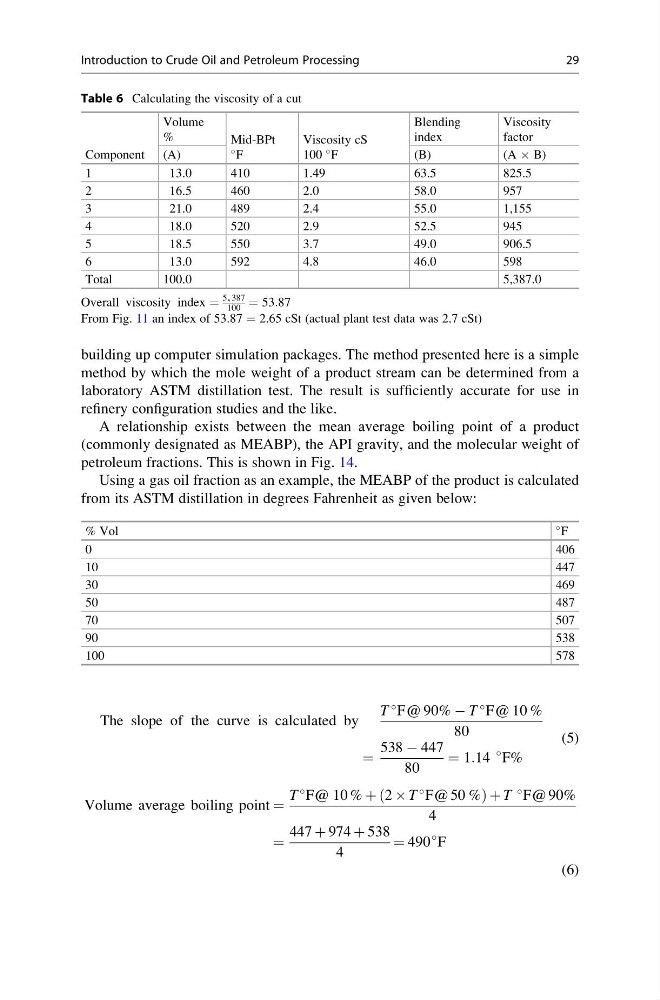
Table 6 Calculating the viscosity of a cut
Component
Volume
%
Mid-BPt
F
Viscosity cS
100
F
Blending
index
Viscosity
factor
(A)
(B)
(A Â B)
1
13.0
410
1.49
63.5
825.5
2
16.5
460
2.0
58.0
957
3
21.0
489
2.4
55.0
1,155
4
18.0
520
2.9
52.5
945
5
18.5
550
3.7
49.0
906.5
6
13.0
592
4.8
46.0
598
Total
100.0
5,387.0
Overall viscosity index ¼
5, 387
100 ¼ 53:87
From Fig. 11 an index of 53.87 = 2.65 cSt (actual plant test data was 2.7 cSt)
Introduction to Crude Oil and Petroleum Processing
29
method by which the mole weight of a product stream can be determined from a
laboratory ASTM distillation test. The result is sufficiently accurate for use in
refinery configuration studies and the like.
A relationship exists between the mean average boiling point of a product
(commonly designated as MEABP), the API gravity, and the molecular weight of
petroleum fractions. This is shown in Fig. 14.
Using a gas oil fraction as an example, the MEABP of the product is calculated
from its ASTM distillation in degrees Fahrenheit as given below:
% Vol
F
0
406
10
447
30
469
50
487
70
507
90
538
100
578
The slope of the curve is calculated by
T
F @ 90% À T
F @ 10 %
80
¼
538 À 447
80
¼ 1:14
F%
(5)
Volume average boiling point ¼
T
F @ 10 % þ 2 Â T
F @ 50 %
ð
Þ þ T
F @ 90%
4
¼
447 þ 974 þ 538
4
¼ 490
F
(6)
Table 6 Calculating the viscosity of a cut
Component
Volume
%
Mid-BPt
F
Viscosity cS
100
F
Blending
index
Viscosity
factor
(A)
(B)
(A Â B)
1
13.0
410
1.49
63.5
825.5
2
16.5
460
2.0
58.0
957
3
21.0
489
2.4
55.0
1,155
4
18.0
520
2.9
52.5
945
5
18.5
550
3.7
49.0
906.5
6
13.0
592
4.8
46.0
598
Total
100.0
5,387.0
Overall viscosity index ¼
5, 387
100 ¼ 53:87
From Fig. 11 an index of 53.87 = 2.65 cSt (actual plant test data was 2.7 cSt)
Introduction to Crude Oil and Petroleum Processing
29