

• Nitrogen removal, also referred to as denitrogenation or hydrodenitrogenation
(HDN) in which the organic nitrogen compounds are converted to ammonia
• Metal (organometallics) removal, also referred to as demetallation or
hydrodemetallation (HDM), in which the organometallics are converted to the
respective metal sulfides
• Oxygen removal, also referred to as hydrodeoxygenation, in which the organic
oxygen compounds are converted to water
• Olefin saturation, in which organic compounds containing double bonds are
converted to their saturated homologues
• Aromatic saturation, also referred to as hydrodearomatization, in which some of
the aromatic compounds are converted to naphthenes
• Halides removal, also referred to as hydrodehalogenation, in which the organic
halides are converted to hydrogen halides
The first three types of compounds are always present, though in varying
amounts, depending on the source of feedstock. For example, naphtha will typically
contain extremely low amounts of organometallic compounds, while atmospheric
residues may contain levels in excess of 100 wppm. Some crudes contain much
more sulfur in all the fractions when compared with other crudes. For example,
most middle eastern crudes contain much more sulfur than some crudes from
Stripper
column
Off-Gas
Scrubber
Vgo unionfining unit
(Fractionation section)
schematic flow diagram
Product
fractionator
feed heater
C3/C4
product
Cold flash
drum vapor
Stripping
steam
Naphtha
product
Boot
water
Stripping
steam
Diesel
product
Sour
water
Stripping
stream
Unconverted
oil
Hot flash
drum liquid
Cold flash
drum liquid
Product
fractionator
column
Diesel
stripper
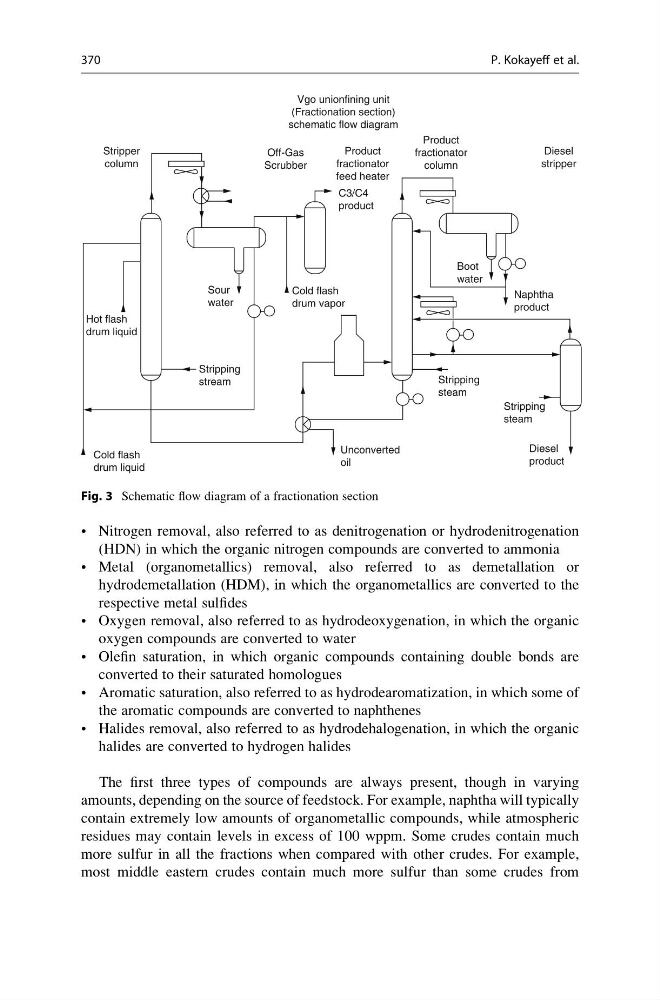
Fig. 3 Schematic flow diagram of a fractionation section
370
P. Kokayeff et al.
(HDN) in which the organic nitrogen compounds are converted to ammonia
• Metal (organometallics) removal, also referred to as demetallation or
hydrodemetallation (HDM), in which the organometallics are converted to the
respective metal sulfides
• Oxygen removal, also referred to as hydrodeoxygenation, in which the organic
oxygen compounds are converted to water
• Olefin saturation, in which organic compounds containing double bonds are
converted to their saturated homologues
• Aromatic saturation, also referred to as hydrodearomatization, in which some of
the aromatic compounds are converted to naphthenes
• Halides removal, also referred to as hydrodehalogenation, in which the organic
halides are converted to hydrogen halides
The first three types of compounds are always present, though in varying
amounts, depending on the source of feedstock. For example, naphtha will typically
contain extremely low amounts of organometallic compounds, while atmospheric
residues may contain levels in excess of 100 wppm. Some crudes contain much
more sulfur in all the fractions when compared with other crudes. For example,
most middle eastern crudes contain much more sulfur than some crudes from
Stripper
column
Off-Gas
Scrubber
Vgo unionfining unit
(Fractionation section)
schematic flow diagram
Product
fractionator
feed heater
C3/C4
product
Cold flash
drum vapor
Stripping
steam
Naphtha
product
Boot
water
Stripping
steam
Diesel
product
Sour
water
Stripping
stream
Unconverted
oil
Hot flash
drum liquid
Cold flash
drum liquid
Product
fractionator
column
Diesel
stripper
Fig. 3 Schematic flow diagram of a fractionation section
370
P. Kokayeff et al.