

Problem A
Problem
A 1
Problem
A 2
Problem
A 3
Problem
A 4
250
Engineering Systems Integration
place for all problems related by the common factor. The problems represented in a hierarchy are deduced from the highest level, with each successive level a deduction from the level above. Unlike nested problems that can
have a mixed relation between problems (relation by hierarchy or heterarchy,
hierarchical problems are only related through decomposition). Take for
example, a problem with the foundation discovered after the building of a
house. The floors of the multistoreyed house slope slightly toward the front
of the house. The doors do not close, a gap showing at the floor and apparent,
because the doors either swing open or close in the unlatched position. With
the walls out of plumb, doors and windows do not function properly. The
foundation is a problem from which many structural subproblems arise.
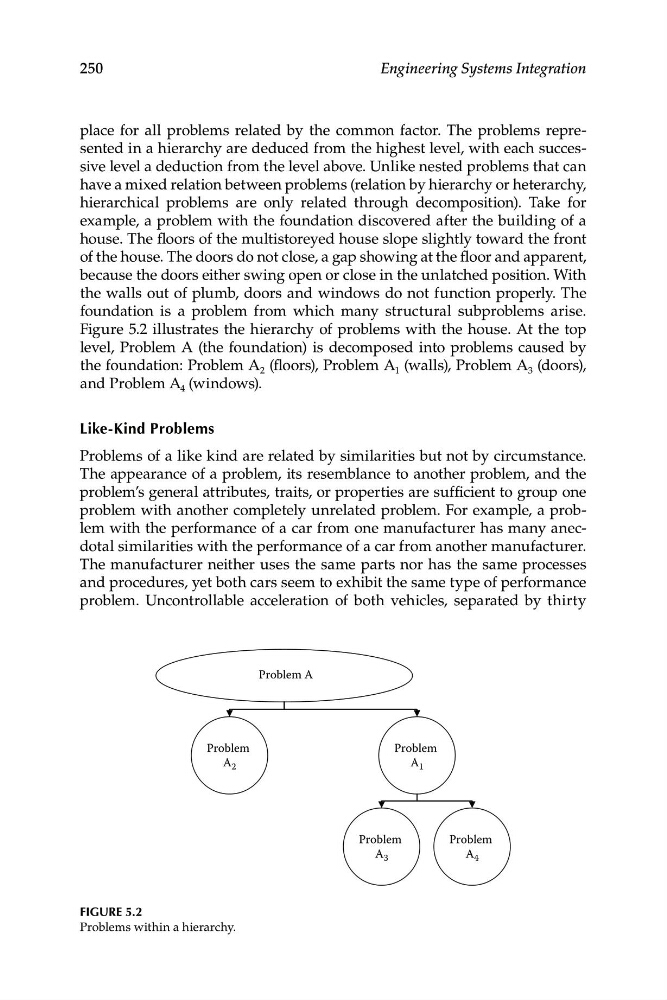
Figure 5.2 illustrates the hierarchy of problems with the house. At the top
level, Problem A (the foundation) is decomposed into problems caused by
the foundation: Problem A 2 (floors), Problem A 1 (walls), Problem A 3 (doors),
and Problem A 4 (windows).
Like-Kind Problems
Problems of a like kind are related by similarities but not by circumstance.
The appearance of a problem, its resemblance to another problem, and the
problem’s general attributes, traits, or properties are sufficient to group one
problem with another completely unrelated problem. For example, a problem with the performance of a car from one manufacturer has many anecdotal similarities with the performance of a car from another manufacturer.
The manufacturer neither uses the same parts nor has the same processes
and procedures, yet both cars seem to exhibit the same type of performance
problem. Uncontrollable acceleration of both vehicles, separated by thirty
FIgure 5.2
Problems within a hierarchy.
Problem
A 1
Problem
A 2
Problem
A 3
Problem
A 4
250
Engineering Systems Integration
place for all problems related by the common factor. The problems represented in a hierarchy are deduced from the highest level, with each successive level a deduction from the level above. Unlike nested problems that can
have a mixed relation between problems (relation by hierarchy or heterarchy,
hierarchical problems are only related through decomposition). Take for
example, a problem with the foundation discovered after the building of a
house. The floors of the multistoreyed house slope slightly toward the front
of the house. The doors do not close, a gap showing at the floor and apparent,
because the doors either swing open or close in the unlatched position. With
the walls out of plumb, doors and windows do not function properly. The
foundation is a problem from which many structural subproblems arise.
Figure 5.2 illustrates the hierarchy of problems with the house. At the top
level, Problem A (the foundation) is decomposed into problems caused by
the foundation: Problem A 2 (floors), Problem A 1 (walls), Problem A 3 (doors),
and Problem A 4 (windows).
Like-Kind Problems
Problems of a like kind are related by similarities but not by circumstance.
The appearance of a problem, its resemblance to another problem, and the
problem’s general attributes, traits, or properties are sufficient to group one
problem with another completely unrelated problem. For example, a problem with the performance of a car from one manufacturer has many anecdotal similarities with the performance of a car from another manufacturer.
The manufacturer neither uses the same parts nor has the same processes
and procedures, yet both cars seem to exhibit the same type of performance
problem. Uncontrollable acceleration of both vehicles, separated by thirty
FIgure 5.2
Problems within a hierarchy.