

S
s
h
d
e
n
l
a
f
s
m
n
a i
rg
Migrating
slope troughs
Leveed
slope trough
Distal slope
sands
I n a c t iv e
f a n
( S u s p e n s io
n
lo
a d
d e p o s it io
n )
A
B
C
A'
B'
C'
She lf
ed ge
S
u
p
r
a
f
a
n
a
r
e
a
Active
fan
Distal slope wedge
Intermediate slope wedge
Proximal slope wedge
Fan plain
Active fan
Migrating slope
troughs
Slope trough
Slope trough levee
Filled trough
Distal slope
sands
A
A '
B
B'
C
C '
Bed load transport
No scale
Extreme vertical
exaggeration
Slope fan model
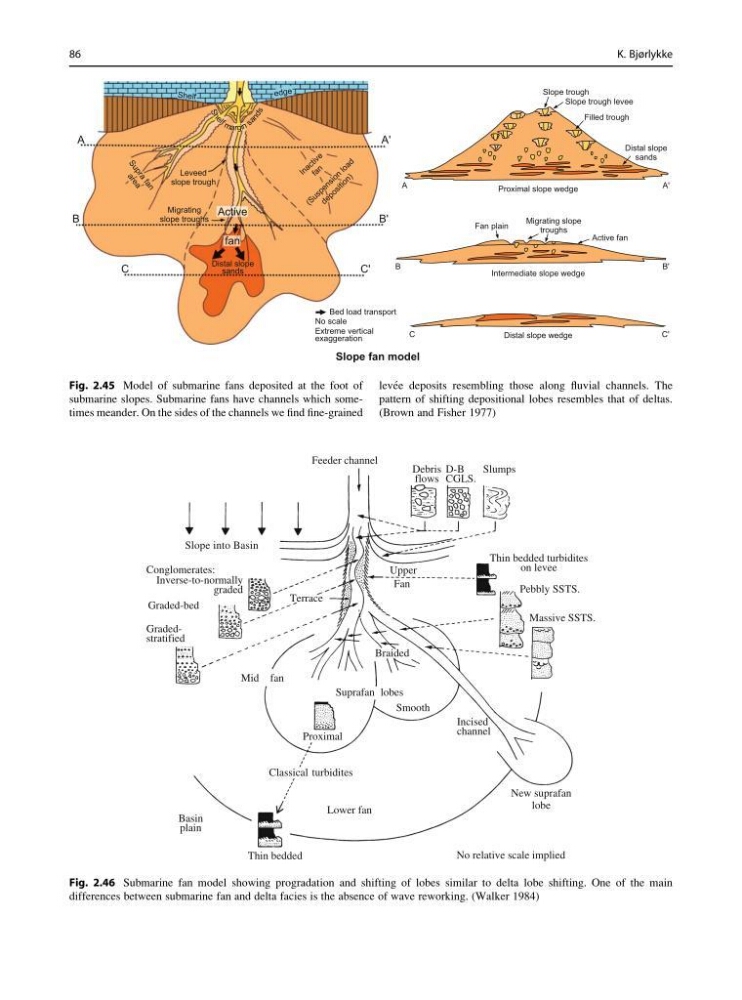
Fig. 2.45 Model of submarine fans deposited at the foot of
submarine slopes. Submarine fans have channels which sometimes meander. On the sides of the channels we find fine-grained
leve ´e deposits resembling those along fluvial channels. The
pattern of shifting depositional lobes resembles that of deltas.
(Brown and Fisher 1977)
Slope into Basin
Conglomerates:
Inverse-to-normally
graded
Graded-bed
Mid fan
Suprafan lobes
Smooth
Proximal
turbidites
Classical
Lower fan
No relative scale implied
New suprafan
lobe
Incised
channel
Massive SSTS.
Pebbly SSTS.
Fan
Upper
Slumps
Debris
flows
D-B
CGLS.
Feeder channel
Braided
Terrace
Thin bedded turbidites
on levee
Thin bedded
Basin
plain
Gradedstratified
Fig. 2.46 Submarine fan model showing progradation and shifting of lobes similar to delta lobe shifting. One of the main
differences between submarine fan and delta facies is the absence of wave reworking. (Walker 1984)
86
K. Bjørlykke
s
h
d
e
n
l
a
f
s
m
n
a i
rg
Migrating
slope troughs
Leveed
slope trough
Distal slope
sands
I n a c t iv e
f a n
( S u s p e n s io
n
lo
a d
d e p o s it io
n )
A
B
C
A'
B'
C'
She lf
ed ge
S
u
p
r
a
f
a
n
a
r
e
a
Active
fan
Distal slope wedge
Intermediate slope wedge
Proximal slope wedge
Fan plain
Active fan
Migrating slope
troughs
Slope trough
Slope trough levee
Filled trough
Distal slope
sands
A
A '
B
B'
C
C '
Bed load transport
No scale
Extreme vertical
exaggeration
Slope fan model
Fig. 2.45 Model of submarine fans deposited at the foot of
submarine slopes. Submarine fans have channels which sometimes meander. On the sides of the channels we find fine-grained
leve ´e deposits resembling those along fluvial channels. The
pattern of shifting depositional lobes resembles that of deltas.
(Brown and Fisher 1977)
Slope into Basin
Conglomerates:
Inverse-to-normally
graded
Graded-bed
Mid fan
Suprafan lobes
Smooth
Proximal
turbidites
Classical
Lower fan
No relative scale implied
New suprafan
lobe
Incised
channel
Massive SSTS.
Pebbly SSTS.
Fan
Upper
Slumps
Debris
flows
D-B
CGLS.
Feeder channel
Braided
Terrace
Thin bedded turbidites
on levee
Thin bedded
Basin
plain
Gradedstratified
Fig. 2.46 Submarine fan model showing progradation and shifting of lobes similar to delta lobe shifting. One of the main
differences between submarine fan and delta facies is the absence of wave reworking. (Walker 1984)
86
K. Bjørlykke