

beach has its return flow seawards. Rip currents are
often rich in suspended material and transport material
from the beach towards the shelf. Another component
of wave energy is transmitted parallel with the beach
as longshore currents, contributing to the longshore
drift of sediment transport.
During onshore storms the sea level near the coast
may be raised by several metres due to the combined
effect of wind stress, tides and the low barometric
pressure associated with storms. The increased potential (elevation) of the coastal water due to these storm
surges will result in strong bottom currents which are
capable of transporting sediment further out onto the
shelf. Storm surges may transport fine sand and mud in
suspension, but not as true turbidity currents. In this
case the increased potential of the coastal water is the
driving force and not the density difference between
the current and the surrounding water, as with
turbidites. Hummocky cross-bedding is a characteristic sedimentary structure produced by the deposition
of coarse particles from suspension during storms, and
rounded, undulating sand surfaces tend to form. Finer
particles will be transported further, into areas with
lower energy.
In many modern shelf areas tidal currents are
important transport mechanisms, in combination with
rare strong storm currents. Sediments deposited in this
environment are characterised by rather abrupt
transitions from well-sorted sand to mud and from
bioturbated to non-bioturbated strata.
The main characteristic of tidal shelves is the
mobility of the clastic sediments, on scales ranging
from the diurnal tidal cycle to annual (storm augmented) cycles and gradual long-term movement of
the largest bedforms. In shelf areas with relatively
strong tidal currents (>150 cm/s) we may get furrrows
and gravel waves. At velocities of less than 1 m/s sand
ribbons may be deposited – longitudinal bedforms
developed parallel to the currents. Sandwaves are
large-scale transverse bedforms, generally 2–15 m
high, with a wavelength of 150–500 m. Sandwaves
a
b
Fig. 2.43 (a) Tidal channel on a tidal flat in the muddy facies of the inner part of a tidal flat (near Wilhelmshaven, Germany).
Erosion by tidal channels in this mud produces a lag of mollusc shells. (b) Mollusc in living position
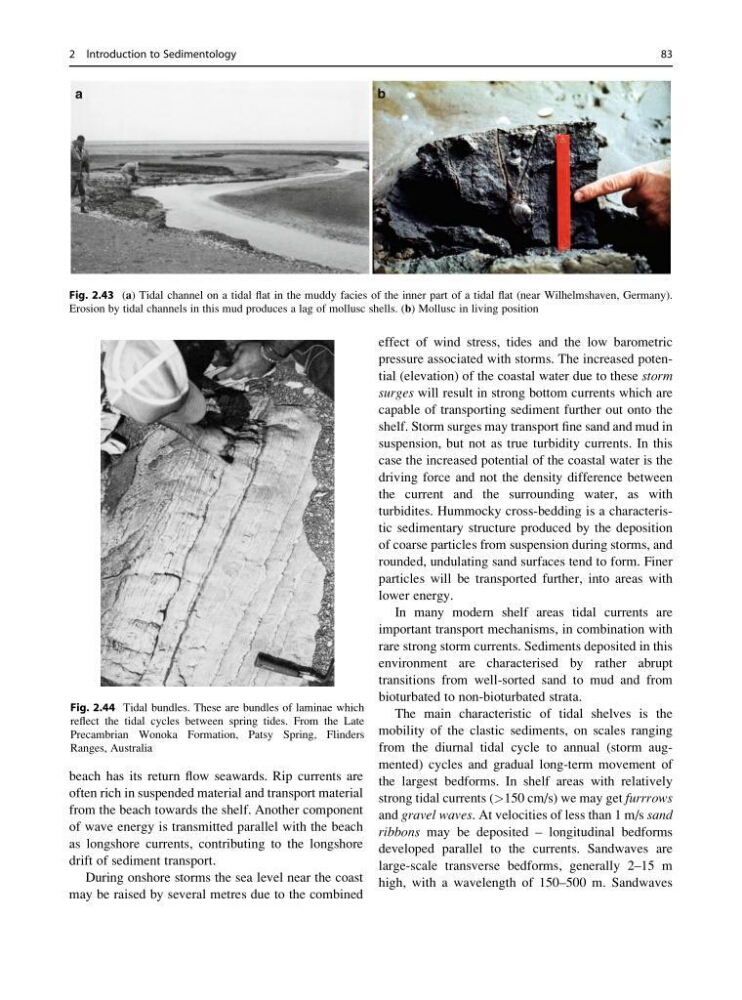
Fig. 2.44 Tidal bundles. These are bundles of laminae which
reflect the tidal cycles between spring tides. From the Late
Precambrian Wonoka Formation, Patsy Spring, Flinders
Ranges, Australia
2 Introduction to Sedimentology
83
often rich in suspended material and transport material
from the beach towards the shelf. Another component
of wave energy is transmitted parallel with the beach
as longshore currents, contributing to the longshore
drift of sediment transport.
During onshore storms the sea level near the coast
may be raised by several metres due to the combined
effect of wind stress, tides and the low barometric
pressure associated with storms. The increased potential (elevation) of the coastal water due to these storm
surges will result in strong bottom currents which are
capable of transporting sediment further out onto the
shelf. Storm surges may transport fine sand and mud in
suspension, but not as true turbidity currents. In this
case the increased potential of the coastal water is the
driving force and not the density difference between
the current and the surrounding water, as with
turbidites. Hummocky cross-bedding is a characteristic sedimentary structure produced by the deposition
of coarse particles from suspension during storms, and
rounded, undulating sand surfaces tend to form. Finer
particles will be transported further, into areas with
lower energy.
In many modern shelf areas tidal currents are
important transport mechanisms, in combination with
rare strong storm currents. Sediments deposited in this
environment are characterised by rather abrupt
transitions from well-sorted sand to mud and from
bioturbated to non-bioturbated strata.
The main characteristic of tidal shelves is the
mobility of the clastic sediments, on scales ranging
from the diurnal tidal cycle to annual (storm augmented) cycles and gradual long-term movement of
the largest bedforms. In shelf areas with relatively
strong tidal currents (>150 cm/s) we may get furrrows
and gravel waves. At velocities of less than 1 m/s sand
ribbons may be deposited – longitudinal bedforms
developed parallel to the currents. Sandwaves are
large-scale transverse bedforms, generally 2–15 m
high, with a wavelength of 150–500 m. Sandwaves
a
b
Fig. 2.43 (a) Tidal channel on a tidal flat in the muddy facies of the inner part of a tidal flat (near Wilhelmshaven, Germany).
Erosion by tidal channels in this mud produces a lag of mollusc shells. (b) Mollusc in living position
Fig. 2.44 Tidal bundles. These are bundles of laminae which
reflect the tidal cycles between spring tides. From the Late
Precambrian Wonoka Formation, Patsy Spring, Flinders
Ranges, Australia
2 Introduction to Sedimentology
83