

Energy
(waves,
wind)
Eh
Salinity
Temperature
Light
Substrate
sediment
Diversity
Abundance High in places
Lower than in
marine realm
Aqueous or
subaerial; sand,
silt, mud
Daily changes
Extreme variety
Low, rarely high
Oxidising, except
at lake bottoms
Variable: waves,
river, air currents
Chirotherium
Anthichnium
Arenicolites
Teichichnus
Scalarituba
Phyllodocites
Lophoctenium
Ophiomorpha
0
5 cm
1 m
0
Merostomichnites
Beaconites
Dikaka
Cylindricum
Planolites
Scoyenia
Continental area
Supratidal Intertidal
Subtidal
(f) Rocky coast association
2000 – 4000 m
200 m
Wave base
Deep sea fan
0 m
55
56
57
58
59
60
61
62
R oc ky sh or e
Sa nd y sh or e
ri ve r
Lake
Lake
Non-marine zone
(a) Scoyenia association
(b) Skolithos and Glossifungites
(c) Cruziana association
(d) Zoophycus association
(e) Nereites association
Tidal zone
Neritic zone
Cont. slope and apron
Ocean basin
Bathyal and abyssal zones
Continental shelf
Isopdichnus
(Cruziana
type)
(Rusophycus
type)
Thallassinoides
Diplocraterion
Cylindrichnus
Skolithos
Cruziana
Rusophycus
Diplichnites
Rhizocorallium
Palaeodictyon
Dictyodora
Palaeomeandron
Spirorhaphe
Spirophycus
Urohelminthoida
Oldhamia
Phycodes
Zoophycos
Helminthoida
Nereites
sensu stricto
Spirophyton
Cosmorhaphe
Higher energy,
constant wave
mixing
Oxidising
Oxidising
Mostly normal
Normal
Daily changes
Daily changes
Daily changes
Daily changes
Sand > mud, less
firm, reworked
Mud = sand,
firmer, reworked
Low
Low
Dense
Arthropods, molluscs, echinoderms,
corals, ‘worms’
Unbranched
vertical burrows
Vertical and
inclined
ear-shaped
burrows
Mostly suspension feeders
Mostly sediment feeders
Arthropods, molluscs,
echinoderms, corals
Horizontal crawling –
grazing traces > inclined
burrows
Dense
High
Low
Low
Arthropods, polychaete worms, hemichordates
(e.g. acorn worms), echinoderms
Sediment churners, feeders
Sediment grazers, farmers
Low, but seems higher
due to slow deposition
Low, but higher than in
(d), higher through time
Pelagic mud, most stable
but for density and ocean
current flows
None
Down to 2°C, no changes
Normal
No wave mixing,
some density flows,
ocean current flows
Little O 2 , e.g. from density
flows, even anoxic
Casts, crawling, grazing
traces, spreiten planar
and on surface
High
Daily changes in upper part
Mud = sand, stable,
rarer reworking and ripples
Mud, stable except in
failure and density flow
None
< 10°C, no changes
Normal
Lower energy, infrequent
wave mixing, some density
flows
O 2 reduced, high organic
content
Seasonal changes
Oxidising
Lower energy,
frequent wave mixing
Lower energy,
frequent wave
mixing
Dominant
organisms,
traces
Arthropods (insects)
molluscs,
vertebrates,
small shallow
burrows, trails,
tracks,
herbivores, carnivores
Neonereites
Complex horizontal grazing
and shallow feeding traces,
spreiten inclined in sheets,
ribbons, spirals – bioturbation
Normal
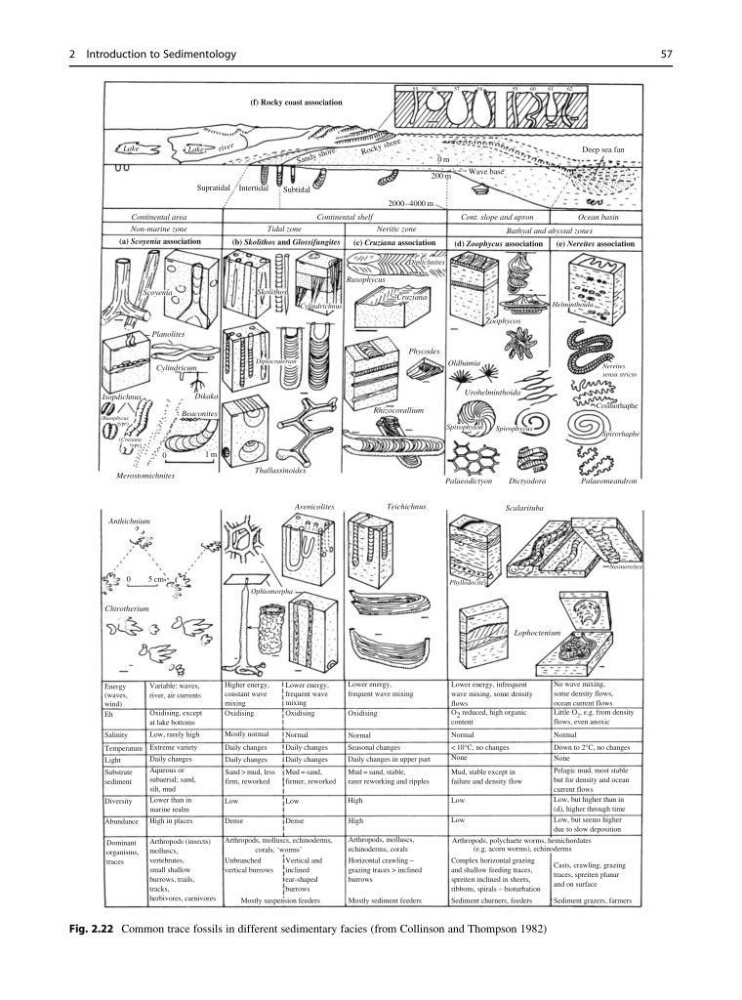
Fig. 2.22 Common trace fossils in different sedimentary facies (from Collinson and Thompson 1982)
2 Introduction to Sedimentology
57
(waves,
wind)
Eh
Salinity
Temperature
Light
Substrate
sediment
Diversity
Abundance High in places
Lower than in
marine realm
Aqueous or
subaerial; sand,
silt, mud
Daily changes
Extreme variety
Low, rarely high
Oxidising, except
at lake bottoms
Variable: waves,
river, air currents
Chirotherium
Anthichnium
Arenicolites
Teichichnus
Scalarituba
Phyllodocites
Lophoctenium
Ophiomorpha
0
5 cm
1 m
0
Merostomichnites
Beaconites
Dikaka
Cylindricum
Planolites
Scoyenia
Continental area
Supratidal Intertidal
Subtidal
(f) Rocky coast association
2000 – 4000 m
200 m
Wave base
Deep sea fan
0 m
55
56
57
58
59
60
61
62
R oc ky sh or e
Sa nd y sh or e
ri ve r
Lake
Lake
Non-marine zone
(a) Scoyenia association
(b) Skolithos and Glossifungites
(c) Cruziana association
(d) Zoophycus association
(e) Nereites association
Tidal zone
Neritic zone
Cont. slope and apron
Ocean basin
Bathyal and abyssal zones
Continental shelf
Isopdichnus
(Cruziana
type)
(Rusophycus
type)
Thallassinoides
Diplocraterion
Cylindrichnus
Skolithos
Cruziana
Rusophycus
Diplichnites
Rhizocorallium
Palaeodictyon
Dictyodora
Palaeomeandron
Spirorhaphe
Spirophycus
Urohelminthoida
Oldhamia
Phycodes
Zoophycos
Helminthoida
Nereites
sensu stricto
Spirophyton
Cosmorhaphe
Higher energy,
constant wave
mixing
Oxidising
Oxidising
Mostly normal
Normal
Daily changes
Daily changes
Daily changes
Daily changes
Sand > mud, less
firm, reworked
Mud = sand,
firmer, reworked
Low
Low
Dense
Arthropods, molluscs, echinoderms,
corals, ‘worms’
Unbranched
vertical burrows
Vertical and
inclined
ear-shaped
burrows
Mostly suspension feeders
Mostly sediment feeders
Arthropods, molluscs,
echinoderms, corals
Horizontal crawling –
grazing traces > inclined
burrows
Dense
High
Low
Low
Arthropods, polychaete worms, hemichordates
(e.g. acorn worms), echinoderms
Sediment churners, feeders
Sediment grazers, farmers
Low, but seems higher
due to slow deposition
Low, but higher than in
(d), higher through time
Pelagic mud, most stable
but for density and ocean
current flows
None
Down to 2°C, no changes
Normal
No wave mixing,
some density flows,
ocean current flows
Little O 2 , e.g. from density
flows, even anoxic
Casts, crawling, grazing
traces, spreiten planar
and on surface
High
Daily changes in upper part
Mud = sand, stable,
rarer reworking and ripples
Mud, stable except in
failure and density flow
None
< 10°C, no changes
Normal
Lower energy, infrequent
wave mixing, some density
flows
O 2 reduced, high organic
content
Seasonal changes
Oxidising
Lower energy,
frequent wave mixing
Lower energy,
frequent wave
mixing
Dominant
organisms,
traces
Arthropods (insects)
molluscs,
vertebrates,
small shallow
burrows, trails,
tracks,
herbivores, carnivores
Neonereites
Complex horizontal grazing
and shallow feeding traces,
spreiten inclined in sheets,
ribbons, spirals – bioturbation
Normal
Fig. 2.22 Common trace fossils in different sedimentary facies (from Collinson and Thompson 1982)
2 Introduction to Sedimentology
57