

due to cohesion in the rest of the clay. At relatively
shallow depth clays may have a house of cards structure (Fig. 6.2) which will be deformed when subjected
to shear stress. Clay minerals will then be more parallel oriented resulting in a shear softening. The excess
porewater from the denser packing could produce an
overpressure reducing the effective stress so that the
frictional forces are reduced. Smectitic clays are much
more fine grained and have higher cohesion than
e.g. kaolinitic clays. If we have coarse-grained
sediments, i.e. coarse sand and gravel, compaction
will lead to excess water flowing out so rapidly that
the overpressure will drop very quickly, assuming the
high permeability has allowed it to build up properly
in the first place (Fig. 2.13). It is therefore silt and fine
sand, the fractions most susceptible to liquefaction,
that are likely to generate high-velocity subsea flows.
Liquefaction can, as already mentioned, be triggered
by tremors, e.g. earthquakes, and stress. Stresses on
sediments (soils) due to buildings, fills, etc. can lead to
collapse of the grain frameworks and cause liquefaction. Lowering of the groundwater table on a slope, for
example down towards the coast, has a similar effect
because of reduced buoyancy in part of the sediment
column. Extremely low tides or a combination of a
strong ebb and a land wind can trigger a slide in
otherwise stable coastal sediments. This is because
the effective stress in the sediments increases when
the sea level is low.
The stability of slopes can be estimated by calculating the gravitational forces acting on a particular
volume of sediment in relation to the frictional forces.
During construction work, slides may sometimes be
prevented by drilling wells which release the excess
pore pressure so that the effective stress and the friction increases.
2.15 Sedimentary Structures, Facies and
Sedimentary Environments
It is difficult to observe or take measurements of rocks
entirely objectively and consistently. Most types of
measurements and observations have a considerable
degree of inherent uncertainty, and the validity and
usefulness of results often depend on the experience
and skill of those carrying out the field work. It has
turned out to be very difficult to observe structures
which one does not recognise and understand the
significance of.
A good description of a stratigraphic profile
depends on good theoretical knowledge of sedimentary processes, and of experience from studies of similar rocks.
It is easy to forget to record or measure some of the
properties of a rock. In order to obtain a more comprehensive description and avoid forgetting anything, it
may be a good idea to have a well-established routine
or even a checklist. Photographs from outcrops or
cores may help when writing final reports. If our
investigation has a definite and limited objective, we
measure only the properties we think will be relevant.
A list of features which can be observed (measured or
registered) in sedimentary rocks:
1. Textures – grain size, sorting, grain shape etc.
2. Grain orientation – fabric.
3. Sedimentary structures and their orientation.
4. Fossils.
A. Preservation or impressions, casts, or the
fossils themselves, and their mode of
occurrence.
B. Trace fossils.
5. Colour.
6. Resistance to weathering and erosion.
7. Composition (a) Mineral (b) Chemical.
8. Thickness and geometry of beds.
9. Variations in texture and composition within a
bed, e.g. increase in grain size upwards or downwards in the bed (grading or inverse grading).
10. Type of contact between beds (e.g. erosional contact, conformable contact, gradational contact).
Grain sizes
susceptible
to fluidisation
P e r m
e a b i l i t y
Cohesion
Permeability
Clay
Congl.
Silt
Fine
sand
Medium
sand
Coarse
sand
C
o
h
e
s
i
o
n
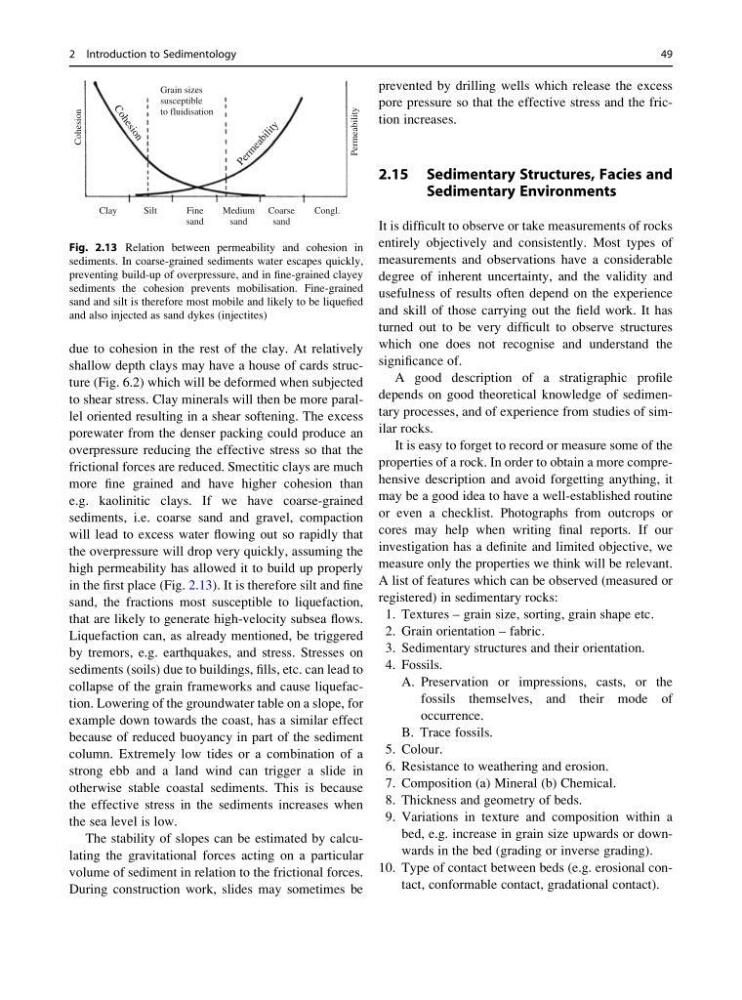
Fig. 2.13 Relation between permeability and cohesion in
sediments. In coarse-grained sediments water escapes quickly,
preventing build-up of overpressure, and in fine-grained clayey
sediments the cohesion prevents mobilisation. Fine-grained
sand and silt is therefore most mobile and likely to be liquefied
and also injected as sand dykes (injectites)
2 Introduction to Sedimentology
49
shallow depth clays may have a house of cards structure (Fig. 6.2) which will be deformed when subjected
to shear stress. Clay minerals will then be more parallel oriented resulting in a shear softening. The excess
porewater from the denser packing could produce an
overpressure reducing the effective stress so that the
frictional forces are reduced. Smectitic clays are much
more fine grained and have higher cohesion than
e.g. kaolinitic clays. If we have coarse-grained
sediments, i.e. coarse sand and gravel, compaction
will lead to excess water flowing out so rapidly that
the overpressure will drop very quickly, assuming the
high permeability has allowed it to build up properly
in the first place (Fig. 2.13). It is therefore silt and fine
sand, the fractions most susceptible to liquefaction,
that are likely to generate high-velocity subsea flows.
Liquefaction can, as already mentioned, be triggered
by tremors, e.g. earthquakes, and stress. Stresses on
sediments (soils) due to buildings, fills, etc. can lead to
collapse of the grain frameworks and cause liquefaction. Lowering of the groundwater table on a slope, for
example down towards the coast, has a similar effect
because of reduced buoyancy in part of the sediment
column. Extremely low tides or a combination of a
strong ebb and a land wind can trigger a slide in
otherwise stable coastal sediments. This is because
the effective stress in the sediments increases when
the sea level is low.
The stability of slopes can be estimated by calculating the gravitational forces acting on a particular
volume of sediment in relation to the frictional forces.
During construction work, slides may sometimes be
prevented by drilling wells which release the excess
pore pressure so that the effective stress and the friction increases.
2.15 Sedimentary Structures, Facies and
Sedimentary Environments
It is difficult to observe or take measurements of rocks
entirely objectively and consistently. Most types of
measurements and observations have a considerable
degree of inherent uncertainty, and the validity and
usefulness of results often depend on the experience
and skill of those carrying out the field work. It has
turned out to be very difficult to observe structures
which one does not recognise and understand the
significance of.
A good description of a stratigraphic profile
depends on good theoretical knowledge of sedimentary processes, and of experience from studies of similar rocks.
It is easy to forget to record or measure some of the
properties of a rock. In order to obtain a more comprehensive description and avoid forgetting anything, it
may be a good idea to have a well-established routine
or even a checklist. Photographs from outcrops or
cores may help when writing final reports. If our
investigation has a definite and limited objective, we
measure only the properties we think will be relevant.
A list of features which can be observed (measured or
registered) in sedimentary rocks:
1. Textures – grain size, sorting, grain shape etc.
2. Grain orientation – fabric.
3. Sedimentary structures and their orientation.
4. Fossils.
A. Preservation or impressions, casts, or the
fossils themselves, and their mode of
occurrence.
B. Trace fossils.
5. Colour.
6. Resistance to weathering and erosion.
7. Composition (a) Mineral (b) Chemical.
8. Thickness and geometry of beds.
9. Variations in texture and composition within a
bed, e.g. increase in grain size upwards or downwards in the bed (grading or inverse grading).
10. Type of contact between beds (e.g. erosional contact, conformable contact, gradational contact).
Grain sizes
susceptible
to fluidisation
P e r m
e a b i l i t y
Cohesion
Permeability
Clay
Congl.
Silt
Fine
sand
Medium
sand
Coarse
sand
C
o
h
e
s
i
o
n
Fig. 2.13 Relation between permeability and cohesion in
sediments. In coarse-grained sediments water escapes quickly,
preventing build-up of overpressure, and in fine-grained clayey
sediments the cohesion prevents mobilisation. Fine-grained
sand and silt is therefore most mobile and likely to be liquefied
and also injected as sand dykes (injectites)
2 Introduction to Sedimentology
49