

16.6 Summary
Well logs are the results of several geophysical
measurements recorded in a well bore. Logging
provides continuous recording of a physical parameter
of the formation as a function of depth. The primary
objectives of the well logging are (1) identification of
source, reservoir and cap rocks, (2) determination of
depth, thickness, temperature and pressure of the reservoir, (3) to distinguish between oil, gas and water zones
in the reservoir, (4) estimation of hydrocarbon in place,
and (5) estimation of recoverable hydrocarbon. Well
logging is broadly classified into open-hole logging,
cased-hole logging, MWD and LWD. In open-hole
logging, the tool is lowered to the desired depth and
data is acquired as the tool is pulled up. Logs are
recorded to measure different physical parameters of a
well to ascertain the capacity of the well to flow
hydrocarbon. There are many physical parameters that
can be recorded, depending upon requirements.
Well logging is the most abundant data acquisition
technique available to help evaluate formation and
determinate fluid saturation. Modern tools may record
up to ten different types of measurement simultaneously during a single run. The most common
measurements are radioactive, electric and acoustic
logging. Rock properties are sensitive to changes in
lithology and fluid content. Changes in rock properties
are used to mark different formations. Well logs may
be used both as a visual qualitative tool to identify the
main rock types and also as a basis for sedimentological and stratigraphic interpretation.
In addition to providing information about the porosity and permeability of rock types, well logs can be used
directly for interpreting depositional environments.
Gamma logs and self-potential logs record characteristic coarsening-upward and fining-upward sequences
very efficiently. We can therefore often recognise fluvial channels (fining-upward) and shallow marine
deposits (coarsening-upward). Turbidities give a characteristic alternation between coarse and fine material.
In delta sequences coal or lignite beds give characteristically strong deflections on the resistivity log. It is
important, however, to bear in mind that the response
of the logs is not due to sedimentological parameters
such as grain size and sorting, but can be indirectly
correlated with these parameters.
Physical measurements are related to rock
properties such as lithology, porosity (fracture, vugs,
primary and secondary), permeability, shaliness, and
the type (oil, gas or condensate) and saturation of
hydrocarbons. More quantitative calculations of
porosity, shaliness and hydrocarbon saturation can
also be made based on log data. Crossplots which are
calibrated for different types of lithologies are then
required. Correlation between wells can map units
across a reservoir. Sonic and density logs provide a
link between seismic and petrophysics.
In conclusion, when logging is properly applied, it
can help to answer many questions from a wide spectrum of special interest groups on topics ranging from
basic geology to petroleum economics. A single tool
cannot perform a complete diagnosis of lithology and
fluids. Usually a group of log measurements is made
in the same hole to improve interpretation. Of equal
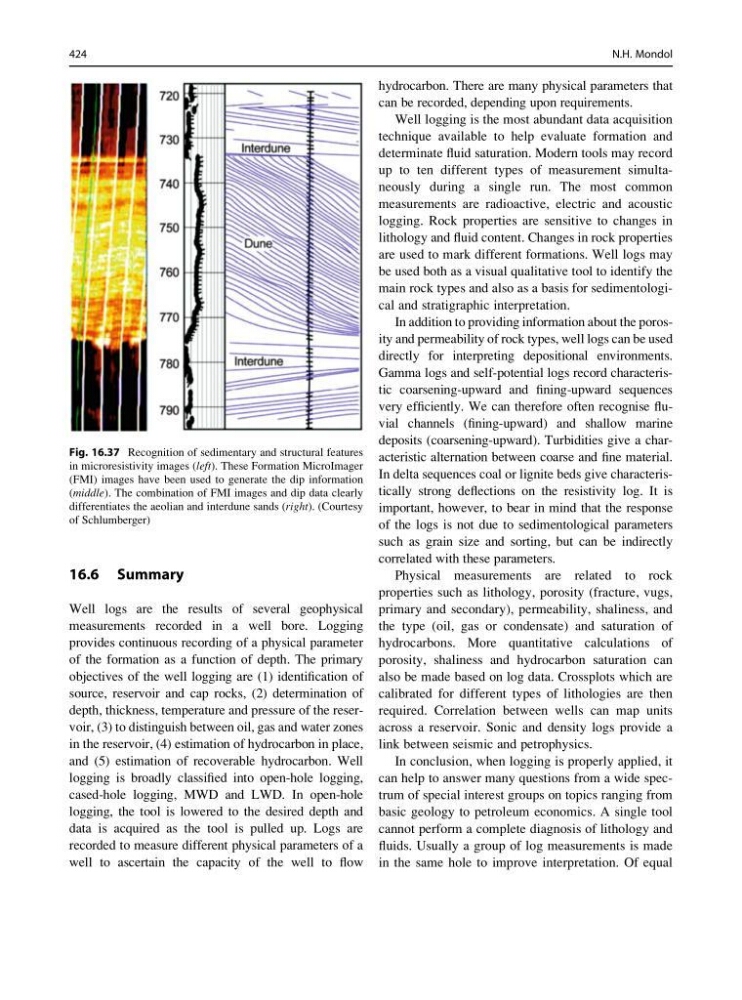
Fig. 16.37 Recognition of sedimentary and structural features
in microresistivity images (left). These Formation MicroImager
(FMI) images have been used to generate the dip information
(middle). The combination of FMI images and dip data clearly
differentiates the aeolian and interdune sands (right). (Courtesy
of Schlumberger)
424
N.H. Mondol
Well logs are the results of several geophysical
measurements recorded in a well bore. Logging
provides continuous recording of a physical parameter
of the formation as a function of depth. The primary
objectives of the well logging are (1) identification of
source, reservoir and cap rocks, (2) determination of
depth, thickness, temperature and pressure of the reservoir, (3) to distinguish between oil, gas and water zones
in the reservoir, (4) estimation of hydrocarbon in place,
and (5) estimation of recoverable hydrocarbon. Well
logging is broadly classified into open-hole logging,
cased-hole logging, MWD and LWD. In open-hole
logging, the tool is lowered to the desired depth and
data is acquired as the tool is pulled up. Logs are
recorded to measure different physical parameters of a
well to ascertain the capacity of the well to flow
hydrocarbon. There are many physical parameters that
can be recorded, depending upon requirements.
Well logging is the most abundant data acquisition
technique available to help evaluate formation and
determinate fluid saturation. Modern tools may record
up to ten different types of measurement simultaneously during a single run. The most common
measurements are radioactive, electric and acoustic
logging. Rock properties are sensitive to changes in
lithology and fluid content. Changes in rock properties
are used to mark different formations. Well logs may
be used both as a visual qualitative tool to identify the
main rock types and also as a basis for sedimentological and stratigraphic interpretation.
In addition to providing information about the porosity and permeability of rock types, well logs can be used
directly for interpreting depositional environments.
Gamma logs and self-potential logs record characteristic coarsening-upward and fining-upward sequences
very efficiently. We can therefore often recognise fluvial channels (fining-upward) and shallow marine
deposits (coarsening-upward). Turbidities give a characteristic alternation between coarse and fine material.
In delta sequences coal or lignite beds give characteristically strong deflections on the resistivity log. It is
important, however, to bear in mind that the response
of the logs is not due to sedimentological parameters
such as grain size and sorting, but can be indirectly
correlated with these parameters.
Physical measurements are related to rock
properties such as lithology, porosity (fracture, vugs,
primary and secondary), permeability, shaliness, and
the type (oil, gas or condensate) and saturation of
hydrocarbons. More quantitative calculations of
porosity, shaliness and hydrocarbon saturation can
also be made based on log data. Crossplots which are
calibrated for different types of lithologies are then
required. Correlation between wells can map units
across a reservoir. Sonic and density logs provide a
link between seismic and petrophysics.
In conclusion, when logging is properly applied, it
can help to answer many questions from a wide spectrum of special interest groups on topics ranging from
basic geology to petroleum economics. A single tool
cannot perform a complete diagnosis of lithology and
fluids. Usually a group of log measurements is made
in the same hole to improve interpretation. Of equal
Fig. 16.37 Recognition of sedimentary and structural features
in microresistivity images (left). These Formation MicroImager
(FMI) images have been used to generate the dip information
(middle). The combination of FMI images and dip data clearly
differentiates the aeolian and interdune sands (right). (Courtesy
of Schlumberger)
424
N.H. Mondol