

the outline of extensional basins will accompany the
transition from the syn- to the post-rift stage. In this
model the margins of the relatively narrow, steepwalled rift, which traps the syn-rift sediments, become
overstepped at the syn- to post-rift transition. This
implies that the basin becomes wider and the rate
of subsidence decreases asymptotically during the following post-rift stage. Thus, one defines the beginning
of the post-rift development as the stage by which
the syn-rift faults become inactive and subsidence
becomes controlled dominantly by thermal contraction and sediment loading.
In practical terms, the identification of this stage in
the basin development is not trivial, because the transition is frequently not synchronous all over the basin,
and the criteria for identifying the transition in reflection seismic data are not always well constrained. To
overcome this problem, the syn- to post-rift transition
should be defined more precisely as the point in time
when net heat out of the system is greater than net heat
into the system. It is recognised that a lateral heat flow
gradient commonly exists perpendicular to the basin
axis. This implies that the area closest to the basin
axis, which coincides with the area of greatest thinning, is also the part of the basin displaying the highest
heat flux at the end of the syn-rift stage. The lithosphere beneath the central part of the basin will
accordingly undergo the greatest vertical contraction
during the post-rift stage. The enhanced subsidence at
the basin axis is further enhanced in cases where the
basin is filled by sediments, creating an extra load and
also a greater total compaction. Hence, the syn- to
post-rift transition coincides with a regional shift in
tilt from fault block rotation away from the graben axis
during the syn-rift stage to tilting directed towards the
basin axis during the post-rift development (Fig. 12.9).
This change is due to a shift from bulk thermal expansion to bulk thermal contraction of the lithosphere and
is in most cases clearly distinguishable in reflection
seismic data.
It needs to be emphasised that the syn- to post-rift
transition is unlikely to occur simultaneously throughout the entire basin. This is due to differences in
structural configurations, e.g. the existence of graben
units, and thermal inhomogeneities associated with
variable stretching both along and transverse to the
basin axis. For reasons discussed below (Chap. 22),
the entire Cretaceous sequence of the northern North
Sea is included in the post-rift development sensu
stricto. Furthermore, analysis of the basin topography
permits three sub-stages to be identified within the
framework of the post-rift development: the incipient,
the middle and the mature post-rift stages. The configuration at the syn-rift/post-rift transition is treated
separately in the present analysis (Section 12.3.1).
In the analysis of basin subsidence it is important to
remember that in addition to the effects of fault-related
subsidence and thermal expansion and contraction, the
basin’s subsidence is affected by elastic deformation
and isostasy, and in many cases also by extra-basinal
stress.
The simple-shear model for extensional basins is in
considerable geometrical and mechanical contrast to
the pure-shear model for extensional basins in that the
simple-shear model assumes that extension is
concentrated along one or several inclined fault zone
(s) affecting the entire crust (Fig. 12.5b). Still, where
thermo-tectonic and isostatic responses are concerned
a
b
c
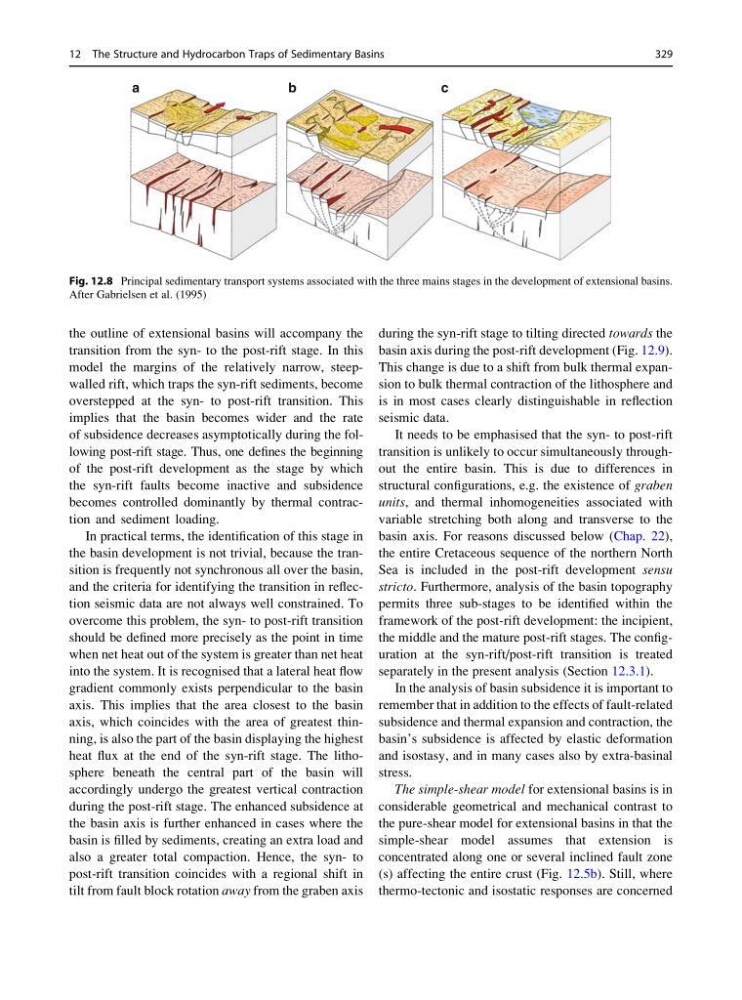
Fig. 12.8 Principal sedimentary transport systems associated with the three mains stages in the development of extensional basins.
After Gabrielsen et al. (1995)
12 The Structure and Hydrocarbon Traps of Sedimentary Basins
329
transition from the syn- to the post-rift stage. In this
model the margins of the relatively narrow, steepwalled rift, which traps the syn-rift sediments, become
overstepped at the syn- to post-rift transition. This
implies that the basin becomes wider and the rate
of subsidence decreases asymptotically during the following post-rift stage. Thus, one defines the beginning
of the post-rift development as the stage by which
the syn-rift faults become inactive and subsidence
becomes controlled dominantly by thermal contraction and sediment loading.
In practical terms, the identification of this stage in
the basin development is not trivial, because the transition is frequently not synchronous all over the basin,
and the criteria for identifying the transition in reflection seismic data are not always well constrained. To
overcome this problem, the syn- to post-rift transition
should be defined more precisely as the point in time
when net heat out of the system is greater than net heat
into the system. It is recognised that a lateral heat flow
gradient commonly exists perpendicular to the basin
axis. This implies that the area closest to the basin
axis, which coincides with the area of greatest thinning, is also the part of the basin displaying the highest
heat flux at the end of the syn-rift stage. The lithosphere beneath the central part of the basin will
accordingly undergo the greatest vertical contraction
during the post-rift stage. The enhanced subsidence at
the basin axis is further enhanced in cases where the
basin is filled by sediments, creating an extra load and
also a greater total compaction. Hence, the syn- to
post-rift transition coincides with a regional shift in
tilt from fault block rotation away from the graben axis
during the syn-rift stage to tilting directed towards the
basin axis during the post-rift development (Fig. 12.9).
This change is due to a shift from bulk thermal expansion to bulk thermal contraction of the lithosphere and
is in most cases clearly distinguishable in reflection
seismic data.
It needs to be emphasised that the syn- to post-rift
transition is unlikely to occur simultaneously throughout the entire basin. This is due to differences in
structural configurations, e.g. the existence of graben
units, and thermal inhomogeneities associated with
variable stretching both along and transverse to the
basin axis. For reasons discussed below (Chap. 22),
the entire Cretaceous sequence of the northern North
Sea is included in the post-rift development sensu
stricto. Furthermore, analysis of the basin topography
permits three sub-stages to be identified within the
framework of the post-rift development: the incipient,
the middle and the mature post-rift stages. The configuration at the syn-rift/post-rift transition is treated
separately in the present analysis (Section 12.3.1).
In the analysis of basin subsidence it is important to
remember that in addition to the effects of fault-related
subsidence and thermal expansion and contraction, the
basin’s subsidence is affected by elastic deformation
and isostasy, and in many cases also by extra-basinal
stress.
The simple-shear model for extensional basins is in
considerable geometrical and mechanical contrast to
the pure-shear model for extensional basins in that the
simple-shear model assumes that extension is
concentrated along one or several inclined fault zone
(s) affecting the entire crust (Fig. 12.5b). Still, where
thermo-tectonic and isostatic responses are concerned
a
b
c
Fig. 12.8 Principal sedimentary transport systems associated with the three mains stages in the development of extensional basins.
After Gabrielsen et al. (1995)
12 The Structure and Hydrocarbon Traps of Sedimentary Basins
329