

respect to supply and removal of solids dissolved in
the porewater.
Changes in mineralogy or porosity with depth may
provide useful depth trends within an area, but in a
sedimentary basin the initial mineral composition
may vary laterally. This is also the case for early
diagenetic processes like meteoric water flushing and
marine cementation. The observed changes with depth
may therefore also reflect some of these factors and
not only the burial depth.
Based on the theory that the rate of quartz cementation is controlled only by temperature, time and the
grain surface available for quartz precipitation, the
amount of quartz cement and consequently the porosity can be modelled (Bjørkum et al. 1998, Walderhaug
1996). The presence or absence of clay or other
coatings is the most critical input for this modelling
because it determines the area available for quartz
cementation. Prediction of reservoir properties must
start from sedimentological facies models. The depositional environment and the provenance of the clastic
sediments determine the starting composition for the
diagenetic processes.
Early diagenetic processes like marine carbonate
cementation and meteoric water flushing are also
linked to facies and they strongly influence the burial
diagenesis and the porosity reduction at depth. The
precursor minerals controlling the growth of chlorite
coating are also probably to a large extent controlled
by facies. The distribution of silica organisms (like
Rhaxella) which can produce microquartz coatings is
linked to the environment and ecology.
A broad geological background is therefore
required to synthesise all the factors that have to be
considered before modelling or making semiquantitative predictions of reservoir quality. The
capacity of porewater to keep solids in solution is
always rather limited and mineral dissolution and precipitation must therefore balance.
At greater burial depth (3–4 km) the solubility of
silicate minerals increases but the volume of
porewater is low and the potential for supersaturation
and undersaturation strongly reduced. Precipitation of
new mineral phases must therefore be linked to the
dissolution of other minerals or of the same mineral.
Assuming that the burial diagenetic processes are
relatively isochemical, the reservoir properties can be
H + . H 2 O Freshwater flushing in fluvial and
shallow marine environments.
Open system diagenesis. Dissolution of feldspar
and mica and precipitation of kaolinite.
Na + , K +
SiO 4
4–
Mechanical compaction
70–90°C Dissolution of smectite –
precipitation of illite.
Onset of quartz cementation.
The porosity at the onset of quartz
cementation (IGV) is important for
prediction of porosity.
130°C Dissolution of kaolinite and
K-feldspar. Precipitation of illite and quartz.
Quartz
cement
Normal
curve
High
sed. rate
Grain
coat.
160°C, 4–5 km depth. 7–8 km in cold
basins (low geothermal gradients).
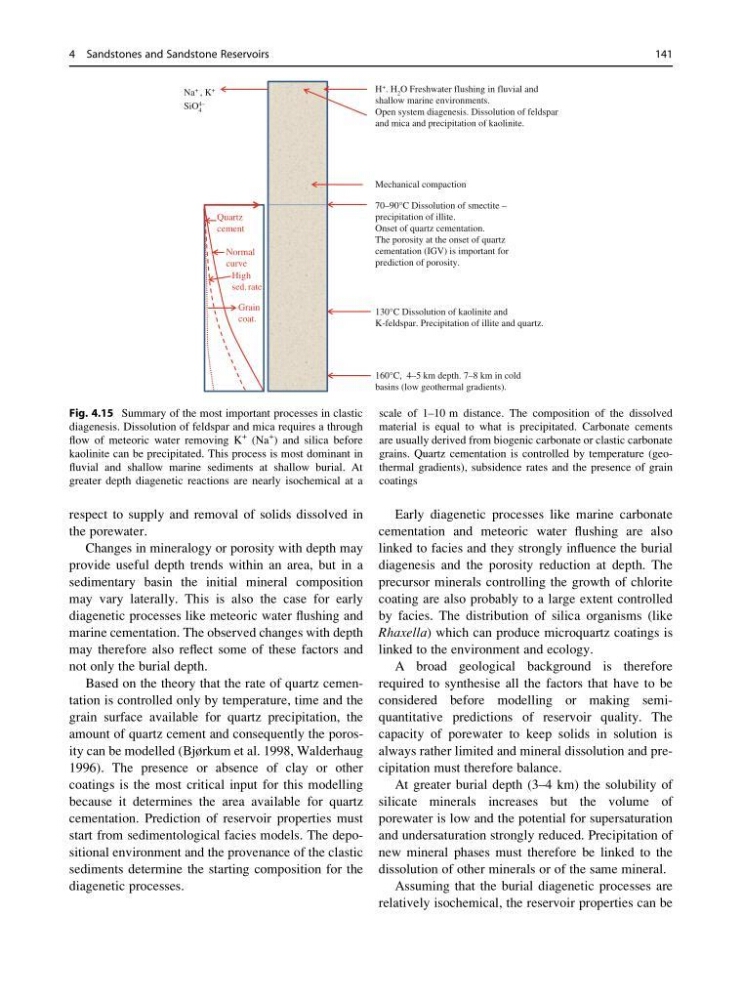
Fig. 4.15 Summary of the most important processes in clastic
diagenesis. Dissolution of feldspar and mica requires a through
flow of meteoric water removing K
+ (Na
+ ) and silica before
kaolinite can be precipitated. This process is most dominant in
fluvial and shallow marine sediments at shallow burial. At
greater depth diagenetic reactions are nearly isochemical at a
scale of 1–10 m distance. The composition of the dissolved
material is equal to what is precipitated. Carbonate cements
are usually derived from biogenic carbonate or clastic carbonate
grains. Quartz cementation is controlled by temperature (geothermal gradients), subsidence rates and the presence of grain
coatings
4 Sandstones and Sandstone Reservoirs
141
the porewater.
Changes in mineralogy or porosity with depth may
provide useful depth trends within an area, but in a
sedimentary basin the initial mineral composition
may vary laterally. This is also the case for early
diagenetic processes like meteoric water flushing and
marine cementation. The observed changes with depth
may therefore also reflect some of these factors and
not only the burial depth.
Based on the theory that the rate of quartz cementation is controlled only by temperature, time and the
grain surface available for quartz precipitation, the
amount of quartz cement and consequently the porosity can be modelled (Bjørkum et al. 1998, Walderhaug
1996). The presence or absence of clay or other
coatings is the most critical input for this modelling
because it determines the area available for quartz
cementation. Prediction of reservoir properties must
start from sedimentological facies models. The depositional environment and the provenance of the clastic
sediments determine the starting composition for the
diagenetic processes.
Early diagenetic processes like marine carbonate
cementation and meteoric water flushing are also
linked to facies and they strongly influence the burial
diagenesis and the porosity reduction at depth. The
precursor minerals controlling the growth of chlorite
coating are also probably to a large extent controlled
by facies. The distribution of silica organisms (like
Rhaxella) which can produce microquartz coatings is
linked to the environment and ecology.
A broad geological background is therefore
required to synthesise all the factors that have to be
considered before modelling or making semiquantitative predictions of reservoir quality. The
capacity of porewater to keep solids in solution is
always rather limited and mineral dissolution and precipitation must therefore balance.
At greater burial depth (3–4 km) the solubility of
silicate minerals increases but the volume of
porewater is low and the potential for supersaturation
and undersaturation strongly reduced. Precipitation of
new mineral phases must therefore be linked to the
dissolution of other minerals or of the same mineral.
Assuming that the burial diagenetic processes are
relatively isochemical, the reservoir properties can be
H + . H 2 O Freshwater flushing in fluvial and
shallow marine environments.
Open system diagenesis. Dissolution of feldspar
and mica and precipitation of kaolinite.
Na + , K +
SiO 4
4–
Mechanical compaction
70–90°C Dissolution of smectite –
precipitation of illite.
Onset of quartz cementation.
The porosity at the onset of quartz
cementation (IGV) is important for
prediction of porosity.
130°C Dissolution of kaolinite and
K-feldspar. Precipitation of illite and quartz.
Quartz
cement
Normal
curve
High
sed. rate
Grain
coat.
160°C, 4–5 km depth. 7–8 km in cold
basins (low geothermal gradients).
Fig. 4.15 Summary of the most important processes in clastic
diagenesis. Dissolution of feldspar and mica requires a through
flow of meteoric water removing K
+ (Na
+ ) and silica before
kaolinite can be precipitated. This process is most dominant in
fluvial and shallow marine sediments at shallow burial. At
greater depth diagenetic reactions are nearly isochemical at a
scale of 1–10 m distance. The composition of the dissolved
material is equal to what is precipitated. Carbonate cements
are usually derived from biogenic carbonate or clastic carbonate
grains. Quartz cementation is controlled by temperature (geothermal gradients), subsidence rates and the presence of grain
coatings
4 Sandstones and Sandstone Reservoirs
141